Chamber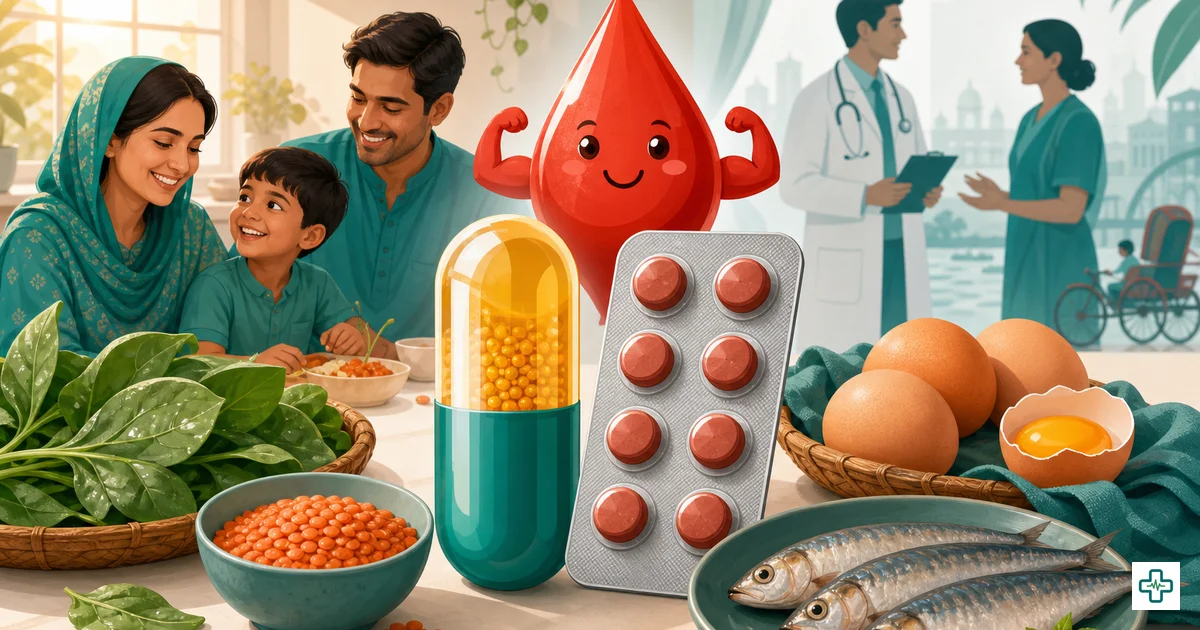
Vitamin D and Iron Deficiency in Bangladesh: Symptoms, Tests, Medicines and Diet
Short answer: If you feel constantly tired, ache in your bones and muscles, get sick often, or look pale and run out of breath climbing stairs, you may be low in vitamin D, iron, or both — and these are among the most common deficiencies in Bangladesh. The good news is that both are easy to confirm with a simple blood test and usually easy to correct with the right supplement, the right dose, and better food. The important caution: high-dose vitamin D (20,000–40,000 IU) and long-term iron must be taken under a doctor's direction, because too much vitamin D can be toxic and because anaemia always has an underlying cause that needs to be found — not masked with iron forever.
This guide walks you through both deficiencies in plain language: what symptoms to watch for, which tests confirm them, which Bangladeshi medicines are commonly used (such as Defrol 1000 IU for vitamin D and Fefa for iron), how to take them so they actually work, and what to eat. It is written for general awareness and does not replace a consultation. To talk to a registered doctor, you can book through app.chamberbd.com.
Why vitamin D and iron deficiency are so common here
It surprises many people that vitamin D deficiency is widespread in a sunny country. But sunlight alone is not enough if you spend the day indoors, cover most of your skin, use sunscreen, live in a polluted city where haze blocks UVB rays, or have darker skin (which needs more sun to make the same vitamin D). On top of that, very few everyday foods contain meaningful vitamin D, so when sun exposure is low, the body has no easy backup.
Iron deficiency is the world's most common nutritional deficiency, and in Bangladesh it hits women, growing children, adolescents, and pregnant mothers hardest. Diets high in rice but low in iron-rich animal foods, monthly blood loss from menstruation, repeated pregnancies, and parasitic worm infections all drain the body's iron. The result is iron-deficiency anaemia — too few healthy red blood cells to carry oxygen around the body.
Vitamin D deficiency: symptoms to recognise
Vitamin D helps your body absorb calcium and keep bones and muscles strong, and it supports the immune system. When levels drop, symptoms are often vague and easy to blame on "just being busy." Watch for:
- Bone pain and tenderness, especially in the lower back, hips, legs and ribs.
- Muscle aches and weakness, or difficulty standing up from a squat or climbing stairs.
- Persistent tiredness and low energy that rest does not fix.
- Frequent colds and infections — getting sick more often than those around you.
- Low mood in some people, and poor sleep.
- In children, severe deficiency can cause rickets (bowed legs, delayed walking); in adults, long-standing deficiency softens bones (osteomalacia).
Because these overlap with many other conditions, a blood test is the only way to be sure. For a deeper look at the warning signs and natural sources, see our companion article on vitamin D deficiency symptoms and sources.
Iron-deficiency anaemia: symptoms to recognise
When iron runs low, the body cannot make enough haemoglobin, the protein in red blood cells that carries oxygen. Tissues get less oxygen, and you feel it as:
- Tiredness and weakness out of proportion to your activity.
- Pallor — a pale tongue, inner eyelids, nail beds and palms.
- Breathlessness and a racing heartbeat, especially on exertion such as climbing stairs.
- Dizziness or headaches, feeling faint when standing.
- Hair fall and brittle, spoon-shaped nails.
- Cracks at the corners of the mouth and a sore, smooth tongue.
- Sometimes unusual cravings to eat ice, clay or chalk (called pica).
If you have heavy periods, are pregnant, or notice these signs, do not self-diagnose with internet checklists alone. Our companion guide on anaemia and an iron-rich diet explains the food side in detail.
How each deficiency is tested
Both are confirmed with simple, affordable blood tests that most diagnostic centres in Bangladesh offer:
- Vitamin D: a blood test for 25-hydroxy vitamin D (25-OH vitamin D). Results are usually reported in ng/mL. Low levels indicate deficiency; your doctor interprets the number with your symptoms.
- Iron / anaemia: a Complete Blood Count (CBC) shows haemoglobin and red-cell size. To confirm iron deficiency specifically, doctors add a serum ferritin test (the body's iron store), and sometimes serum iron and TIBC.
Crucially, the tests don't just confirm a deficiency — they help the doctor look for the cause. For anaemia in particular, finding the reason (poor diet, heavy menstrual bleeding, pregnancy demand, ulcers or other blood loss, worms) matters as much as taking iron, because correcting the cause is what makes the fix last.
Vitamin D medicines used in Bangladesh and how to take them
The vitamin D used in supplements is cholecalciferol (vitamin D3), the same form your skin makes from sunlight. A widely used local brand is Defrol, which is cholecalciferol. You can read the active-ingredient details on the cholecalciferol (vitamin D3) generic page.
Vitamin D3 comes in different strengths for different jobs. A small daily dose is used for everyday maintenance, while much higher doses are used for a limited time to correct a confirmed deficiency — and those high doses are strictly doctor-directed.
| Defrol strength | Typical use | How it is taken |
|---|---|---|
| Defrol 1000 IU tablet | Daily maintenance / mild top-up once levels are normal | Usually one tablet daily, long-term, as advised |
| Defrol 20,000 IU capsule | Correcting a confirmed deficiency (moderate) | Weekly / intermittent, for a set number of weeks — doctor-directed |
| Defrol 40,000 IU capsule | Correcting a more significant deficiency | Weekly / intermittent for a defined course — doctor-directed, then review |
Why the high doses must be supervised: vitamin D is fat-soluble, so it builds up in the body. Taking 20,000–40,000 IU capsules too often or for too long can push blood calcium too high (a state called hypervitaminosis D / hypercalcaemia), which can cause nausea, excessive thirst and urination, kidney stones, and in severe cases kidney damage. That is why these strengths are meant for a defined course to top up your stores, after which the doctor usually drops you to a low maintenance dose and may recheck your level. Never copy someone else's high-dose schedule. Tip: take vitamin D with a meal that contains some fat, as it absorbs better that way.
Iron medicines used in Bangladesh and how to take them
For iron-deficiency anaemia, doctors prescribe oral iron supplements. A common Bangladeshi combination is Fefa, which contains ferrous sulphate + folic acid + zinc — see Fefa capsule. Ferrous sulphate supplies iron to rebuild haemoglobin, folic acid supports red-cell production (and is especially important in pregnancy), and zinc is an additional micronutrient. Combinations of iron and folic acid are a standard part of anaemia and pregnancy care.
Iron works best when you take it correctly, and small mistakes are why many people feel it "isn't working":
- Take it with vitamin C (a glass of lemon water, orange, guava, or amla) — vitamin C significantly improves iron absorption.
- Avoid taking it with tea, coffee, milk, calcium tablets or antacids — these reduce how much iron your body absorbs. Separate them by a couple of hours.
- Expect dark/black stools — this is normal and harmless with iron, not bleeding.
- If it upsets your stomach (nausea, constipation), take it with or just after food; this softens side effects even if it slightly lowers absorption.
- Keep taking it for the full course. Haemoglobin starts improving in a few weeks, but iron stores take longer to refill — doctors often continue iron for some months after the blood count normalises.
- Keep iron tablets away from children — accidental iron overdose is dangerous for small kids.
Most importantly, iron treats the symptom, not the source. The cause of the anaemia must be found and addressed — whether that is improving the diet, treating heavy periods, deworming, or investigating blood loss. Simply taking iron forever without finding out why you are losing it can hide a problem that needs different treatment.
Food sources: build your levels from the plate
Supplements correct a deficiency; food keeps it from coming back. Aim to make these regular parts of your meals.
| Nutrient | Best food sources (Bangladesh-friendly) | Helpful tip |
|---|---|---|
| Vitamin D | Oily fish (e.g. ilish, mackerel, sardine), egg yolk, fortified milk/foods; plus safe sunlight | Few foods are rich in vitamin D — sensible sun exposure on arms and face matters |
| Iron (animal / well absorbed) | Liver, red meat, organ meat, eggs, fish, poultry | Animal-source (haem) iron is absorbed more easily than plant iron |
| Iron (plant) | Spinach and dark leafy greens, lentils (dal), beans, dates, jaggery | Pair with a vitamin C food (lemon, amla, guava) at the same meal to boost absorption |
For most people, a balanced plate plus sensible sunlight prevents both deficiencies. Supplements are for confirmed shortfalls, higher needs (like pregnancy), or when diet alone cannot keep up.
Special notes for women and pregnancy
Women are at higher risk of iron deficiency because of monthly menstrual blood loss, and the demand rises sharply in pregnancy, when the mother is building the baby's blood supply too. This is why iron and folic acid are routinely recommended in pregnancy — folic acid also helps protect the baby's developing spine and brain in early pregnancy. Adolescent girls with heavy periods are another group who quietly become anaemic.
Vitamin D matters in pregnancy and breastfeeding as well, supporting the mother's bones and the baby's development. However, pregnancy is exactly when you should not self-prescribe high-dose anything — doses and brands should be chosen by the doctor or antenatal clinic looking after you. If you are pregnant, planning pregnancy, or have heavy periods, raise iron and vitamin D specifically at your next visit.
When to see a doctor
Book a consultation rather than self-treating if you have:
- Strong symptoms of anaemia — marked breathlessness, chest discomfort, fainting, or a very pale appearance.
- Heavy menstrual bleeding, blood in stool, black tarry stools, or any unexplained blood loss.
- Anaemia that does not improve after a proper course of iron — the cause needs investigation.
- A need for high-dose vitamin D (20,000 or 40,000 IU) — start it only on a doctor's instruction and follow the review plan.
- Pregnancy, breastfeeding, kidney disease, or you take other regular medicines.
- Severe bone pain, muscle weakness, or symptoms in a child (poor growth, bowed legs, delayed walking).
A registered doctor can order the right tests, read them alongside your symptoms, prescribe a safe dose, and find the underlying cause. You can find and book a doctor on app.chamberbd.com. If a doctor gives you a prescription, the free prescription generator can help create a clear, printable copy with the medicine names and dosing written out.
Frequently Asked Questions
Can I take Defrol 40,000 IU on my own without a doctor?
No. High-dose vitamin D such as 20,000 IU and 40,000 IU is meant to correct a confirmed deficiency over a defined, doctor-directed course. Vitamin D builds up in the body, and taking these strengths too often or for too long can raise blood calcium dangerously. Get your level tested and let a doctor set the dose and the review plan; for ongoing maintenance a low dose like 1,000 IU is usually used instead.
What is the best way to take iron tablets so they actually work?
Take iron with a source of vitamin C such as lemon water, orange, amla or guava, which improves absorption. Avoid taking it at the same time as tea, coffee, milk, calcium tablets or antacids, which reduce absorption — keep a couple of hours' gap. If it upsets your stomach, take it with or just after food. Dark or black stools are a normal, harmless effect of iron.
How long does it take to recover from iron-deficiency anaemia?
Haemoglobin usually starts rising within a few weeks of taking iron correctly, and energy improves over a month or two. But the body also needs to rebuild its iron stores, so doctors often continue iron for several months after the blood count normalises. Stopping too early is a common reason anaemia comes back. Always finish the course your doctor advises.
Which blood tests confirm vitamin D and iron deficiency?
For vitamin D, the test is 25-hydroxy vitamin D (25-OH vitamin D). For anaemia, a Complete Blood Count (CBC) checks haemoglobin, and a serum ferritin test confirms whether low iron stores are the cause. Most diagnostic centres in Bangladesh offer these, and your doctor interprets the numbers together with your symptoms.
If I just keep taking iron, will my anaemia stay away?
Not necessarily. Iron corrects the deficiency, but anaemia always has a cause — poor diet, heavy periods, pregnancy demand, ulcers or other blood loss, or worm infection. If the cause is not found and treated, the anaemia can return or a serious underlying problem can be missed. That is why a doctor should investigate the reason, not just prescribe iron indefinitely.
Can diet alone fix these deficiencies without medicine?
A good diet and sensible sunlight prevent most deficiencies and help maintain levels after treatment. But once a deficiency is confirmed — especially a significant one, or in pregnancy — food usually cannot correct it fast enough, and a supplement at the right dose is needed. Think of medicine to correct the gap and food to keep it from returning.
Are these supplements safe in pregnancy?
Iron and folic acid are routinely recommended in pregnancy because the demand for iron rises and folic acid protects the baby's early development, and vitamin D is also important. However, pregnancy is exactly when you should not self-prescribe doses — let your antenatal doctor or clinic choose the brand and strength and monitor you. Bring up iron and vitamin D specifically at your visit.
This article is for general health awareness and does not replace personal medical advice. Medicines, doses and brands mentioned here should be used only as directed by a registered doctor. To consult a doctor, visit app.chamberbd.com.