Chamber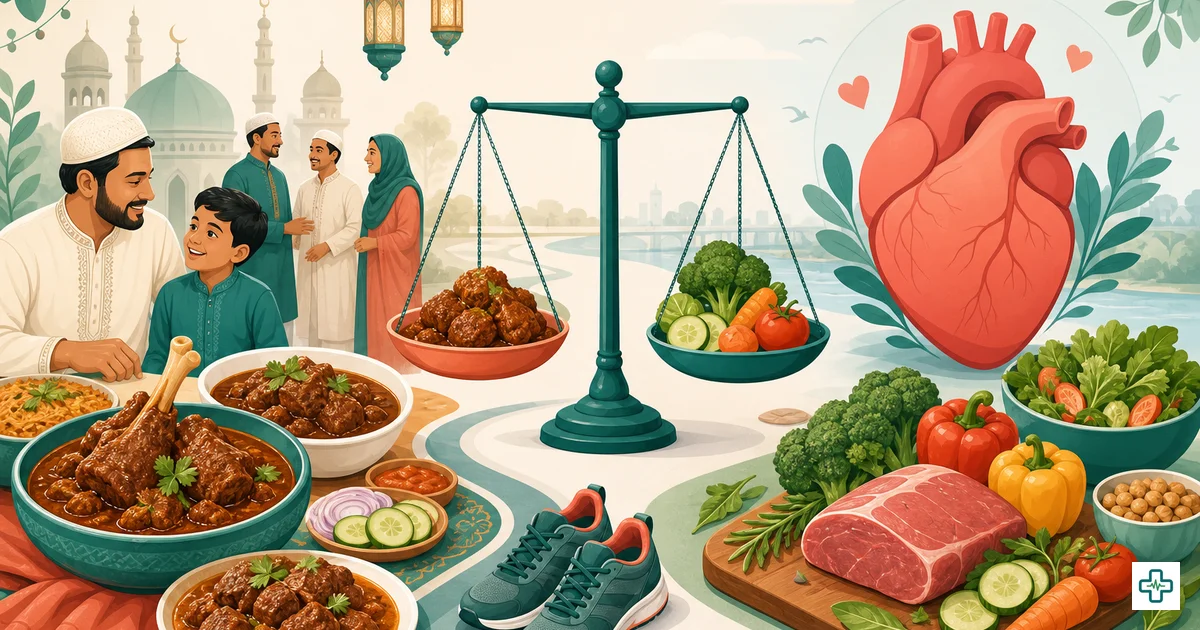
Eid-ul-Adha Meat: Protecting Your Heart and Cholesterol
Eid-ul-Adha brings a welcome abundance of beef and mutton, but several days of rich red meat, fat and offal in a row can quietly raise cholesterol, blood pressure and uric acid. You do not have to avoid qurbani meat. With a few sensible choices you can enjoy it while protecting your heart, especially if you already live with diabetes, high pressure, heart disease or gout.
Is red meat at Eid bad for your heart?
Red meat in moderation is a good source of protein and iron. The problem at Eid is quantity and frequency: large portions, fatty cuts and deep-fried preparations eaten two or three times a day for several days. That load of saturated fat can raise LDL ("bad") cholesterol and strain the heart. Healthy people handle an occasional feast well; the risk is real for those with existing heart disease or high cholesterol who overdo it for a week.
Which cuts and parts should you limit?
Choose leaner cuts and trim visible fat before cooking. Go easy on fatty mutton, the skin, brain, liver and other organ meats, which are very high in cholesterol and, in the case of offal, in purines that raise uric acid. Removing the fat and skin and draining excess oil after cooking makes a real difference. Keep portions to a fist-sized serving rather than piling the plate.
How should you cook and balance qurbani meat?
How you cook matters as much as the cut. Favour grilling, roasting, bhuna with less oil, or curry where you skim the fat, over deep-frying. Balance every meat dish with vegetables, salad and a sensible amount of rice, and spread the meat across the week rather than eating it all in two days. Share and freeze portions so you are not forced to finish fatty leftovers. Drinking enough water helps your kidneys clear the extra protein and uric acid.
What should heart, diabetes and gout patients do?
If you have heart disease, high blood pressure, high cholesterol, diabetes or gout, keep portions small, avoid organ meat, and never stop your regular medicines to enjoy the festival. Watch the salt in rich gravies if your pressure is high, and the rice and sweets if you have diabetes. A sudden gout flare often follows an Eid binge on red and organ meat, so those prone to it should be especially careful. Read more in our guides on cholesterol control and blood pressure.
When should you see a doctor?
Seek urgent care for chest pain or pressure, breathlessness, or a one-sided weakness — these can be a heart attack or stroke and are emergencies. See your doctor after Eid if you have a known heart or kidney condition, a swollen painful joint suggesting gout, or you simply want your cholesterol and pressure checked after a heavy week. You can find a specialist through our list of registered doctors.
This article is for general health education and is not a substitute for professional medical advice.