Safe Weight Loss: A Realistic Bangladeshi Diet and Exercise Plan
Search for weight-loss tips online and you will find miracle teas, fat-burner pills and diets promising 10 kg in a month. Most of it is useless — some of it dangerous. Meanwhile obesity, diabetes and heart disease are rising fast across Bangladesh, in cities and villages alike. The honest path is slower, but it works and it lasts: sensible portions of the food we already eat, more movement, better sleep. Here is a realistic plan built around dal-bhat, not imported superfoods.
How fast should you lose weight?
Aim for 0.5 to 1 kg per week — roughly 2-4 kg a month. Faster crash diets mostly strip away water and muscle, slow your metabolism down, and the weight returns with interest the moment you stop. Slow loss through habit change is the kind that stays off.
Do you actually need to lose weight?
Two quick checks answer this. First, BMI: divide your weight in kilograms by your height in metres squared — for South Asians, 23 or above counts as overweight and 27.5 or above as obese. Second, and often more telling, measure your waist at the navel: risk rises above roughly 90 cm (35.5 inches) for men and 80 cm (31.5 inches) for women, because belly fat is the type most strongly linked to diabetes and heart disease.
The Bangladeshi plate method
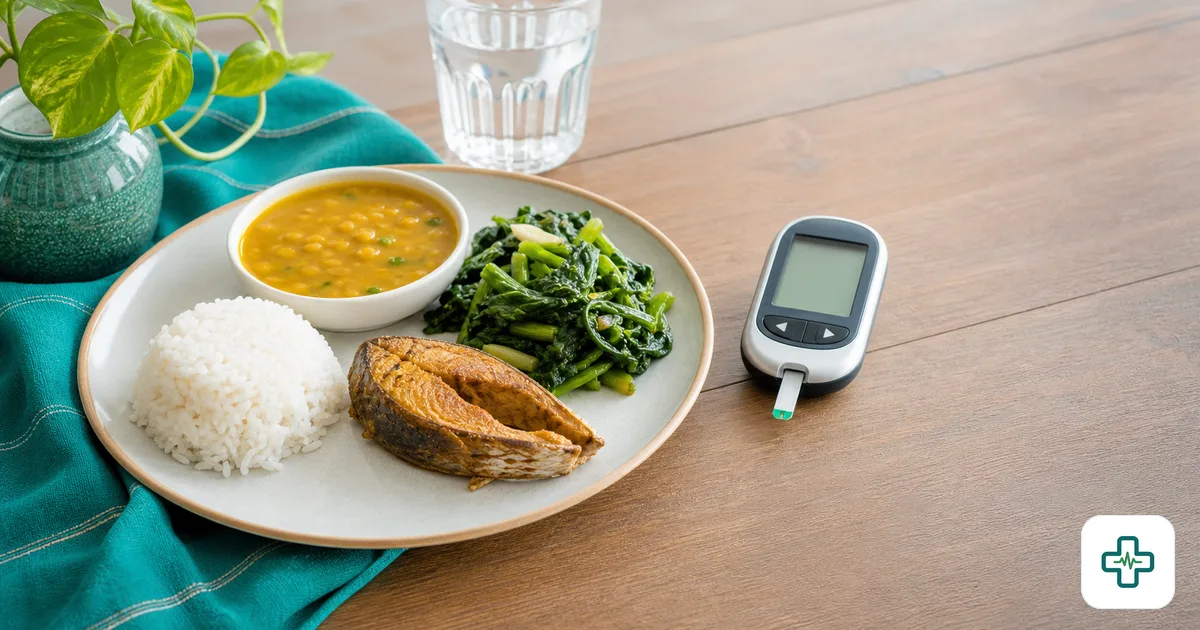
No separate “diet food” is needed — just rebuild your plate at lunch and dinner:
- Half the plate: vegetables and shak — bhaji, salad, vegetable curry cooked with less oil.
- One quarter: protein — fish, skinless chicken, eggs, dal or chola.
- One quarter: rice or ruti — about one fist-sized serving of rice or two thin rutis, measured once, not refilled.
Protein and fibre are your appetite's best friends: they keep you full for hours so you snack less. Eat slowly and stop when comfortably satisfied rather than stuffed, and drink water before meals instead of sugary drinks with them.
Small swaps that quietly cut calories
- Tea without sugar, or one spoon less to start — three cups a day with two spoons each adds up to thousands of extra calories a month.
- Soft drinks and packaged juice replaced by water, sugar-free lebu-pani or daber pani.
- Afternoon singara-puri-chop swapped for seasonal fruit, a handful of nuts or boiled chola, or plain muri.
- The 11 p.m. second plate of rice replaced by an earlier, lighter dinner.
- Biryani and mishti kept for occasions — smaller portions, not weekly habits.
Skip the dangerous shortcuts
Slimming pills, “fat-burner” teas and unsupervised extreme fasting can harm your liver, heart rhythm and hormones — and the weight usually comes back anyway. Be especially wary of products that list no ingredients; check what a medicine actually is in our medicine directory, and never start any weight-loss drug without a doctor's prescription.
Exercise: a realistic beginner plan
You do not need a gym. Start with a 30-minute brisk walk five days a week — morning or evening, in a park or on the rooftop. Add two days of simple strength work: squats to a chair, wall push-ups, taking stairs instead of the lift. Muscle matters because it burns calories even at rest, so build up gradually — light sweating and slightly faster breathing mean it is working.
Sleep and stress count too: short sleep and constant tension raise hunger hormones and drive cravings for sugary, oily food. Protect 7-8 hours of sleep and take real breaks during the day.
What if the scale stops moving?
A plateau after the first few kilos is normal. Re-measure your rice portions honestly, vary your exercise, fix your sleep — and remember that a smaller, stable waistline is still progress.
When should you see a doctor?
If your weight will not budge after two to three months of honest diet and exercise, a medical cause may be hiding — thyroid problems, PCOS in women, or weight-promoting medicines such as some steroids and psychiatric drugs. Excess weight with constant thirst or hunger, or a family history of diabetes, deserves a blood-sugar check; our Bangladeshi diabetes diet guide pairs well with this plan. You can book a verified doctor on ChamberBD — an endocrinologist, gynaecologist or medicine specialist — for tests and tailored advice.
- Rapid weight loss without trying, night sweats, or a lump anywhere — get checked urgently.
- No weight loss despite genuine effort for three months.
- Weight gain with irregular periods (possible PCOS or thyroid trouble).
- Snoring with daytime sleepiness, knee pain or breathlessness that limits activity.
- Before any strict diet if you have diabetes, kidney or heart disease, or are pregnant.
This article is for general health education and is not a substitute for professional medical advice.