Chamber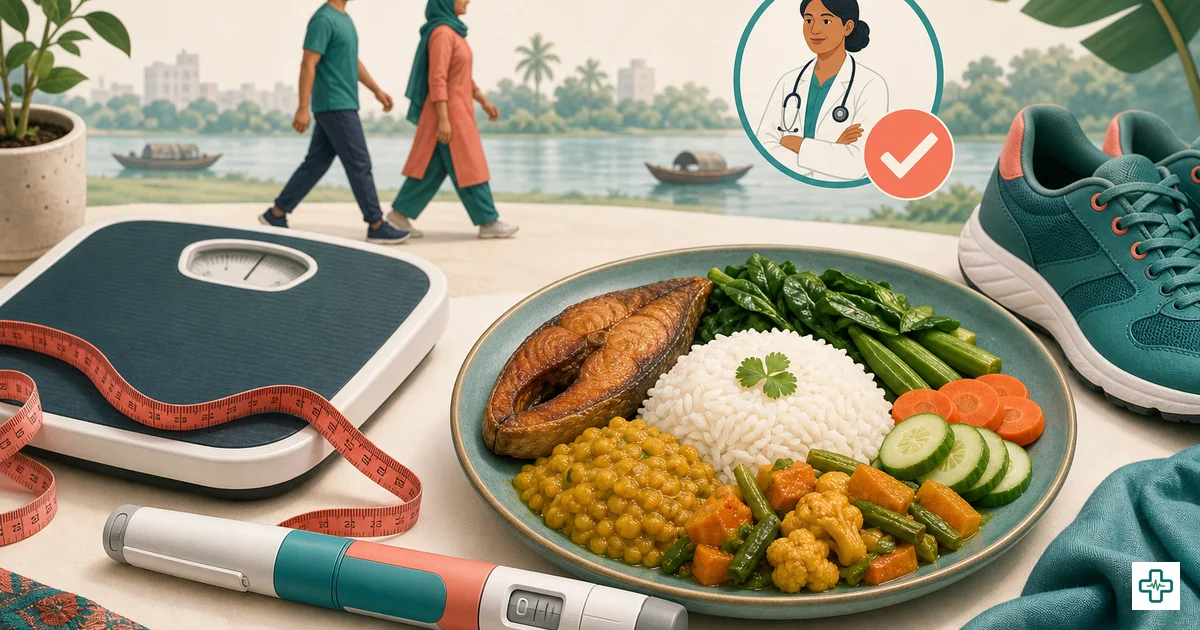
Weight-Loss Injection (Semaglutide) in Bangladesh: What It Is, Who It's For, and Why It Needs a Doctor
Over the last two years, the "weight-loss injection" has become one of the most talked-about medicines in Bangladesh. You have probably seen it on social media, heard a relative mention it, or noticed it in a pharmacy. The medicine being discussed is usually semaglutide — sold here under brand names such as SemaSlim. It is a real, powerful, science-backed treatment. But it is also one of the most misunderstood and most dangerously misused medicines on the market. So let us answer the most important question directly and without hype: semaglutide is a prescription-only, doctor-supervised medicine for obesity and type-2 diabetes — it is not a cosmetic quick-fix, and you should never buy it and inject yourself without a doctor.
This guide explains, in plain language, what the injection is, how it works in your body, who genuinely benefits from it, how a doctor starts and slowly increases the dose, what realistic results look like, the side effects, and — most importantly — who must absolutely never use it. The goal is to help you make a safe, informed decision with a qualified doctor, not to push you toward a needle.
What is the weight-loss injection (semaglutide)?
Semaglutide belongs to a class of medicines called GLP-1 receptor agonists. GLP-1 (glucagon-like peptide-1) is a hormone your own gut naturally releases after you eat. It tells your brain you are full, helps control blood sugar, and slows down how quickly your stomach empties. Semaglutide is a man-made version of this hormone that lasts much longer in the body, which is why it is given as a once-weekly injection under the skin (subcutaneous) rather than every day.
It is important to understand what semaglutide is not. It is not a fat-burner, not a laxative, not a "detox," and not a stimulant. It does not melt fat directly. Instead, it changes your appetite and your relationship with food so that you naturally eat less and feel satisfied with smaller portions. That is a very different — and much more medical — mechanism than the slimming teas and crash diets people often compare it to.
In Bangladesh, semaglutide is available as injections of different strengths, sold under brands such as SemaSlim. You can read the verified product details on the brand pages for SemaSlim 0.25 mg (250 mcg) injection, SemaSlim 0.5 mg (500 mcg) injection, and SemaSlim 1 mg injection, or see the full drug overview on the semaglutide generic page. These different strengths exist for a specific reason — slow, stepwise dose increases — which we explain below.
How does it work in the body?
Semaglutide works in three main ways, and none of them involve "burning" anything:
- It increases satiety (the feeling of fullness). By acting on appetite centres in the brain, it makes you feel full sooner and stay full longer, so you eat less without constant willpower battles.
- It slows gastric emptying. Food stays in your stomach longer, so hunger returns more slowly after a meal. This is also why eating large or very fatty meals on semaglutide can cause nausea.
- It improves blood-sugar control. It helps the body release insulin appropriately and lowers high blood sugar, which is why it is also a recognised treatment for type-2 diabetes.
The result, when combined with a sensible diet, is that most people eat several hundred fewer calories a day almost effortlessly — and that calorie reduction, sustained over months, is what produces weight loss. Notice the key phrase: combined with a sensible diet. The injection makes eating less easier; it does not replace eating well.
Who is the injection genuinely for?
This is where most of the harm happens in Bangladesh, because the medicine is increasingly wanted by people who do not medically need it. Semaglutide is a treatment for specific medical conditions, prescribed after a doctor assesses your health. It is genuinely indicated, under medical supervision, for:
- Obesity — generally a body mass index (BMI) of 30 or above.
- Overweight with a weight-related health problem — for example a BMI of 27 or above together with high blood pressure, high cholesterol, prediabetes, fatty liver, or obstructive sleep apnoea.
- Type-2 diabetes — to help control blood sugar, often alongside other diabetes medicines.
It is not intended for someone of healthy weight who simply wants to lose a few kilograms for a wedding, a photoshoot, or to look slimmer. Using a powerful metabolic medicine for cosmetic reasons exposes you to real risks for no real medical benefit, and is exactly the misuse doctors are most worried about. The table below shows the difference clearly.
| Likely an appropriate candidate (with a doctor) | Likely NOT an appropriate candidate |
|---|---|
| BMI 30 or above (obesity) | Healthy or near-healthy weight wanting to be "slimmer" |
| BMI 27+ with high blood pressure, high cholesterol, prediabetes or fatty liver | Looking for a fast fix before an event, with no health risk |
| Type-2 diabetes needing better blood-sugar control | Pregnant, planning pregnancy, or breastfeeding |
| Willing to also change diet and activity long-term | Expecting the injection alone to do all the work |
| Able to attend regular follow-up with a doctor | Personal or family history of medullary thyroid cancer or MEN2 |
Even if you tick the left-hand boxes, the medicine should still only be started after a proper consultation. A doctor will weigh you, check your BMI, review your medical and family history, look at your other medicines, and decide whether semaglutide is suitable and safe for you.
How is it started and slowly titrated?
One of the biggest reasons self-injection is dangerous is that semaglutide cannot simply be started at a "weight-loss dose." It must be titrated — started very low and increased step by step over several weeks — so that your body adapts and side effects stay manageable. Jumping straight to a high dose typically causes severe nausea, vomiting, and dehydration.
A doctor usually begins with the lowest strength, keeps you there for a few weeks, checks how you are tolerating it, and only then steps up to the next strength. The exact schedule is individual, but the principle is always the same: start low, go slow. The illustrative schedule below shows why three different strengths exist.
| Stage | Typical strength used | Purpose |
|---|---|---|
| Starting (first weeks) | 0.25 mg once weekly | Let the body adjust; minimise nausea. Not mainly for weight loss yet. |
| Step up | 0.5 mg once weekly | Begin a more active dose once the low dose is tolerated. |
| Further step up (if needed and tolerated) | 1 mg once weekly, and higher under specialist care | Reach a maintenance dose that controls appetite or blood sugar. |
This stepwise plan, the timing of each increase, and the final maintenance dose must be decided by your doctor — not copied from a friend, a video, or a seller. Your dose may differ from someone else's, and changing it yourself is one of the fastest routes to harm. The injection is given once a week, on the same day each week, into the abdomen, thigh, or upper arm, and a clinician should show you the correct technique, storage, and disposal.
What results are realistic?
Used properly — at an adequate dose, over many months, alongside diet and activity — semaglutide can produce meaningful weight loss for many people with obesity, often more than diet and exercise alone achieve. It can also improve blood sugar, blood pressure, and cholesterol. These are genuine, clinically valuable benefits.
But three honest truths must be said clearly. First, it is not instant. Results build over months, not days, and the early weeks at low doses are mostly about tolerating the medicine. Second, results vary. Some people respond strongly, others modestly. Third, and most important, the weight very often returns if lifestyle does not change. Semaglutide is a long-term treatment for a long-term condition; if you stop it and go back to old eating habits, appetite returns and much of the weight typically comes back. That is why doctors describe it as a tool to support permanent lifestyle change — not a one-time cure. Building a sustainable eating pattern matters just as much as the injection; our guide to a safe weight-loss Bangladeshi diet plan is a good companion to read alongside this one.
What are the side effects?
Because semaglutide slows the stomach and acts on the gut, the most common side effects are digestive, especially in the first weeks and after each dose increase. They usually settle as your body adjusts:
- Nausea (the most common complaint)
- Vomiting
- Diarrhoea
- Constipation
- Acid reflux or burping
- Reduced appetite and feeling very full quickly
Eating smaller, less greasy meals, not overeating, and drinking enough water help reduce these symptoms. Slow titration is the main strategy to keep them tolerable — another reason the dose must be managed by a doctor. Persistent vomiting or diarrhoea can cause dehydration, which is itself dangerous, so tell your doctor if symptoms are severe or do not improve.
More serious problems are less common but real. Seek medical help urgently if you develop severe, persistent abdominal pain (especially spreading to the back, with vomiting), which can be a sign of pancreatitis. Gallbladder problems (including gallstones) can also occur, particularly with rapid weight loss. People with diabetes who also take insulin or certain other diabetes drugs may be at risk of low blood sugar and need their other medicines adjusted by a doctor. These risks are manageable precisely because a supervising doctor is watching for them — which a self-injecting buyer is not.
Who must NOT use it?
Some people must never take semaglutide, and others need careful specialist judgement. This is non-negotiable safety information:
- Do not use it if you or a close family member has had medullary thyroid carcinoma (a type of thyroid cancer), or the genetic condition MEN2 (Multiple Endocrine Neoplasia type 2). This is a firm contraindication.
- Avoid in pregnancy and when planning pregnancy or breastfeeding. If you become pregnant while using it, contact your doctor.
- Use only with great caution, and under specialist advice, if you have a history of pancreatitis or gallbladder disease.
- Tell your doctor about severe stomach or gut conditions, kidney problems, diabetic eye disease, and all other medicines you take.
A doctor screens for every one of these before prescribing. A pharmacy seller or an online vendor does not. That single difference is why self-injecting semaglutide is genuinely unsafe, no matter how easy it may be to obtain.
Why it is prescription-only — and why you must not self-inject
It is worth repeating, because the temptation is real: semaglutide is a prescription-only medicine that must be doctor-supervised. The reasons are not bureaucratic — they are about your safety:
- Only a doctor can confirm you actually need it and that it is safe given your history.
- Only a doctor can titrate the dose correctly so side effects stay manageable.
- Only a doctor can monitor for serious problems like pancreatitis or interactions with your diabetes medicines.
- Counterfeit and improperly stored injections sold outside proper channels carry their own dangers, from contamination to wrong dosing.
If you think you may be a candidate, the right next step is a consultation — not a purchase. You can find and book a qualified doctor through app.chamberbd.com, and after your visit your doctor can issue a proper prescription using a tool like our prescription generator. A real treatment plan, written by a real doctor who has examined you, is what makes this medicine safe.
The bottom line: a tool, not a shortcut
Semaglutide is a genuine medical advance for people living with obesity and type-2 diabetes. Used correctly — prescribed by a doctor, titrated slowly, monitored for side effects, and combined with lasting changes to how you eat and move — it can be life-improving and even life-saving. But it is a serious medicine with real contraindications and real risks, and it is being widely misused as a cosmetic shortcut. Do not buy it and inject yourself. Do not use it just to look slimmer. Do not expect it to work without changing your lifestyle. See a qualified doctor, get assessed honestly, and let the injection be one supervised part of a complete, safe plan.
Frequently Asked Questions
Is the semaglutide weight-loss injection safe to buy and use on my own?
No. Semaglutide is a prescription-only medicine that must be supervised by a doctor. It needs careful screening for conditions like thyroid cancer history and pancreatitis, the dose must be increased slowly, and side effects must be monitored. Buying it and self-injecting without a doctor is genuinely unsafe, even if it is easy to obtain.
Will the injection make me lose weight even if I keep eating the same?
No. The injection works by reducing appetite and helping you eat less, but you must still eat a sensible diet and stay active for it to work and for the results to last. Diet and exercise remain essential. If lifestyle does not change, the weight very often returns once the medicine is stopped.
Can a healthy-weight person use it just to look slimmer for an event?
No. It is intended for obesity, overweight-with-health-risk, or type-2 diabetes — not for cosmetic weight loss in people of healthy weight. Using a powerful metabolic medicine for appearance alone exposes you to real risks with no medical benefit, and is exactly the misuse doctors warn against.
Why does the dose start so low and increase slowly?
Starting low and increasing the dose step by step over weeks lets your body adjust and keeps side effects like nausea and vomiting manageable. Jumping straight to a high dose can cause severe nausea, vomiting, and dehydration. That is why different strengths exist and why a doctor must control the schedule.
What are the most common side effects?
The most common are digestive: nausea, vomiting, diarrhoea, constipation, and reflux, especially in the early weeks and after each dose increase. They usually settle over time. Seek urgent care for severe ongoing abdominal pain, which can signal pancreatitis, and tell your doctor if vomiting or diarrhoea is severe.
Who should never use semaglutide?
Anyone with a personal or family history of medullary thyroid carcinoma or MEN2 must not use it. It should be avoided in pregnancy, planned pregnancy, and breastfeeding, and used only with specialist caution if you have a history of pancreatitis or gallbladder disease. Always tell your doctor your full medical history.
Will my weight come back if I stop the injection?
Often, yes, if your eating and activity habits have not changed. Semaglutide is a long-term treatment for a long-term condition; when it is stopped, appetite returns and much of the weight can come back. That is why it works best as a tool to support permanent lifestyle change, not as a one-time fix.