Chamber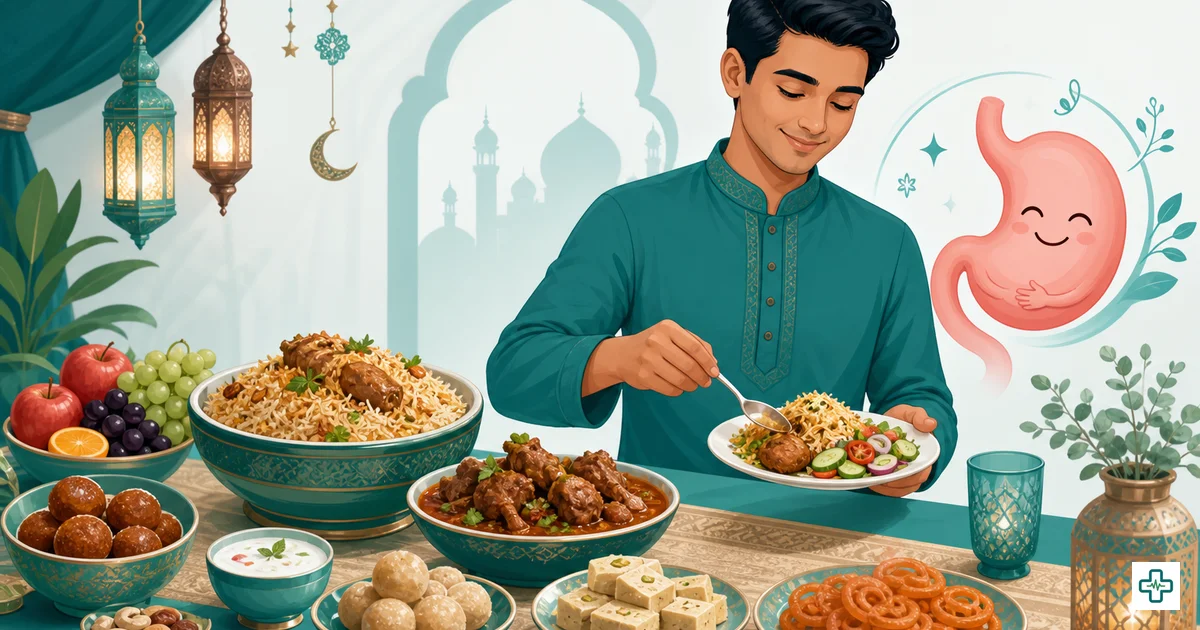
Eid Without the Stomach Upset: Eating and Digestion Tips
After a month of light, scheduled meals, the body suddenly meets a table of biryani, beef, sweets and fizzy drinks on Eid morning. It is no surprise that bloating, acidity, nausea and diarrhoea are some of the most common reasons people feel unwell during the festival. A little pacing lets you enjoy every dish without paying for it afterwards.
Why does the stomach struggle on Eid?
During Ramadan your stomach adjusted to two meals a day and smaller portions. On Eid it is asked, within hours, to digest large amounts of fatty meat, sugar and oil. The digestive system needs a few days to readjust, so an overload causes gas, heaviness and reflux. Rich food combined with less sleep and lots of tea makes it worse.
How can you enjoy Eid food without overeating?
Start the day with a normal breakfast rather than diving straight into heavy meat, so you are not ravenous at lunch. Use a smaller plate, take modest portions, and eat slowly — fullness signals take about twenty minutes to arrive. Balance every rich dish with salad, vegetables or plain rice, and drink water rather than one sugary drink after another. You can taste everything; you simply do not need a full plate of each.
What helps digestion between Eid meals?
Leave a real gap between meals instead of grazing on meat and sweets all day. A short walk after a heavy meal genuinely helps your stomach move food along and eases that stuffed feeling. Warm water, plain yoghurt or a little lebu-pani can settle the stomach. Go easy on tea and coffee right after eating, and avoid lying down immediately, which invites acid reflux and a burning chest at night.
How do you prevent Eid diarrhoea and food poisoning?
Cooked meat left out for hours in warm weather is a common cause of Eid diarrhoea and food poisoning. Refrigerate leftovers promptly, reheat them thoroughly, and be careful with food that has sat out since morning. If diarrhoea does strike, the priority is fluids: sip oral rehydration saline (ORS) to replace what you lose, keep eating small bland meals, and rest. You can read how to manage it in our guide on food poisoning and ORS home care.
When should you see a doctor?
Most Eid stomach upsets settle in a day or two. See a doctor if you have severe or constant abdominal pain, blood in vomit or stool, a high fever, signs of dehydration such as dizziness and very little urine, or diarrhoea that lasts more than two to three days. People with diabetes, heart or kidney disease should be more cautious, as a big festive load affects them faster. You can reach a doctor through our list of registered doctors.
This article is for general health education and is not a substitute for professional medical advice.