Chamber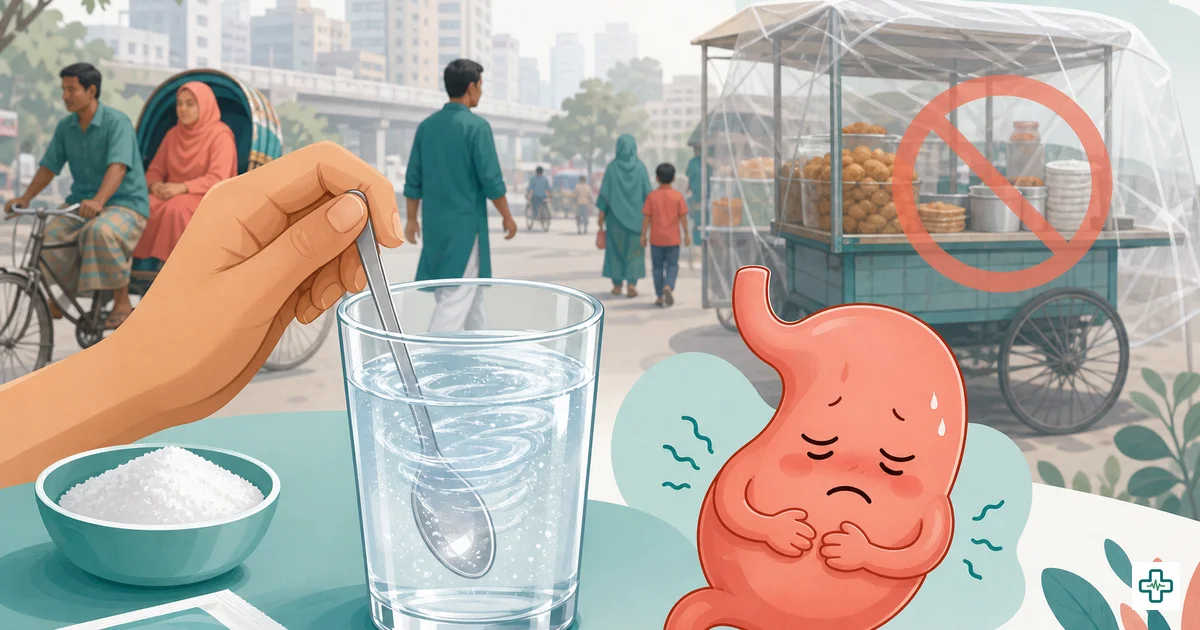
Food Poisoning and Diarrhoea: ORS Rules, Home Care and When to Worry
Every monsoon, hospital wards across Bangladesh fill with people doubled over from food poisoning and diarrhoea. Street-side fuchka, curry left out overnight, cut fruit at the bus stand, a glass of questionable water — it does not take much. The reassuring news is that most episodes settle within a few days with correct home care, and the most life-saving tool is the humble packet of ORS, our khabar saline. What matters is knowing the right rules and spotting danger early.
Why do food poisoning and diarrhoea spike in the monsoon?
Heat and humidity help bacteria multiply quickly in cooked food kept at room temperature, while flooding contaminates water sources. Street food prepared with unsafe water or served with unwashed hands carries germs straight to the gut. That is why diarrhoeal illness peaks in Bangladesh during the monsoon months, especially in crowded urban areas.
Simple prevention rules
- Drink boiled, filtered or sealed bottled water; be careful with ice and street sharbat.
- Eat freshly cooked, hot food; refrigerate leftovers quickly and reheat them thoroughly.
- Wash hands with soap before eating and after using the toilet.
- Wash fruit and vegetables in safe water; avoid cut fruit sold open by the roadside.
How do you prepare ORS correctly?
Mix one full packet of ORS in exactly half a litre (500 ml) of safe drinking water — never in less water to make it “stronger”, and never half a packet. Stir until fully dissolved and use the solution within 12 hours; after that, discard it and prepare a fresh batch. Sip frequently in small amounts instead of gulping a whole glass at once.
A practical guide to amounts after each loose stool:
- Under 2 years: roughly 50-100 ml (10-20 teaspoons), given slowly by spoon.
- 2 to 10 years: about 100-200 ml — half to one glass.
- Older children and adults: at least one full glass, plus normal fluids and water.
If the person vomits, pause for ten minutes, then restart with slower, smaller sips. For children, doctors commonly add zinc for 10-14 days, which shortens the illness — but let a registered doctor confirm the dose instead of guessing at the pharmacy counter.
What should you eat — and avoid?
Keep eating; starving yourself to “rest the stomach” actually delays recovery. Choose soft, low-oil food in small, frequent portions.
- Good choices: soft rice or rice porridge (jau), mashed potato, ripe banana, water-soaked chira with a little doi, plain toast, light chicken or vegetable soup, and green coconut water.
- Avoid for now: oily and heavily spiced dishes, street snacks, raw salads, rich milk sweets, packaged juices and soft drinks, and too much tea or coffee.
Why not just take a pill to stop it?
Because diarrhoea is your body flushing germs out, and blocking it abruptly can trap the infection inside. Instant anti-diarrhoea pills are especially risky for children and for anyone with fever or blood in the stool. Most episodes are viral, so antibiotics do nothing except feed Bangladesh's growing problem of antibiotic resistance — never buy them over the counter on a shopkeeper's advice. If a doctor does prescribe a medicine, you can look up its basic details in our medicine directory.
How do you recognise dehydration?
Dehydration is what turns simple diarrhoea dangerous, and small children dry out fastest. Look for excessive thirst, a dry mouth and tongue, sunken eyes, reduced urine that turns deep yellow, and unusual tiredness. In babies, also watch for a sunken soft spot on the head, crying without tears, far fewer wet nappies, and listlessness. Elderly people may simply become confused or drowsy, so check on them often.
When should you see a doctor?
Seek care the same day if home treatment is clearly not working within 24 hours or any danger sign below appears. You can quickly book a verified doctor on ChamberBD — a paediatrician or medicine specialist near you.
- Blood or mucus in the stool, or watery rice-water stools that will not stop.
- High fever with diarrhoea, or repeated vomiting so that nothing stays down.
- No urine for 6-8 hours (or far fewer wet nappies in babies), sunken eyes, drowsiness or confusion.
- Diarrhoea in a baby under six months, a pregnant woman, an elderly person, or someone with diabetes or kidney disease.
- Symptoms lasting beyond three days despite proper ORS and home care.
This article is for general health education and is not a substitute for professional medical advice.