Chamber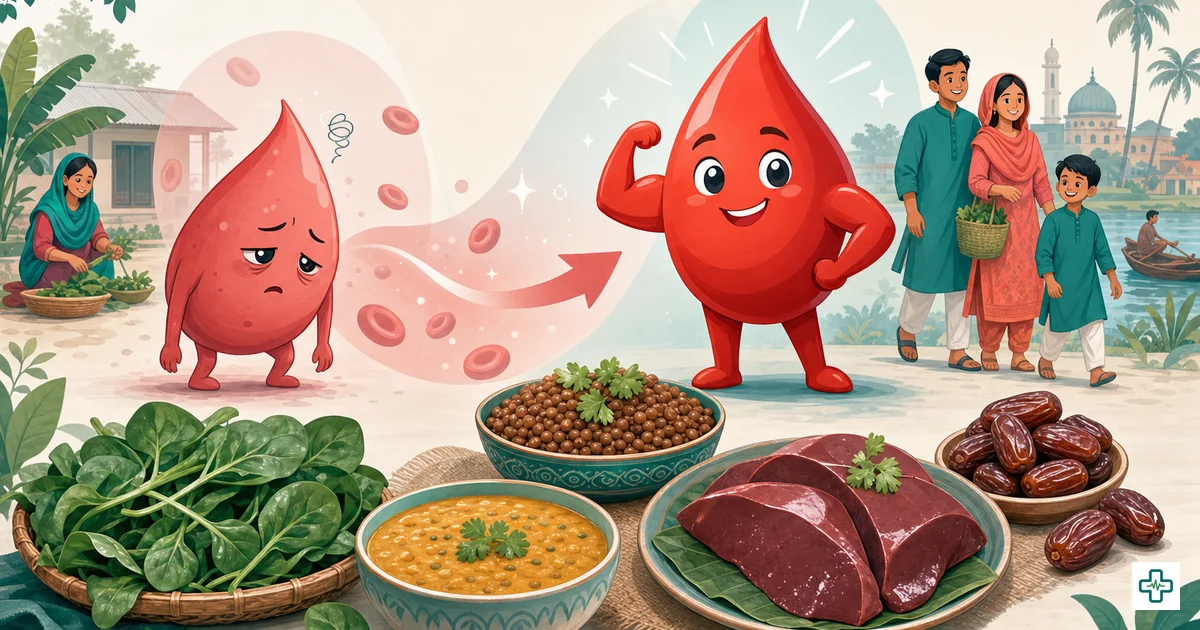
Anaemia: Iron Deficiency Symptoms and the Best Iron-Rich Foods
Anaemia is one of the most common health problems in Bangladesh, especially among women and young children. It means your blood cannot carry enough oxygen because you are short of healthy red blood cells or haemoglobin. The most frequent cause here is iron deficiency, driven by iron-poor diets, monthly periods, pregnancy and intestinal worms. The good news is that, once the cause is found, most iron-deficiency anaemia is very treatable.
What are the symptoms of iron-deficiency anaemia?
Mild anaemia may cause no symptoms, so it is often discovered on a routine blood test. As it worsens, the body struggles to deliver oxygen and clearer signs appear. Watch for these common ones.
- Constant tiredness and weakness
- Pale skin, lips, tongue and inner eyelids
- Breathlessness or a racing heart with light activity
- Dizziness, headaches and poor concentration
- Brittle nails and hair fall
- Unusual cravings for ice, clay or raw rice (pica)
What causes iron deficiency in Bangladesh?
Iron deficiency usually develops when the body loses iron faster than the diet can replace it. In Bangladesh several causes often overlap in the same person.
- Diets high in rice but low in iron-rich foods
- Heavy or long menstrual periods
- Pregnancy, which sharply raises iron needs
- Intestinal worm infections
- Hidden bleeding from the stomach or gut, sometimes from ulcers or long-term painkiller use
How is anaemia diagnosed?
A complete blood count (CBC) shows whether your haemoglobin is low and gives clues about the type of anaemia. A serum ferritin test, which reflects the body's iron stores, helps confirm iron deficiency specifically. Your doctor may suggest more tests — such as a stool test for worms or checks for hidden bleeding — because treating anaemia without finding the cause can be dangerous. A single low haemoglobin reading is a reason to investigate, not to self-diagnose.
Which foods are richest in iron?
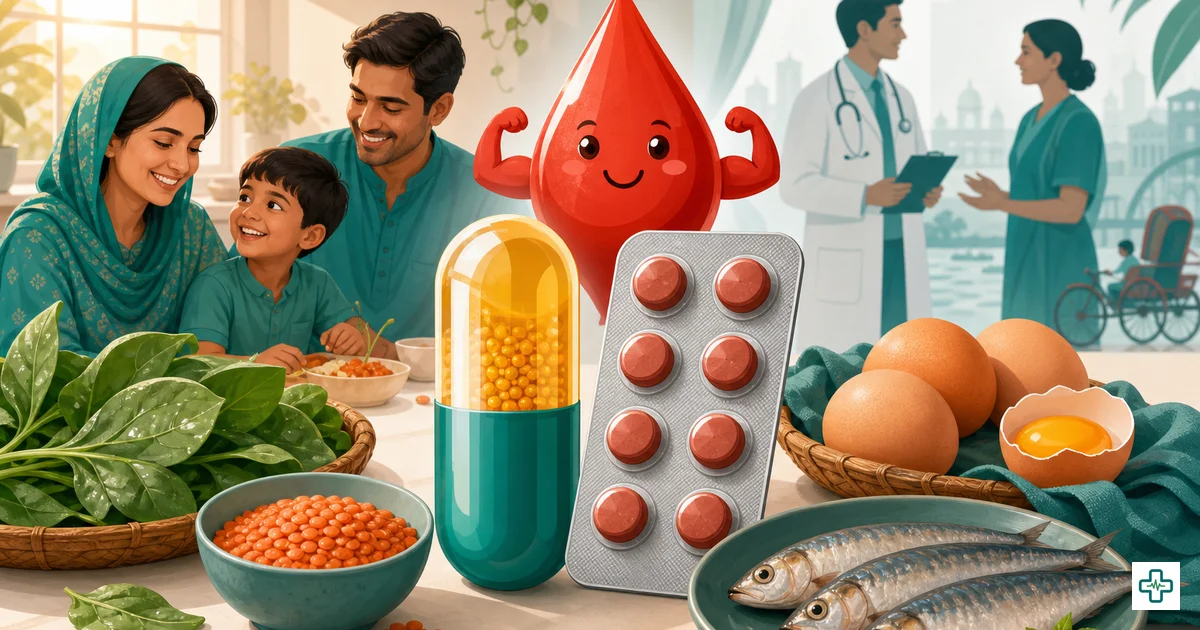
You can rebuild iron stores with everyday Bangladeshi foods alongside any treatment your doctor advises.
- Green leafy vegetables such as kochu shak, palong shak and red amaranth (lal shak)
- Liver, red meat and eggs (animal sources are absorbed best)
- Lentils (dal), chickpeas and beans
- Dates, raisins and jaggery (gur)
- Small fish eaten with bones
Pair iron-rich meals with vitamin C — a slice of lemon, guava, amla or orange — to boost absorption. Avoid drinking tea or coffee with meals, because they block iron uptake; keep them for an hour or two after eating instead. Plant sources of iron are absorbed less easily than meat, fish and eggs, so vegetarians need to pay extra attention to pairing and variety.
How is iron-deficiency anaemia treated?
Diet matters, but moderate or severe anaemia usually needs iron tablets or syrup at a dose and duration set by a doctor. Take only what is prescribed, since too much iron causes constipation, stomach upset and can be harmful, especially to children. Improvement often begins within weeks, but tablets are usually continued for several months to refill the body's iron stores fully, and stopping early is a common reason anaemia comes back. If worms are the cause, your doctor will also advise safe deworming. You can find prescribed supplements through a licensed pharmacy or the medicine directory.
When should you see a doctor?
See a doctor if you feel constantly tired, look pale, become breathless easily, or crave non-food items like ice or clay. Anaemia can also be a warning sign of something more serious, such as bleeding in the gut, so it should never be ignored or self-treated for long. Pregnant women and growing children especially need timely checks. You can book a verified doctor on ChamberBD to find the cause and start safe treatment.
This article is for general health education and is not a substitute for professional medical advice.