Vitamin D Deficiency: Symptoms, Tests and the Best Sources
Bangladesh enjoys bright sunshine for most of the year, so many people are surprised to learn that vitamin D deficiency is very common here. Studies from Dhaka and other cities suggest that a large share of adults and children have low levels. Indoor jobs, fully covered clothing, heavy air pollution that blocks UV rays, and the habit of avoiding the harsh midday sun all play a part. Because vitamin D supports not only your bones but also your muscles, immunity and mood, it is worth knowing the warning signs and the safe ways to fix a shortage.
Why is vitamin D deficiency so common in sunny Bangladesh?
Sunshine alone does not guarantee healthy vitamin D levels. Most of us spend daytime hours indoors at offices, schools or factories, and when we do step out, clothing, sunscreen and city pollution cut how much UVB light reaches the skin. Darker skin also needs longer sun exposure to make the same amount of vitamin D. The result is widespread deficiency despite our tropical climate.
What are the symptoms of vitamin D deficiency?
Mild deficiency often causes no clear symptoms, which is why it goes unnoticed for years. When signs do appear, they are usually vague and easy to blame on a busy, tiring life.
- Bone pain, especially in the lower back, hips and legs
- Muscle weakness, aches or cramps
- Constant tiredness and low energy
- Frequent coughs, colds and other infections
- Low mood or mild depression
- In children: delayed walking, bowed legs or a soft skull (rickets)
Who is most at risk?
Some groups are far more likely to run low and may benefit from earlier testing.
- People who stay indoors for most of the day
- Women who wear fully covered clothing outdoors
- Older adults, whose skin makes less vitamin D
- Babies who are exclusively breastfed without supplements
- People with obesity, darker skin, or kidney or liver disease
How is vitamin D deficiency tested?
A simple blood test called 25-hydroxy vitamin D (25-OH vitamin D) measures your level, and it is available at most diagnostic centres in Bangladesh. A doctor should interpret the result, because the same number can mean different things for a child, a pregnant woman or an older adult. Do not start treatment from the report alone — let a registered doctor decide whether you need treatment at all.
What are the best sources of vitamin D?
You can raise your level safely with a mix of sunlight, food and, when truly needed, supplements.
Sunlight
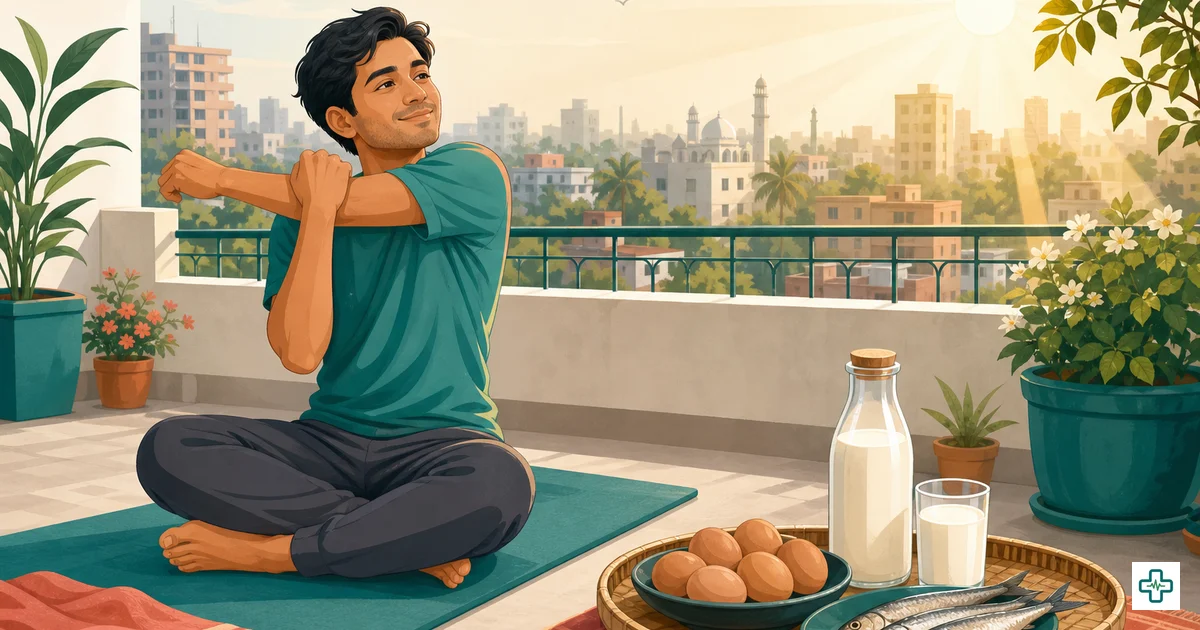
Aim for about 15–20 minutes of midday sun — roughly between 10–11am and 3pm — on bare arms, hands and face a few times each week. Sun earlier or later in the day carries much less of the UVB needed to make vitamin D. Never let your skin redden or burn.
Foods
Helpful local foods include small fish eaten with bones (such as mola), egg yolk, liver and fortified milk. Everyday staples like rice and dal contain very little vitamin D, so food alone may not be enough for someone who is already deficient.
Supplements
Supplements work well, but the dose must be set by a doctor. Very high doses bought casually over the counter can cause harmful calcium build-up, nausea and kidney damage. Buy only what your doctor prescribes from a licensed pharmacy or the medicine directory, and never copy a friend's high-dose prescription.
When should you see a doctor?
See a doctor if you have ongoing bone or muscle pain, repeated infections, or unexplained fatigue, or if a child shows bowed legs or delayed walking. These deserve proper testing rather than guesswork, and elderly people with weak bones may need extra care to prevent fractures. You can book a verified doctor on ChamberBD for the right test and a safe, personalised dose.
This article is for general health education and is not a substitute for professional medical advice.