Chamber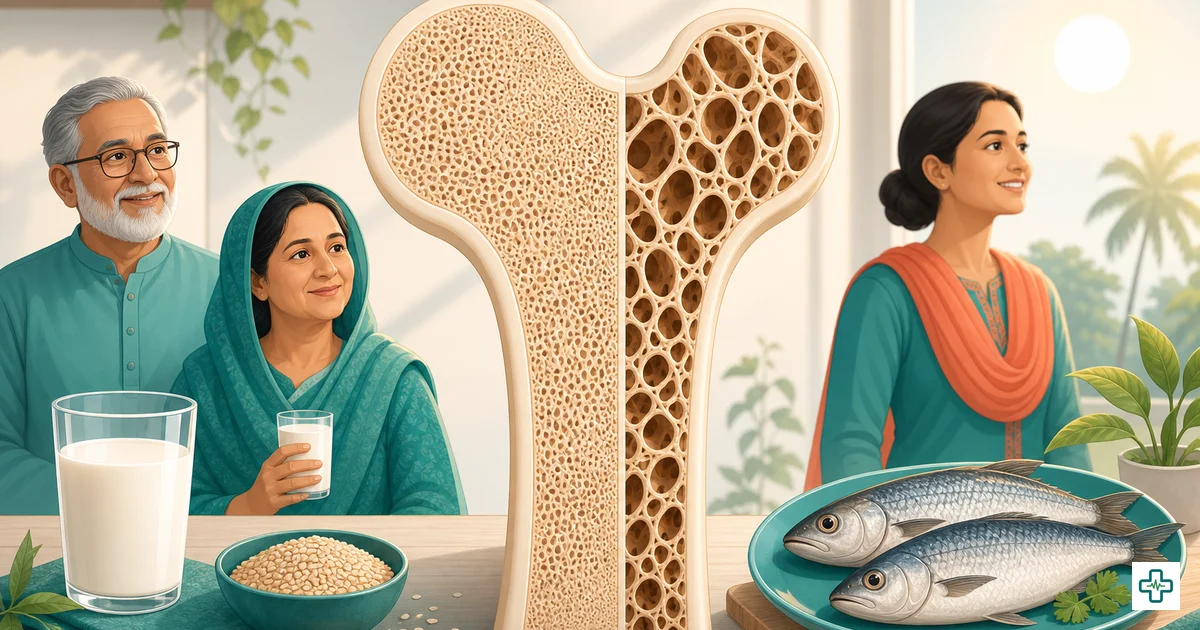
Osteoporosis: Keep Your Bones Strong After 40 — Calcium, Vitamin D and Exercise
In many Bangladeshi families, an elderly parent slips in the bathroom or trips on a doorstep and suddenly cannot walk — a broken hip or wrist from what looked like a minor fall. Behind these accidents is often osteoporosis, a condition in which bones quietly lose strength and become fragile with age. It rarely causes symptoms until a bone breaks, so understanding and preventing it after 40 is far wiser than waiting for that first fracture.
What is osteoporosis and why is it called a silent disease?
Osteoporosis means 'porous bones' — the inside of the bone thins and weakens until it can fracture from a small bump or fall. It is called silent because there is usually no pain or warning while bone is being lost over many years. Often the very first sign is a sudden fracture of the hip, wrist or spine, which is exactly why prevention matters so much.
Why are women over 40 most at risk?
Women lose bone faster than men, especially after menopause when the protective hormone oestrogen drops sharply. A smaller frame, repeated pregnancies and breastfeeding, and lower calcium intake throughout life all add to the risk. Men get osteoporosis too, but women — particularly thin, post-menopausal women — should be the most alert. Other risk factors that affect both men and women include a family history of fractures, a very thin build, low physical activity, smoking and the long-term use of certain medicines.
How much calcium do you need, and from which foods?
Most adults need roughly 1000–1200 mg of calcium a day, and it is best to get it from food rather than relying on pills. Bangladesh offers many affordable, calcium-rich options:
- Milk, yoghurt (doi) and other dairy — among the richest everyday sources.
- Small fish eaten with their bones such as mola, kachki and dried fish (shutki).
- Sesame seeds (til) and til-based foods.
- Dark leafy greens like data shak, palong and other shak.
- Pulses, beans and nuts.
Spreading these foods across the day, rather than taking one large dose at once, helps your body absorb the calcium more effectively.
Vitamin D, exercise and habits that build strong bones
Calcium alone is not enough — your body needs vitamin D to absorb it. Sensible sunlight and the steps in our guide on vitamin D deficiency help keep levels healthy. Bones also grow stronger when you use them, so do regular weight-bearing exercise (brisk walking, climbing stairs, light strength work) plus simple balance practice to prevent falls. At the same time, protect your bones by avoiding smoking, limiting strong tea, coffee and cola with meals, and never taking steroid medicines long-term without a doctor's supervision.
Fall-proof your home and know the test
Because a single fall can cause a life-changing fracture, make the home safer for older people: fit grab bars in the bathroom, improve lighting, remove loose rugs and clutter, use non-slip mats, and keep walkways clear. If you are over 50, post-menopausal, or have other risk factors, ask about a bone density (BMD/DEXA) scan — a quick, painless test that measures bone strength and guides treatment. You can discuss your personal risk with a registered doctor through our doctor directory.
When should you see a doctor?
See a doctor if you break a bone from a minor fall, lose height over time, develop a stooped upper back, or have persistent back pain that could signal a spinal fracture. Anyone over 50 with several risk factors, or already on long-term steroids, should be assessed early. Catching bone loss before a major fracture lets you protect your independence for years to come.
This article is for general health education and is not a substitute for professional medical advice.