Chamber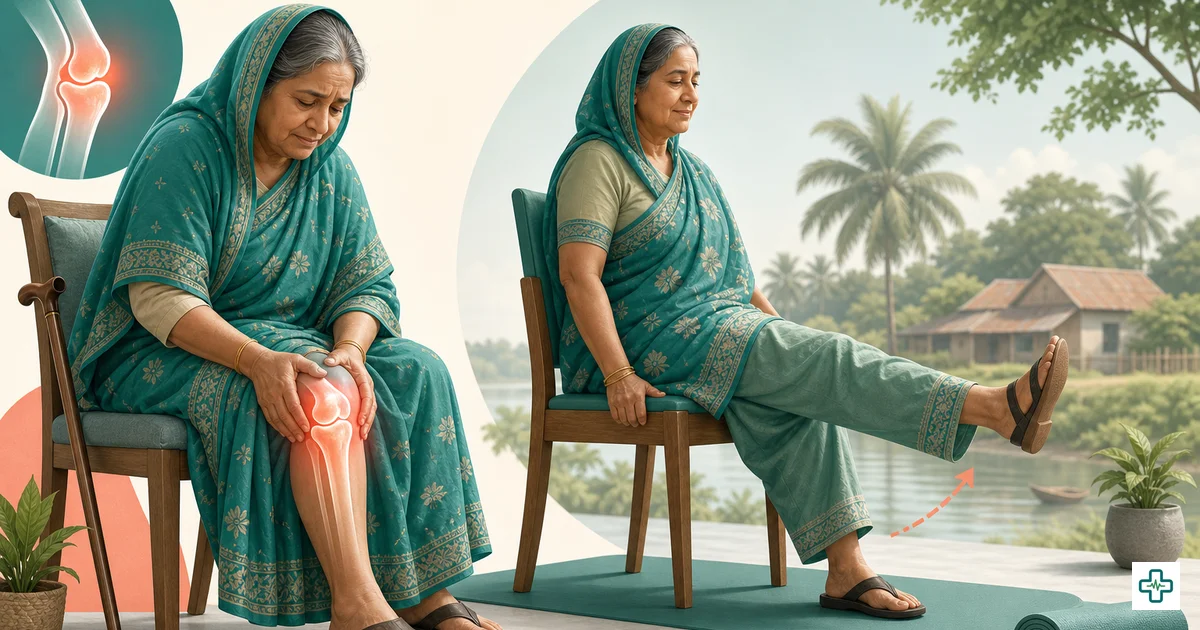
Knee Pain and Arthritis: Relief, Exercises and Care for Older Adults
Knee pain is one of the most common complaints among older adults in Bangladesh, and for many it slowly turns simple daily tasks — climbing stairs, sitting on the floor, or praying — into painful struggles. Most of this pain comes from osteoarthritis, the gradual wearing of the cushioning cartilage in the knee. The good news is that with the right care, most people can reduce pain, stay active and protect their independence for years. Understanding what helps and what harms the knees makes a real difference at any age.
What is osteoarthritis of the knee?
Osteoarthritis is the most common type of arthritis and happens when the smooth cartilage that cushions the knee joint gradually wears away. Without this cushion, the bones rub together, causing pain, stiffness, swelling and a grinding sensation. It is especially common in older Bangladeshis, in women, and in people who are overweight. While it cannot be fully reversed, its progress can be slowed and its symptoms well managed.
What makes knee arthritis worse?
Everyday habits common in Bangladeshi homes can put heavy strain on worn knees. Using squatting-style toilets, sitting cross-legged on the floor for long periods, and repeatedly climbing stairs all load the joint deeply. Being overweight is one of the biggest factors, because every extra kilogram multiplies the pressure on the knees with each step. Reducing these strains often brings noticeable relief.
What relief actually works?
The most effective treatments are simple and do not always need medicine. Losing even a few kilograms dramatically reduces knee load, and strengthening the thigh muscles supports and protects the joint.
- Straight-leg raises: sit or lie down, keep one leg straight and lift it slowly, hold for a few seconds, then lower. Repeat for both legs.
- Seated knee extensions: sit on a chair and slowly straighten one knee until the leg is level, hold briefly, then relax.
- Gentle wall-supported squats: with your back against a wall, bend the knees only slightly and rise again, avoiding deep bending.
A warm compress eases stiffness, while a cold pack helps a swollen, painful knee. A walking stick held in the opposite hand and switching to a chair-height commode can also reduce strain.
Are painkillers safe for knee pain?
Painkillers can help, but they are not as harmless as many people assume. Common anti-inflammatory tablets (NSAIDs) bought without advice can irritate the stomach and harm the kidneys, especially in older adults or those with existing problems. This is why long-term use should be supervised, as explained in our articles on early kidney disease and gastric acidity. Always tell your doctor about any painkillers you take regularly.
Do you need a knee replacement?
Most people with knee arthritis never need surgery. Knee replacement is considered only for severe, advanced arthritis when pain is constant, mobility is badly limited, and other treatments have failed. For the great majority, regular physiotherapy is far more valuable — a trained physiotherapist can teach safe exercises, improve movement and reduce pain without an operation. Surgery is a last step, not the first. When surgery is truly needed, modern knee replacement is safe and can restore mobility well.
When should you see a doctor?
See a doctor if knee pain lasts more than a few weeks, keeps you awake at night, or limits your daily activities. Seek prompt care if the knee is hot, red and very swollen, if you have fever with joint pain, if the knee suddenly locks or gives way, or if pain follows a fall or injury, as these may need urgent attention. You can find orthopaedic specialists and physiotherapists through our list of registered doctors for a proper assessment.
This article is for general health education and is not a substitute for professional medical advice.