Heat Stroke and Heat Exhaustion: Summer Safety Rules for Bangladesh
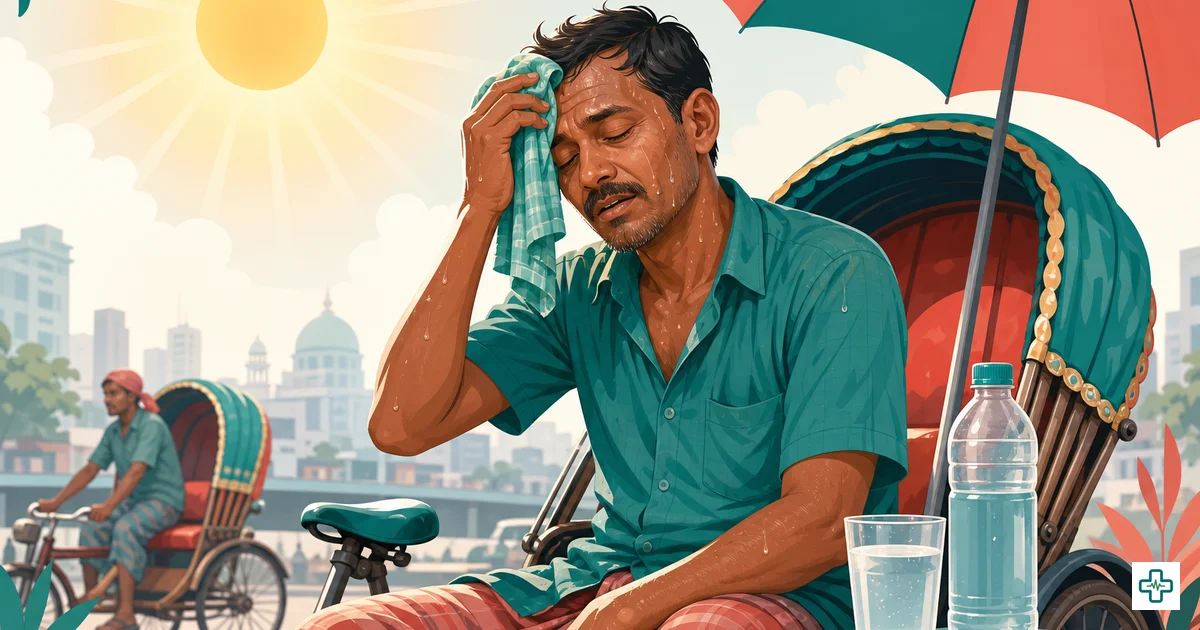
Every year, April and May bring brutal heat waves to Bangladesh, with 'feels-like' temperatures crossing 40°C in Dhaka's concrete and in the open fields alike. Newspapers report deaths of rickshaw pullers, farmers and traffic police — most of them preventable. Knowing the difference between ordinary heat exhaustion and a true heat stroke, and acting fast, can save a life in your own family.
What is the difference between heat exhaustion and heat stroke?
Heat exhaustion is the body's warning stage: heavy sweating, weakness, dizziness, headache, nausea, muscle cramps and cool clammy skin — rest, shade and fluids usually reverse it. Heat stroke is a medical emergency: the body's cooling system fails, temperature rises above about 40°C, the skin often becomes hot and dry, and the person becomes confused, behaves strangely or collapses unconscious. Untreated heat stroke damages the brain, kidneys and heart within hours and can kill — it needs hospital treatment immediately.
Who is most at risk in Bangladesh?
Those who work outdoors in the sun — rickshaw pullers, farmers, construction and garment workers, hawkers and traffic police — face the highest risk. Children, the elderly, pregnant women and people with diabetes, heart, kidney or blood pressure problems tolerate heat poorly even indoors. Risk multiplies during power cuts in tin-roofed or poorly ventilated rooms, and inside parked vehicles, which heat up lethally within minutes.
Prevention: simple rules for the hot months
- Drink on a schedule, not just on thirst — roughly a glass of water every hour in hot conditions; by the time you feel very thirsty you are already behind.
- Check your urine colour: pale yellow means you are drinking enough; dark yellow means drink more. On heavy-sweating days, ORS or slightly salted water or lebur shorbot can help — but people with kidney, heart or blood pressure disease should ask their doctor first (see our guide on protecting your kidneys).
- Time your work: do heavy outdoor tasks before 11am or after 4pm, and take shaded breaks every hour in between.
- Dress for the heat: loose, light-coloured cotton clothes, and a cap or umbrella outdoors.
- Never leave a child — or anyone — in a parked car, even for two minutes with the windows cracked open.
- Avoid alcohol and limit strong tea and coffee in peak heat; eat lighter meals and more water-rich fruits like watermelon, cucumber and green coconut.
First aid for heat stroke: every minute counts
If someone in the heat is burning hot, confused or collapsing, treat it as heat stroke and act immediately:
- Move them to shade or a cool room; call for help and arrange transport to hospital at once.
- Remove excess clothing and cool them aggressively: pour or sponge water over the body, place wet cloths on the neck, armpits and groin, and fan continuously.
- If they are fully conscious, give sips of water or ORS. Do not give anything by mouth if they are confused, vomiting or unconscious — it can choke them.
- Do not rely on paracetamol or aspirin — fever medicines do not bring down heat-stroke temperature and may cause harm.
- Keep cooling on the way to hospital — cool first, transport fast.
Could your regular medicines make heat worse?
Yes — several common medicines reduce sweating, drain fluid from the body or blunt thirst, making heat illness more likely. Examples include some blood pressure tablets and diuretics ('water tablets'), and certain allergy (antihistamine), psychiatric and Parkinson's medicines. Never stop a prescribed medicine on your own; instead ask your doctor how to adjust fluids and activity in summer, and keep track of what you take using a reliable medicine directory. Patients managing blood pressure should also read our blood pressure control guide.
When should you see a doctor?
Go to the nearest hospital emergency immediately if a person in the heat has a very high temperature with hot skin, confusion, slurred speech, fits or unconsciousness — do not wait to see whether it passes. Also seek medical help the same day if any of the following occur:
- Weakness, dizziness, vomiting or cramps do not improve within 30-60 minutes of rest, shade and fluids
- Urine becomes very dark or scanty, or stops — a sign of dehydration harming the kidneys
- A child, elderly person or pregnant woman shows unusual drowsiness, dry mouth or sunken eyes
- Chest pain or breathlessness appears in the heat
For follow-up after any heat illness, or summer advice for chronic patients, you can find a registered doctor near you on ChamberBD.
This article is for general health education and is not a substitute for professional medical advice.