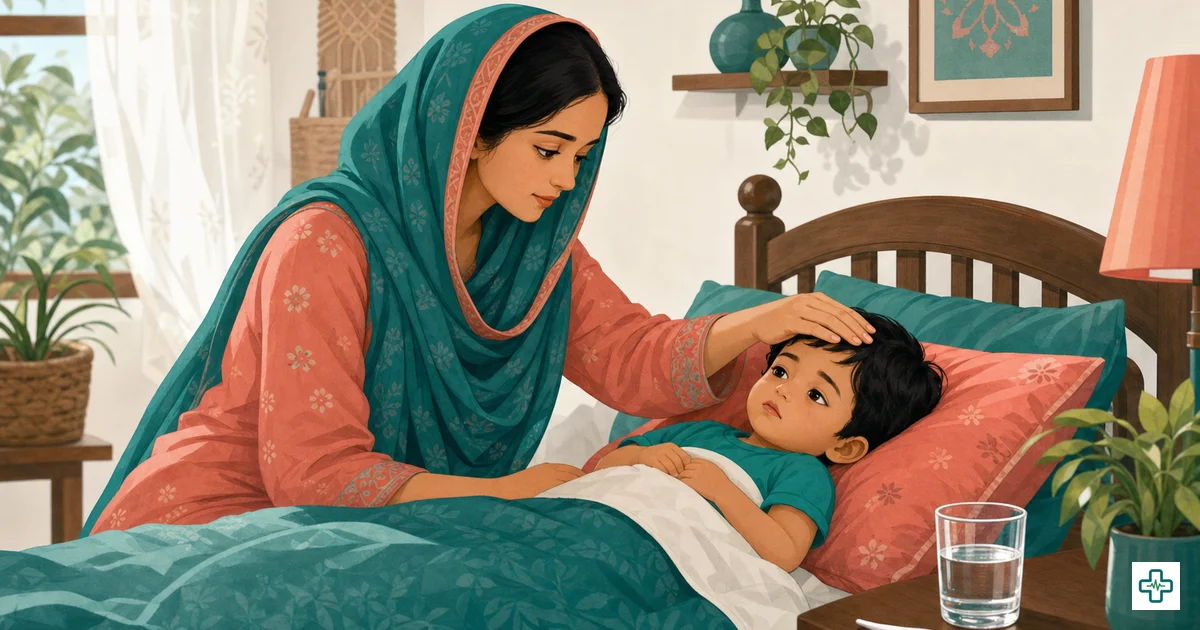
Child Fever: Home Care, Safe Medicine Use and Danger Signs
Few things worry parents more than a child burning with fever in the middle of the night. In Bangladesh, where viral fevers spike during the monsoon and dengue season, it happens to almost every family — and the first reaction is often panic, or a rushed trip to the nearest pharmacy. Here is the reassuring truth: fever is not a disease itself. It is a symptom, a sign that your child's immune system is fighting an infection, most often a harmless viral one. What really matters is good home care and knowing the danger signs that need a doctor.
What counts as a fever in a child?
A child has a fever when the body temperature is 38°C (100.4°F) or higher, measured with a thermometer. Feeling the forehead with your hand is not reliable, so always use a digital thermometer — under the armpit is the safest method for babies and young children. Remember that how your child looks and behaves often matters more than the exact number on the display.
Keep the thermometer snugly in the dry armpit until it beeps, and check the temperature every few hours rather than constantly. Write the readings down — this simple record helps your doctor enormously later.
Home care that actually helps
Most childhood fevers settle within two to three days with simple care at home:
- Plenty of fluids: breast milk for babies; water, dab (green coconut water), soup or soft fruit for older children to prevent dehydration.
- Light clothing: dress your child in thin cotton clothes and keep the room airy — do not wrap them in heavy kantha or blankets to 'sweat the fever out'.
- Rest and comfort: let the child sleep or play quietly as they wish; strict bed rest is not necessary.
- Lukewarm sponging: if the fever is high, gently sponge the body with lukewarm (not cold) water.
Never use cold water, ice or alcohol rubs to bring a fever down. Cold causes shivering, which can actually push the core temperature up, and alcohol can be absorbed through a child's thin skin and cause harm.
Which fever medicines are safe for children?
Paracetamol is the standard first-choice medicine for fever and discomfort in children. The correct dose depends on your child's weight, not just age, so give it exactly as a doctor advises and never exceed the recommended frequency. Never give aspirin to a child or teenager with fever, as it is linked to a rare but serious condition called Reye's syndrome.
Equally important: do not buy antibiotics over the counter for a fever. Most childhood fevers are viral, and antibiotics do nothing against viruses — they only add side effects and fuel the growing national problem of antibiotic resistance. Antibiotics should be taken only when a registered doctor prescribes them.
What should you do if your child has a febrile seizure?
Stay calm — febrile seizures look terrifying, but most stop on their own within a few minutes and do not cause lasting harm. Lay your child on their side on a flat, safe surface, loosen tight clothing, and never put anything (water, medicine or a spoon) into the mouth during the fit. Note the time: if the seizure lasts longer than five minutes, take the child to the nearest hospital immediately. Every child should still be seen by a doctor after a first seizure so the cause can be found.
When should you see a doctor?
Most fevers can be managed at home, but some warning signs mean your child needs medical attention without delay. Trust your instincts — you know your child best, and it is always better to check early than late.
- Any fever in a baby under 3 months of age
- Fast breathing, difficulty breathing, or the chest pulling in with each breath
- Unusual drowsiness, limpness, or difficulty waking the child
- A rash anywhere on the body along with fever
- Signs of dehydration: dry mouth, no tears, sunken eyes, or noticeably fewer wet nappies
- Fever lasting more than 3 days, or returning after it had settled
- Repeated vomiting, severe headache or a stiff neck
- During dengue season: severe body ache, abdominal pain or any bleeding — read our guide to dengue warning signs and get an NS1 test done early.
If any of these appear, do not rely on pharmacy advice — consult a paediatrician. You can quickly book a verified child specialist on ChamberBD near your area.
This article is for general health education and is not a substitute for professional medical advice.