Chamber
Anaemia in Pregnancy: Symptoms and Iron Care
Anaemia, often called "low blood" or rokto-shulpota, is one of the most common health problems among pregnant women in Bangladesh. During pregnancy the body needs much more iron to make extra blood for the mother and the growing baby. When iron runs short, the blood carries less oxygen, leaving the mother tired and pale and putting the baby at risk. The encouraging news is that pregnancy anaemia is usually easy to prevent and treat with the right food and supplements.
What is anaemia and why is it common in pregnancy?
Anaemia means there are too few healthy red blood cells or too little haemoglobin, the part of blood that carries oxygen. The most frequent cause in pregnancy is a shortage of iron. Demand rises sharply because the mother's blood volume increases and the baby and placenta draw on her iron stores. Many women in Bangladesh already start pregnancy with low iron due to diet, frequent pregnancies, or worm infections, which makes the problem more likely.
What are the symptoms and warning signs?
Mild anaemia may cause no clear symptoms, which is why testing matters. As it worsens, common signs include:
- Unusual tiredness and weakness, even after rest.
- Pale skin, lips, tongue, or inner eyelids.
- Shortness of breath and a fast or pounding heartbeat.
- Dizziness, headaches, or feeling faint.
- Brittle nails or unusual cravings for non-food items like clay or ice.
Why does it matter for mother and baby?
Severe anaemia is not just tiredness. It raises the risk of premature birth, low birth weight, and heavier bleeding during and after delivery, which can be dangerous for the mother. A baby born to a very anaemic mother may also have low iron stores. This is why every pregnant woman should have her blood checked during antenatal visits and treat anaemia early rather than ignoring the fatigue.
How can you get enough iron through food and supplements?
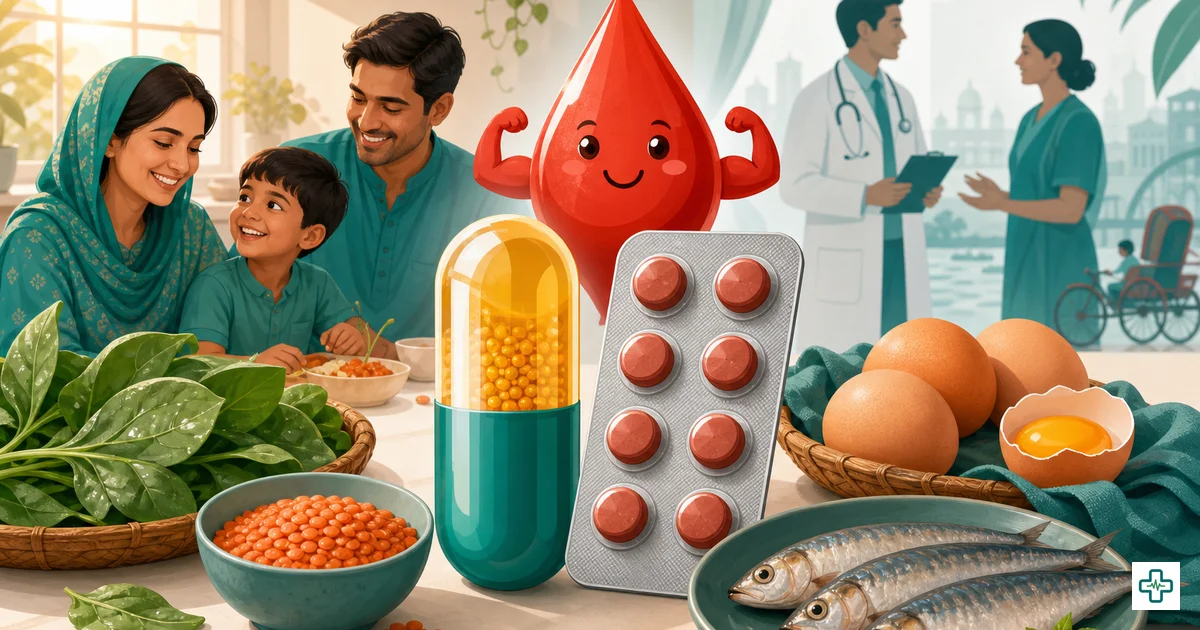
Most doctors in Bangladesh routinely advise iron and folic acid tablets during pregnancy, and these should be taken exactly as prescribed; never adjust the dose yourself. Food also plays a vital role.
- Eat iron-rich foods such as liver, lean meat, small fish, eggs, beans, lentils, and dark green leafy vegetables like spinach and red amaranth (lal shak).
- Add a source of vitamin C, like lemon, guava, or amla, with meals to help iron absorb better.
- Avoid drinking tea or coffee right after meals, as they reduce iron absorption.
- Take iron tablets with water or juice, not with milk, for best effect.
You can look up iron and folic acid preparations in the medicine directory, but always follow your own doctor's instructions on which product and dose to use.
When should you see a doctor?
Attend every scheduled antenatal checkup and get the advised blood tests. See a doctor promptly if you feel very weak, breathless while resting, dizzy, or notice a very fast heartbeat, as these may mean the anaemia is severe and needs stronger treatment. Seek urgent care for fainting, chest pain, or any heavy bleeding. You can find an obstetrician or gynaecologist through our see a relevant specialist directory and read more health tips on safe, healthy pregnancy.
Frequently Asked Questions
Why do iron tablets sometimes cause constipation or dark stool?
Iron supplements commonly cause black stool, which is harmless, and can lead to constipation or mild stomach upset. Drinking more water, eating fibre, and taking the tablet with food can help. If it is very troubling, ask your doctor rather than stopping on your own.
Can I treat pregnancy anaemia with diet alone?
Diet is very important, but during pregnancy the body's iron need is so high that food alone is often not enough. That is why doctors usually advise iron and folic acid tablets as well. Follow your doctor's prescription, and you can keep track of it with the free prescription tool.
Which foods are best for boosting iron in Bangladesh?
Affordable, local choices include lentils (dal), beans, eggs, small fish, liver, and dark green leafy vegetables like red amaranth (lal shak) and spinach. Adding lemon or guava helps your body absorb the iron better.
Does tea reduce iron absorption?
Yes. Tea and coffee taken right after meals can lower how much iron your body absorbs from food and tablets. It is better to drink them between meals rather than immediately after eating.
This article is for general health education and is not a substitute for professional medical advice.