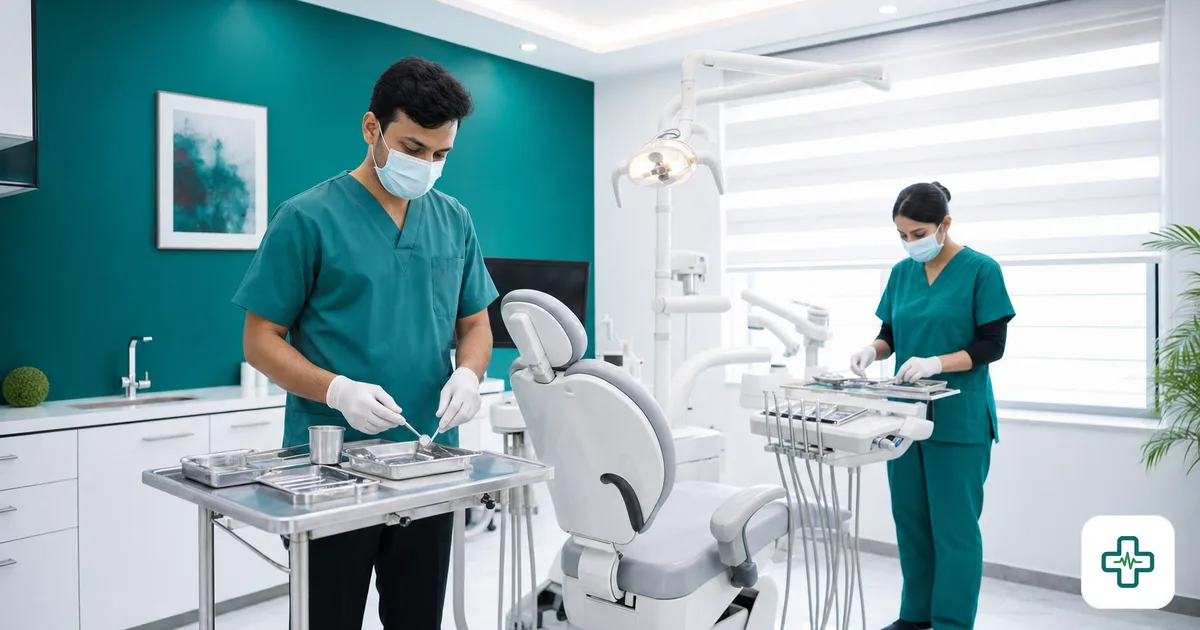
Dental chamber management in Bangladesh: from first call to aftercare
A dental chamber does not run like a physician's chamber, and trying to run it that way is why so many dental clinics feel chaotic by mid-afternoon. Dentistry is built on procedures, not consultations — a root canal is not a "see the next patient in ten minutes" event. The moment you accept that your real inventory is chair-minutes, almost every management decision falls into place.
This guide walks through dental chamber management end to end, in the order patients actually move through your clinic: from the first phone call and a properly time-slotted appointment, through multi-visit treatment plans and staged payments, to the sterilization patients can see and the aftercare call that catches a complication early.
Why is dental scheduling fundamentally different?
In a medicine chamber, most encounters take a similar amount of time, so a simple serial works. Dentistry has no such uniformity. A scaling appointment, an extraction, and a root canal sitting occupy wildly different blocks of chair time, and a single procedure that runs long pushes every later patient back. If you book dental patients the way a GP books — flat slots, walk-ins absorbed as they arrive — your waiting room overflows and your day collapses.
The fix is to schedule by procedure, not by headcount. Each appointment should be booked against the realistic chair time that specific treatment needs, with the chair as your unit of capacity. Once you think in chair-minutes, overbooking stops being a temptation, because you can see plainly that the day is already full.
Time-slotted appointments by procedure
The foundation of a calm dental chamber is matching each appointment to the chair time its procedure genuinely requires. The table below gives typical chair-time and sitting-count ranges for common procedures. Treat every figure as a general range — your own times depend on case complexity, your speed, and your setup — but the relative differences are what matter for scheduling.
| Procedure | Typical chair time per sitting | Typical number of sittings |
|---|---|---|
| Consultation / check-up | 10–15 min | 1 |
| Scaling / cleaning | 30 min | 1 (sometimes 2) |
| Simple extraction | 20 min | 1 |
| Surgical / wisdom-tooth extraction | 30–60 min | 1 |
| Filling / restoration | 30–45 min | 1 |
| Root canal treatment (RCT) | 45–60 min | 2–3 |
| Crown / bridge | 30–45 min | 2 (prep + fit) |
| Orthodontic adjustment | 20–30 min | Monthly, over 1–2+ years |
Two scheduling habits follow from this. Cluster long procedures so a 60-minute RCT does not sit awkwardly between two quick check-ups. And keep a short buffer between appointments — a few minutes to clean the chair, change instruments, and reset — so one procedure running long does not cascade through the whole session. If serial and slot design is your weak point, the broader mechanics translate well from the guide on patient serial management for Bangladeshi chambers.
Tracking multi-visit treatment plans
Much of dentistry is not finished in one visit. A root canal runs across two or three sittings; a crown needs preparation then fitting; orthodontic treatment is monthly adjustments over a year or more. This creates a management problem a physician rarely faces: at any time, a chunk of your patients are mid-treatment, and you need to know exactly where each one is.
- Record the treatment plan, not just the visit. For every patient under multi-visit care, note the full plan, what was done at each sitting, and what comes next. A patient who returns after three weeks should not depend on your memory of where you stopped.
- Track who is mid-treatment and who is overdue. A patient who started an RCT and never came back for the second sitting is a clinical risk, not just lost revenue — an incomplete root canal can flare up. You need a way to see, at a glance, who has an unfinished treatment.
- Schedule the next sitting before the patient leaves. The strongest way to keep a multi-visit plan on track is to book the next appointment at the end of the current one, while the patient is still in the chair.
Quoting and staged payments for big treatments
Dental treatments can be expensive, and money is where patient trust most often breaks down. A patient who is surprised by a bill feels misled, even when the work was good. Transparency at the start prevents almost all of these disputes.
- Give a written estimate before major work. For anything beyond a routine visit — RCT plus crown, multiple fillings, orthodontics — put the plan and the cost in writing. A clear estimate the patient has seen and agreed to is your best protection against a payment dispute later.
- Offer staged payments for big treatments. Splitting the cost across sittings is fairer to the patient and improves your chances of being paid in full. Many patients will commit to a larger treatment plan only if the payment is staged rather than demanded upfront.
- Track dues per patient. When payment is staged, you must know exactly what each patient has paid and what remains. A vague memory of "they still owe something" is how clinics quietly lose money. Take bKash or Nagad alongside cash, both for patient convenience and for a clean payment record.
Setting the fees themselves is a separate discipline — positioning against local clinics, deciding follow-up policy, revising over time — and the framework in the guide on how to set doctor fees in Bangladesh applies directly to dental pricing.
Chair-time economics: your real unit of inventory
Here is the mental shift that separates a profitable dental chamber from a busy-but-broke one: your inventory is not patients, it is chair-minutes. You have a fixed number of productive chair-minutes in a day, and every one that sits empty — a no-show, a gap from poor scheduling, a procedure that finished early with nothing booked after — is lost forever.
Thinking this way changes your decisions:
- A no-show is not just a missed patient; it is a block of paid-for chair time earning nothing. This is why dental clinics benefit enormously from appointment reminders.
- Overbooking is not "fitting more in" — it is borrowing chair-minutes you do not have, which you repay with a backed-up waiting room and stressed staff.
- The right question for each slot is not "can I squeeze this in" but "does this fit the chair time honestly available."
Sterilization patients can see: trust as a differentiator
Dental patients are unusually aware of hygiene, and rightly so. Visible, obvious sterilization is one of the strongest trust signals a dental chamber can send — and a quiet differentiator from clinics that are careless about it.
- Make sterilization visible. Opening a sealed, sterilised instrument pouch in front of the patient does more for trust than any amount of reassurance. Patients notice, and they talk.
- Keep the autoclave and protocols genuinely sound. Visible sterilization only builds trust if it is real. Proper instrument sterilisation, fresh gloves, and clean surfaces between patients are basic standards, not extras.
- Train staff to maintain it consistently. Hygiene is only as good as the least careful moment. Well-trained staff who follow the protocol every single time are what make it reliable, which is part of the wider point made in the guide on chamber staff training and patient experience.
Aftercare follow-up after extractions and RCT
The visit is not the end of dental care. After an extraction or a root canal, a short follow-up — a call or an SMS the next day — does two things at once. Clinically, it catches complications early: a dry socket, unusual pain, or bleeding the patient might otherwise ignore until it worsens. And as a care signal, it tells the patient you take their recovery seriously, which is exactly what turns a one-time patient into a regular one who refers others.
A simple aftercare routine costs almost nothing and pays back in both safety and loyalty. The broader system for keeping patients engaged over time — cadence, channels, and wording of reminders — is laid out in the same principles that govern any good follow-up engine; for dentistry, the key is simply to make the post-procedure check a fixed habit, not an afterthought.
Dental anxiety: managing the nervous patient
A large share of dental patients are genuinely frightened, and how you handle that fear affects whether they complete treatment and come back. The goal is to reduce anxiety, never to shame it.
- Use tell-show-do. Explain what you are about to do, show the patient (gently, without alarming them), then do it. The predictability itself calms most patients.
- Never shame a nervous patient. Dismissing fear as childish guarantees they delay the next visit or abandon treatment. Acknowledge it as normal and move at a pace they can tolerate.
- Manage the waiting experience. A long, anxious wait makes dental fear worse. Accurate scheduling and short waits are themselves a form of anxiety management.
Inventory and consumables basics
Dentistry runs on consumables — anaesthetic, restorative materials, files, sutures, gloves, sterilisation pouches — and running out mid-procedure is both unprofessional and unsafe. You do not need elaborate software for this, but you do need a simple, consistent system: track what you use, set reorder points for the essentials, and check stock on a fixed schedule rather than discovering a shortage with a patient in the chair.
How a chamber system fits a dental practice
The threads above — slot-based booking by procedure, treatment notes across multiple sittings, dues tracked per patient, aftercare reminders — are exactly what a chamber-management platform is built to hold together. A tool like ChamberBD lets you book time-slotted appointments, keep treatment notes against each patient so you always know where a multi-visit plan stands, and track payments and dues per patient so staged payments never slip. ChamberBD's page for dentists is built around exactly this kind of procedure-driven, multi-visit practice, and the pricing page shows what it costs to run a single chamber on it.
Frequently Asked Questions
How long should I book for a root canal appointment?
Typically 45–60 minutes per sitting, and usually two to three sittings to complete a root canal, depending on the tooth and case. Book the full block rather than squeezing it between quick visits, and schedule the next sitting before the patient leaves so the treatment is not left incomplete.
Why is overbooking such a problem in a dental chamber?
Because your real capacity is chair-minutes, not patient numbers. Procedures take very different lengths, and one running long pushes everyone back. Overbooking borrows chair time you do not have, producing an overflowing waiting room, rushed work, and stressed staff. Booking honestly against available chair time keeps the day calm.
Should I give patients a written estimate for big treatments?
Yes. For anything beyond a routine visit, put the treatment plan and cost in writing before starting. A clear, agreed estimate prevents the payment disputes that arise when a patient is surprised by a bill. It also makes staged payments straightforward, since both sides know the total and what remains.
Do I really need to follow up after an extraction or RCT?
It is well worth it. A quick call or SMS the next day catches complications like a dry socket or unusual pain early, before they worsen. It also signals that you care about the patient's recovery, which builds loyalty and referrals. A fixed aftercare habit costs little and pays back in both safety and reputation.
How do I handle a patient who is very afraid of the dentist?
Use tell-show-do: explain, show gently, then proceed, so the patient knows what to expect. Never shame the fear as childish, because that drives patients away from treatment. Keep waits short, since a long anxious wait worsens dental fear. Moving at a tolerable pace helps nervous patients complete their treatment.
Run your dental chamber on chair-minutes, keep every multi-visit plan and payment visible, and never let a post-procedure follow-up slip, and the clinic stays calm even on a full day. When you are ready to manage slot-based appointments, treatment notes and patient dues in one place, set up your free ChamberBD account and bring order to your dental practice from the first call to aftercare.