Chamber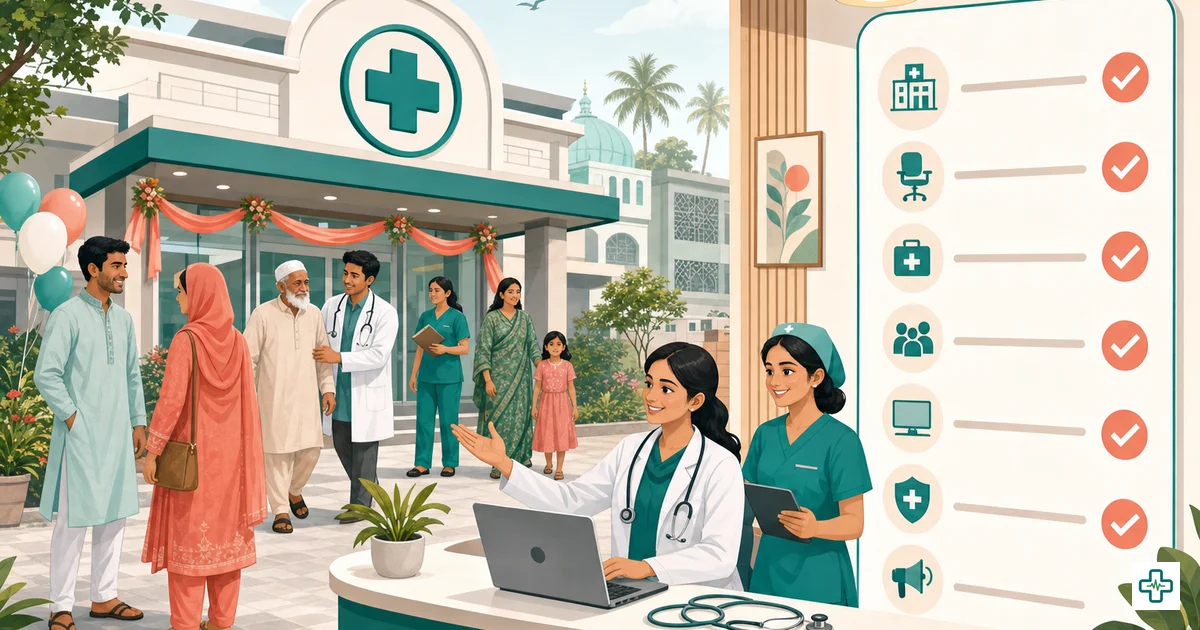
How to start / open a clinic in Bangladesh (2026): step-by-step
Opening a clinic in Bangladesh is a different undertaking from setting up a solo chamber. A chamber is one doctor in one room; a clinic is a business — multiple doctors, salaried staff, fixed monthly costs, regulatory obligations, and many revenue lines to keep clean. Done right, it can earn far more than any single doctor's hours. Done carelessly, the rent and salaries quietly eat your margin month after month. This is a practical, honest, step-by-step guide to starting a clinic in Bangladesh in 2026 — from the first plan on paper to the day patients walk in.
One caution up front, and we will repeat it because it matters: the exact licences, fees, and rules for clinics in Bangladesh change and vary by district. Treat everything here as a planning checklist, not legal advice. Before you sign anything or open your doors, verify the current requirements with the Directorate General of Health Services (DGHS), your City Corporation or local authority, and ideally a lawyer or consultant who handles clinic registrations. We will flag where this matters.
Before anything else: is a clinic the right move?
A clinic only works once patient demand justifies the overhead. If you are a single doctor still building a patient base, opening a multi-doctor facility too early is the classic, expensive mistake — fixed costs run whether patients come or not. If you are not sure whether to start as a chamber and grow, or open a clinic now, read our honest comparison of clinic vs chamber for a doctor in Bangladesh first. For a sense of what a smaller setup costs, our chamber setup cost guide is a useful baseline before you scale up.
Open a clinic when several of these are true: you consistently turn patients away; you can bring in visiting doctors whose patients add shared revenue; you are ready to manage staff (or hire a manager); you can cover rent and salaries in a slow month; and a lab or procedure room could add a second income line. If most of those are still "not yet," start smaller and let real demand pull you into a clinic.
The clinic setup checklist at a glance
Here is the whole journey as a sequence. Treat it as your master checklist — each step is expanded below. Timelines vary, and the licensing steps in particular depend on your local authorities, so confirm durations locally rather than assuming.
| # | Step | What it involves | Why it matters |
|---|---|---|---|
| 1 | Plan & business model | Specialties, scale, target patients, budget, revenue lines | Everything downstream depends on this |
| 2 | Choose location & space | Footfall, access, parking, floor area, expansion room | Hard to fix later; drives rent and demand |
| 3 | Licences & registration | Trade licence, DGHS clinic/hospital licence, TIN, others — verify with authorities | Operating without them is a serious risk |
| 4 | Fit-out & equipment | Reception, chambers, beds, basic equipment, signage, IT | Defines patient experience and capacity |
| 5 | Hire doctors & staff | Visiting consultants, reception, nurses, support, manager | Your service quality is your people |
| 6 | Set up systems | Appointments, token queue, billing, prescriptions, records | Keeps money and patients from leaking |
| 7 | Soft launch & market | Trial week, signage, Facebook, local referrals, Google profile | Fills the chambers you have built |
Step 1 — Plan and business model
Before you look at any space, decide what kind of clinic you are building. A clear plan saves you from over-spending and from a half-finished facility that pleases no one.
- Specialties and scope. A general multi-specialty clinic, a single-specialty centre (e.g. a women's & child clinic), a clinic with a diagnostic lab, or a small clinic with day-care beds — each implies very different space, equipment, licensing, and staff.
- Scale. Two consulting chambers or eight? Outpatient only, or beds? Be honest about the patient volume you can realistically fill in year one.
- Revenue lines. Consultation fees, a share of visiting doctors' fees via doctor revenue-share, diagnostics, minor procedures, pharmacy. More lines mean more income — and more to manage and license.
- Budget and break-even. Estimate one-time setup (deposit, fit-out, equipment, licences) and monthly running cost (rent, salaries, utilities, software, supplies). Then estimate how many paying patients per day you need just to break even. If that number feels unrealistic for your location, rework the plan now, not after you sign a lease.
Step 2 — Choose location and space
Location is the decision you can least afford to get wrong, because it is the hardest to undo. A clinic lives on footfall and accessibility.
- Catchment and competition. Is there enough population nearby that needs your specialties? What clinics already serve them, and where is the gap?
- Access and parking. Patients (often elderly or unwell) need easy access — ground floor or a lift, a main road, transport links, and somewhere to park. A great clinic on a hard-to-reach fourth floor will struggle.
- Floor area and layout. Plan for a reception and waiting area, multiple consulting chambers, a sample-collection or dressing room, washrooms, and storage. Crucially, leave room to add a chamber or two as you grow.
- Lease terms. Clinics require fit-out investment, so negotiate a lease long enough to recover it, with clear terms on renewal and any changes you make to the premises.
Some authorities also have requirements about the suitability of the premises for a healthcare facility (space per bed, sanitation, fire safety, and so on). This is exactly the kind of point to confirm with DGHS and your local authority before committing — it can affect which space you can even use.
Step 3 — Licences and registration (verify everything locally)
This is the part where careful, current information matters most, and where general guides on the internet are most likely to be out of date. The categories below are the kinds of approvals a private clinic in Bangladesh commonly needs — but the exact list, the fees, the documents, and the renewal cycle must be confirmed with the authorities for your district and your type of facility.
- Trade licence. Issued by your City Corporation or local government body to operate a business at that address. Typically required for any commercial establishment, including a clinic.
- DGHS private clinic / hospital licence. A private clinic or hospital in Bangladesh generally needs a licence from the Directorate General of Health Services (DGHS), under the rules governing private clinics and diagnostic centres. There are usually conditions about minimum space, qualified staff, equipment, and waste management. Requirements, forms, and the application process change — check the current DGHS rules directly.
- TIN and tax/VAT registration. A taxpayer identification number, and VAT registration where applicable, for running the business properly.
- Diagnostic / lab approval. If you run a diagnostic lab, additional approval and standards typically apply on top of the clinic licence.
- Other clearances. Depending on location and scope, you may need environmental, fire-safety, narcotics (for certain medicines), or radiation (for X-ray/imaging) clearances. Again — verify which apply to you.
We are deliberately not quoting specific fees or exact legal clauses here, because they vary and change, and acting on a stale number can cost you. The safe path is simple: book a meeting with the relevant DGHS office and your City Corporation, list out your facility, and get the current, written requirements before you spend on fit-out. Many clinic owners also engage a consultant or lawyer who does this routinely. Keep every approval document organised and track renewal dates — lapses can shut you down.
Step 4 — Fit-out and equipment
Once the space and the licensing path are clear, build out the facility. The goal is a clean, calm, professional environment that works for both patients and the doctors you want to attract.
- Reception and waiting area. A proper front desk, comfortable seating, clear signage, drinking water, clean washrooms. This is the first impression and it sets patient trust.
- Consulting chambers. Each doctor needs a private, well-lit room with a desk, examination couch, and basic instruments. Soundproofing and privacy matter for patient confidence.
- Clinical basics. Examination beds, a dressing/injection area, sterilisation, a small store for consumables, and a safe space for any medicines. If you have beds or procedures, the standards rise — and so do the regulatory requirements.
- IT and connectivity. Reliable internet, computers or tablets at reception and in chambers, a printer for prescriptions and receipts, and a backup power plan. Modern clinics run on software, so this is not optional.
- Branding and signage. A clear name board, directions inside, and a consistent look. It costs little and pays back in credibility and walk-ins.
Step 5 — Hire doctors and staff
Your clinic is only as good as its people, and a multi-doctor clinic has two hiring challenges at once: the doctors who bring patients, and the staff who keep the place running.
- Visiting and resident doctors. Most clinics in Bangladesh run on visiting consultants who keep fixed sessions and share fees with the clinic. Choose doctors whose specialties fit your catchment and who already have, or can build, patient demand. Agree the revenue-share and schedule clearly and in writing.
- Reception and front desk. The single most important hire for day-to-day experience — they manage serials, payments, and the waiting room across many doctors at once. Train them well; the front desk is your patient experience.
- Nurses and support staff. Depending on scope, you may need nurses, a dressing assistant, cleaners, and security. For beds or procedures, qualified nursing is often a licensing condition.
- Manager. Beyond a certain size, you need someone running operations — staff, schedules, money, supplies — so you are not doing it between patients. A clinic run "like a bigger chamber," without real management, leaks money and trust within months.
Set up attendance, salary, and roles properly from day one. As staff numbers grow, clinic staff payroll done by hand becomes error-prone and slow — this is one of the first things worth systematising.
Step 6 — Set up the patient, queue and billing systems
This is where a clinic either runs smoothly or descends into chaos, and it is the part many owners underestimate. A solo chamber can survive on a paper register. A clinic with several doctors, a shared reception, and money changing hands all day cannot. You need systems for:
- Appointments and a token queue. Across multiple doctors and sessions, a shared schedule and a fair token/serial system at reception prevent crowding, arguments, and long waits. This directly shapes whether patients come back.
- Shared patient records. A patient who sees two doctors in your clinic should have one record, not two. Shared, searchable records make care better and the clinic look professional.
- Digital prescriptions. Clean, printed prescriptions (ideally from a proper drug catalogue) look professional and reduce dispensing errors.
- Billing and payments. Every consultation, test, and procedure should be receipted, with a clear daily summary of what came in. Un-receipted cash is exactly how clinics lose money without realising.
- Reports and accountability. You need to see, per doctor and per day, how many patients, how much revenue, and which share goes where. Without this, revenue-share and profit are guesswork.
Where ChamberBD Clinic fits
This is exactly the gap ChamberBD Clinic is built to close once you open. It is a clinic-management platform made for Bangladeshi clinics, and it covers the systems above in one place so you are not stitching together a register, a calculator, and a cash box. Concretely, it handles:
- Multiple doctors with their own schedules and fees, plus doctor revenue-share so each doctor's split is calculated automatically.
- Appointments, a token queue, and reception tools to run a busy front desk across many doctors.
- Shared patient records and digital prescriptions backed by a catalogue of 23,000+ medicines.
- Payments with a daily summary, plus billing and invoices, so nothing goes un-receipted.
- Staff with attendance and payroll, expenses, and reports for the business side.
- Multi-branch support, role-based access (RBAC), a bilingual interface, and it is cloud-based with mobile access — so you can check your clinic from anywhere.
You do not have to set it all up before you understand the cost. ChamberBD Clinic is offered as Starter at ৳3,000/month, Pro at ৳6,000/month, and Enterprise at ৳12,000/month for multi-branch groups, with a free trial and demo. The sensible approach is to start a free trial or book a demo at clinic.chamberbd.com, run one real session of your clinic through it, and judge for yourself. When you are ready, you can create your clinic account and join here, or read more on the ChamberBD clinic platform page. Doctors who only use prescriptions can also sign in at app.chamberbd.com.
Step 7 — Budgeting realistically
Separate your money into two buckets and respect both.
- One-time setup: advance/deposit on the space, fit-out and furniture, equipment, branding and signage, IT, and licensing costs. This is your upfront capital.
- Monthly running cost: rent, staff salaries, utilities, software subscription, consumables, marketing, and a buffer. These run every month regardless of patient numbers — which is exactly why opening before demand exists is dangerous.
The single most important number is your monthly break-even: how many paying patients, across all doctors, you need just to cover running cost. Keep a few months of running cost in reserve so a slow start does not sink you. And track expenses from day one — a clinic that does not watch its revenue-share and costs closely can be busy and still unprofitable.
Step 8 — Soft launch and marketing
Do not open to a full waiting room on day one. Run a quiet soft-launch week first: let staff get used to the systems, fix the small problems, and make sure billing and the token queue actually work under real load. Then build demand:
- Clear signage and a visible name board on the road.
- A Facebook page and posts — still the dominant channel for clinics in Bangladesh — with your doctors, specialties, and timings.
- A Google Business Profile so people searching nearby find you with directions and hours.
- Local referral relationships — pharmacies, GPs, and your visiting doctors' own patient bases.
The clinic you have built only earns once it is full, so treat marketing as an ongoing job, not a launch-day task.
Common mistakes when opening a clinic
Opening before demand exists
The most expensive error: signing a lease and hiring staff before there are enough patients. Fixed costs then drain your capital month after month. Let real, proven demand pull you in.
Treating licensing casually
Operating without the proper trade licence or DGHS approval is a serious risk that can shut you down and damage your reputation. Verify requirements early, get them in writing, and track every renewal date.
Running it like a bigger chamber
A clinic is a business with people, money, and many moving parts. Without proper management, payroll, revenue-share, and clean billing, it leaks money and trust fast. The management is the job now.
No real billing system
Cash that is not receipted is revenue you cannot track or trust. A clinic without a billing system and daily summary is almost guaranteed to lose money quietly.
Frequently Asked Questions
How do I start a clinic in Bangladesh?
Start with a clear plan — specialties, scale, budget, and revenue lines. Then choose a good location, confirm and obtain the required licences (commonly a trade licence and, for a private clinic or hospital, a DGHS licence — verify current rules with the authorities), fit out the space and equip it, hire doctors and staff, and set up systems for appointments, the token queue, billing, and records before you open. Always confirm the exact legal requirements with DGHS and your local authority.
What licences do I need to open a clinic in Bangladesh?
A private clinic commonly needs a trade licence from the City Corporation or local body, and a private clinic/hospital licence from the Directorate General of Health Services (DGHS), plus a TIN and any applicable tax/VAT registration. Diagnostics, beds, X-ray, or certain medicines can require additional approvals. The exact list, fees, and process change and vary by area, so verify the current requirements directly with DGHS and your local authority before opening.
How much does it cost to open a clinic in Bangladesh?
It depends heavily on size, location, and whether you have a lab or beds, so there is no single figure. Budget in two parts: one-time setup (space deposit, fit-out, equipment, licences, IT) and monthly running cost (rent, salaries, utilities, software, supplies). The most useful number is your monthly break-even — how many paying patients you need to cover running cost. Keep several months of running cost in reserve before you open.
What is the difference between a clinic and a chamber?
A chamber is one doctor's personal practice room with low overhead and your own patients and fees. A clinic is a larger facility with multiple doctors, salaried staff, fixed costs, and often a lab or beds — it earns more but demands real management and licensing. Many doctors start as a chamber and grow into a clinic once demand exceeds what one doctor can serve.
What software does a new clinic need?
A clinic needs more than a chamber: shared scheduling and a token queue across multiple doctors, shared patient records, digital prescriptions, billing with a daily summary, staff attendance and payroll, expenses, and reports — plus doctor revenue-share to split fees correctly. ChamberBD Clinic covers all of this in one bilingual, cloud platform. You can start a free trial or book a demo at clinic.chamberbd.com and run a real session through it first.
Do I need to manage staff differently in a clinic?
Yes. A chamber may have one assistant; a clinic has reception, nurses, support staff, and visiting doctors to coordinate, with attendance, salaries, and roles to manage. Beyond a certain size you usually need a manager so operations do not fall on you between patients. Setting up attendance and payroll properly from day one prevents errors and disputes as the team grows.
Once your clinic is open, run it in one place. ChamberBD Clinic handles multiple doctors, the token queue, billing, payroll, revenue-share, and reports — bilingual, cloud-based, and built for Bangladeshi clinics. Start a free trial or book a demo at clinic.chamberbd.com, join here, or read more on the clinic platform page.
Read next: clinic vs chamber — which should you choose, chamber setup cost in Bangladesh, or how to start a private chamber.