Training chamber staff for a five-star patient experience
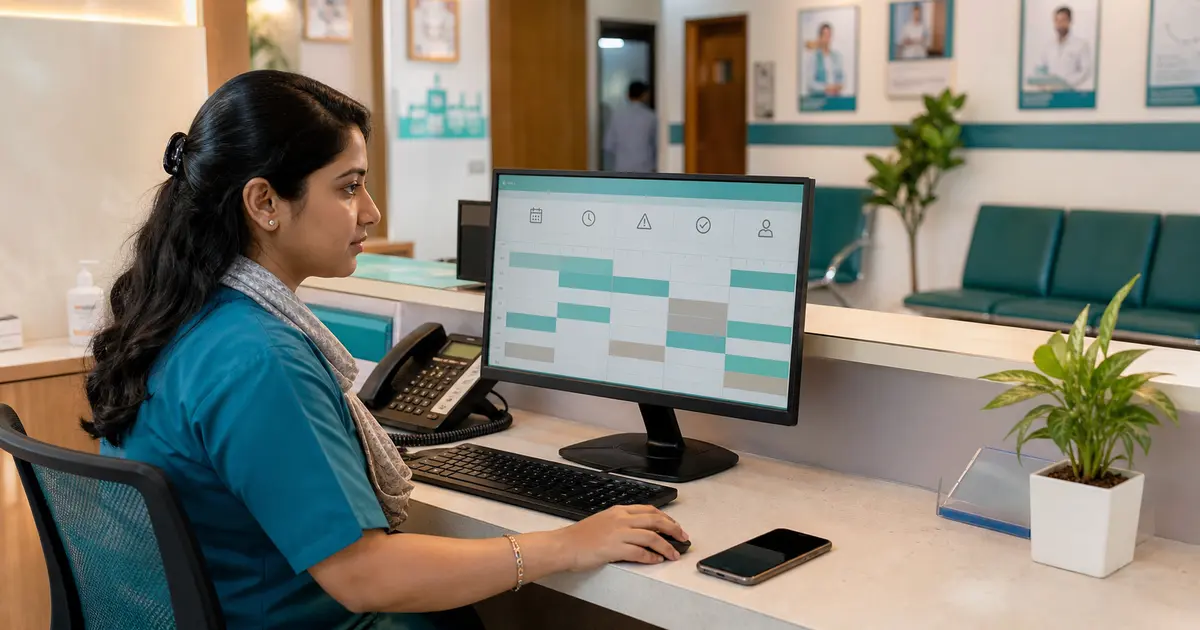
By the time a patient sits in front of you, they have already decided how they feel about your chamber. The tone of the voice that answered the phone, whether the person at the desk looked up and smiled, how long they sat without anyone telling them why — that experience is set before you say "ki problem?" You are an excellent doctor, but to most patients the chamber is the staff, the wait, and the way they were treated on the way to your door.
This is a practical guide to chamber staff training in Bangladesh — the scripts, habits, and small routines that turn a competent front desk into one patients remember warmly and recommend. None of it requires a budget. It requires deciding that patient experience is a skill you train for, not luck you hope for.
Why patient experience is decided before the consultation
A patient in pain or worried about a family member is in a heightened emotional state from the first phone call. Every interaction either calms them or adds to their stress, and they remember the feeling far longer than the medical details. A warm greeting and a clearly communicated wait can make a forty-minute delay feel acceptable; cold silence can make a ten-minute wait feel like neglect. The chamber that wins on experience is rarely the fanciest one — it is the one where staff are trained to make people feel seen.
This is also your most powerful and cheapest marketing. A patient who felt respected tells relatives; one who felt dismissed tells even more. We cover the full picture of how experience drives growth in our guide on starting a private chamber, but the front desk is where it lives or dies day to day.
Service scripts that work in Bangla culture
Good service in Bangladesh is not the scripted corporate cheer of a foreign call centre — it is culturally appropriate warmth and respect. Train your staff in a few reliable patterns rather than leaving every interaction to mood and improvisation.
Forms of address
Teach respectful, age-appropriate address as the default. An older patient is "chacha," "khalamma," "dada," "apa" as fits; a peer is addressed politely with "apni" always, never "tumi," regardless of how the patient is dressed or how young the staff member is. The greeting sets the tone: a simple, warm "Assalamu alaikum, bosun, ami serial ta dekhe nicchi" does more than any signboard.
Handling elderly patients
Elderly patients and their attendants deserve visible extra care. Train staff to stand or step out to help someone who is unsteady, to speak a little more slowly and clearly, to repeat the serial position without irritation, and to seat them comfortably rather than leaving them standing. The respect shown to an elderly patient is noticed by every younger relative in the room.
De-escalating distressed families
When a family arrives frightened — a child with high fever, an elderly parent struggling to breathe — the instinct of an untrained staff member is to defend the queue. The trained response is to acknowledge the distress first: "Ami bujhte parchi apnara chinta korchen. Doctor ke ami ekhuni janacchi." Acknowledgement, then action. Matching their panic or rigidly quoting the serial rule makes everything worse. Our deeper guide on handling difficult patients and communication goes further into de-escalation that protects both the patient and your staff.
Common front-desk situations: poor response vs trained response
The gap between an average chamber and a memorable one usually comes down to a handful of recurring moments handled well or badly. Use this as a training reference — the difference in wording is small, but the difference in how the patient feels is enormous.
| Situation | Poor response | Trained response |
|---|---|---|
| Patient asks how long the wait is | "Wait korun, hoye jabe" | "Doctor ekhon serial 22 dekhchen, apni 31 — motamuti 40 minute lagte pare" |
| Anxious caller asks for advice on the phone | "Paracetamol khan, kal asen" | "Eta doctor dekhle bhalo hobe, ami aj e apnar serial rekhe dicchi" |
| Distressed family with a sick child arrives | "Serial e bosun, sobar age others achen" | "Ami bujhte parchi, doctor ke ekhuni janacchi, ektu bosun" |
| Elderly patient confused about the process | Repeating loudly, visibly irritated | Speaking slowly, helping them sit, repeating calmly |
| Patient is short on the fee | Discussing it loudly across the room | A quiet, respectful word at the desk, options offered |
| A patient's report has arrived | "Apnar sugar er report eseche!" across the room | Quietly, by the desk: "Apnar report ta eseche, doctor dekhben" |
The waiting experience: communicate, don't leave them guessing
The single biggest source of chamber frustration is not the length of the wait — it is the silence around it. A patient who knows where they stand waits patiently; a patient left guessing grows anxious and then angry. Train your staff to communicate the wait proactively, before anyone has to ask.
The pattern is simple and specific. Instead of "doctor ekhono asen ni" or a vague "ektu wait korun," teach: "Doctor ekhon serial 22 dekhchen, apni 31 — motamuti 40 minute lagte pare." A concrete, honest estimate respects the patient's time and lets them decide whether to step out for tea or a phone call. Three habits make this work:
- Proactive updates. Staff volunteer the position rather than waiting to be asked five times. One unprompted update every fifteen or twenty minutes during a long wait transforms the mood of the room.
- Honest estimates, never false certainty. "Roughly forty minutes" is fine; "exactly twenty minutes" that turns into an hour destroys trust. Hedge honestly.
- Permission to step away. "Apni cha kheye aste paren, ami apnar serial dekhe rakhbo" turns a captive, irritated wait into a manageable one.
Phone etiquette: the first impression most patients get
For many patients the phone call is their first and sometimes only contact before arriving. A rushed, vague, or curt call loses people before they ever reach your door. Give staff a clear phone script with three parts: how to answer, what to give, and what never to promise.
- Answer format. A consistent, warm opening: "Assalamu alaikum, [Doctor name] er chamber, ami [name] bolchi, ki bhabe help korte pari?" Identifying the chamber and offering help in one breath reassures the caller they reached the right place.
- What information to give. Sitting days and hours, how to book a serial, the chamber address with a landmark, and the consultation fee if asked. Clear, factual, complete.
- What never to promise. No medical advice over the phone — "ei symptom e ki korbo" is gently redirected to a visit, never answered with a diagnosis. No guaranteed exact wait time. No promise about test results or what the doctor "will definitely do." Over-promising on the phone creates an angry patient at the desk.
A quick roleplay during training — one staff member plays an anxious caller, the other answers — surfaces bad habits faster than any lecture. We come back to this roleplay routine below.
Privacy at the front desk is part of the experience
Patients notice when their problem is discussed where others can hear. An assistant who says loudly across the room "apnar oi report ta, sugar er ta, eseche?" has just shared a patient's private health information with a waiting room full of strangers. Train staff that patient matters are spoken quietly, names and conditions are not announced together, and sensitive conversations happen at the desk in a low voice, never broadcast.
This is both a dignity issue and a confidentiality obligation under the BMDC Code of Medical Ethics, which expects patient information to be protected. Beyond the front desk, the same principle applies to how records are stored and who can see them, which we cover in detail in our guide to patient data privacy for Bangladeshi doctors. A patient who feels their privacy is respected trusts the whole chamber more.
Handling payment conversations with dignity
Money talk can embarrass patients if handled carelessly. Train staff to state the fee plainly and without awkwardness, to offer bKash/Nagad alongside cash as a normal option, and never to discuss a patient's payment within earshot of others. If a patient is short or asks about reduced fees, the conversation should be quiet, respectful, and free of judgement. How payment is handled at the end colours the patient's whole memory of the visit, and a graceless money moment can undo an otherwise good experience.
A weekly 15-minute micro-training routine
Training is not a one-time induction speech that fades in a week. The chambers with consistently good service run tiny, regular practice sessions. The format that sticks is a single weekly fifteen-minute huddle built around one scenario roleplay:
- Pick one real situation from the past week — an angry caller, a confused elderly patient, a family that tried to jump the queue.
- Roleplay it: one person plays the patient, the staff member responds, then swap.
- Discuss for two minutes what worked and one phrase to use next time.
Fifteen minutes a week beats a three-hour session once a year, because it builds reflexes through repetition and keeps service top of mind. Rotate through phone handling, de-escalation, elderly care, and privacy across the weeks. Over a couple of months your staff develop a shared, practised way of treating people that does not collapse the moment the chamber gets busy.
Measuring the experience: a three-question exit pulse
You cannot improve what you do not measure, but you also cannot run a research survey at a busy chamber. Keep it to three questions, asked occasionally and casually as a patient leaves, or on a small card. The questions that actually tell you something:
- Was the wait communicated to you clearly? Tests your proactive-update habit.
- Were you treated respectfully today? Tests warmth and dignity at the desk.
- Would you come back and recommend us? The honest summary of everything else.
You do not need a formal system. A handful of honest answers a week, gathered by you or a trusted staff member, surfaces patterns fast — and when the same complaint comes up twice, you have your next weekly roleplay topic.
When the doctor is the problem
Sometimes the experience breaks down not at the desk but in the consultation room — specifically, a doctor who chronically runs late. No amount of staff charm fully covers a doctor who starts an hour behind every evening and leaves the assistant to absorb the anger. If this is the pattern, the fix is the schedule, not a better apology. Book realistic numbers, build buffer time, and stop overbooking the early slots. It is unfair to train your staff to manage waits you create and then refuse to fix the root cause. Honest scheduling is itself a form of respect for patients, and it makes every other piece of staff training actually work.
How a live queue display reduces front-desk pressure
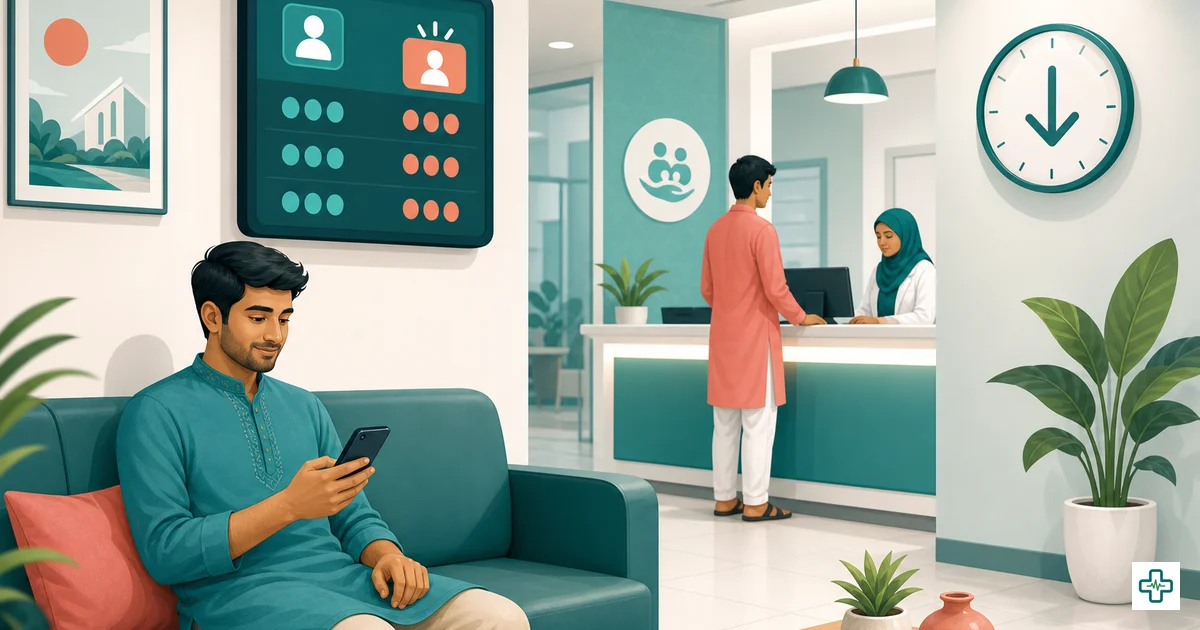
A large share of front-desk stress is the constant "ar koto deri?" — patients asking, staff guessing, everyone tense. A live queue display takes much of that pressure off. When patients can see the current serial number and roughly where they stand, they ask far less, the waiting room calms down, and your staff spend their energy on warmth instead of repeating the same answer thirty times. With ChamberBD, the serial that staff manage is the same one patients can follow, so the "how much longer" question largely answers itself and your team is freed to do the parts of service a screen cannot. You can see how the live queue, appointments, and reminders fit together on the features overview, and the practical setup guide walks through getting your front desk organised from day one. This pairs naturally with the systems that let you manage a hundred patients a day without the chamber descending into chaos.
Frequently Asked Questions
How do I train staff to handle an angry patient?
Teach acknowledgement before action. The first response to anger is recognising the feeling — "ami bujhte parchi apni birokto, dukkhito" — not defending the queue or matching the tone. Practise it weekly through roleplay so it becomes a reflex. A calm, respectful response defuses most situations that a defensive one would escalate.
What should staff say when a patient asks how long the wait is?
Give a concrete, honest estimate based on the current serial: "Doctor ekhon serial 22 dekhchen, apni 31 — motamuti 40 minute." Avoid false precision and avoid vague "ektu wait korun." If there is a live queue display, point them to it. Honest, specific communication makes a long wait feel far more acceptable.
How often should I train chamber staff?
A short, regular routine beats occasional long sessions. A single fifteen-minute weekly huddle built around one scenario roleplay keeps service sharp and builds reflexes through repetition. Rotate topics — phone handling, de-escalation, elderly care, privacy — over the weeks. This consistency matters far more than the total hours spent.
Is it okay for staff to discuss a patient's case at the desk?
No, not where others can hear. Patient names and conditions should never be announced together, and sensitive matters are spoken quietly at the desk. This protects patient dignity and meets confidentiality expectations under medical ethics. A waiting room that overhears private health details trusts the chamber less, even patients whose own details were not shared.
What if the wait is long because the doctor runs late?
Fix the schedule, not just the apology. Chronic lateness cannot be fully covered by staff charm. Book realistic numbers, add buffer time, and stop overbooking early slots. Training staff to manage delays you keep creating is unfair to them and to patients. Honest scheduling is itself a form of respect that makes all other service training effective.
A five-star patient experience is not about marble floors or expensive seating. It is a phone answered warmly, a wait communicated honestly, a name spoken with respect, and privacy quietly protected — habits you can train in fifteen minutes a week. When you are ready to take the pressure off your front desk with a live queue your patients can follow and appointments that keep the day calm, set up your free ChamberBD account and let your staff focus on the warmth that wins patients back.