Stroke: Recognise the F.A.S.T. Signs and Act Within the Golden Hour
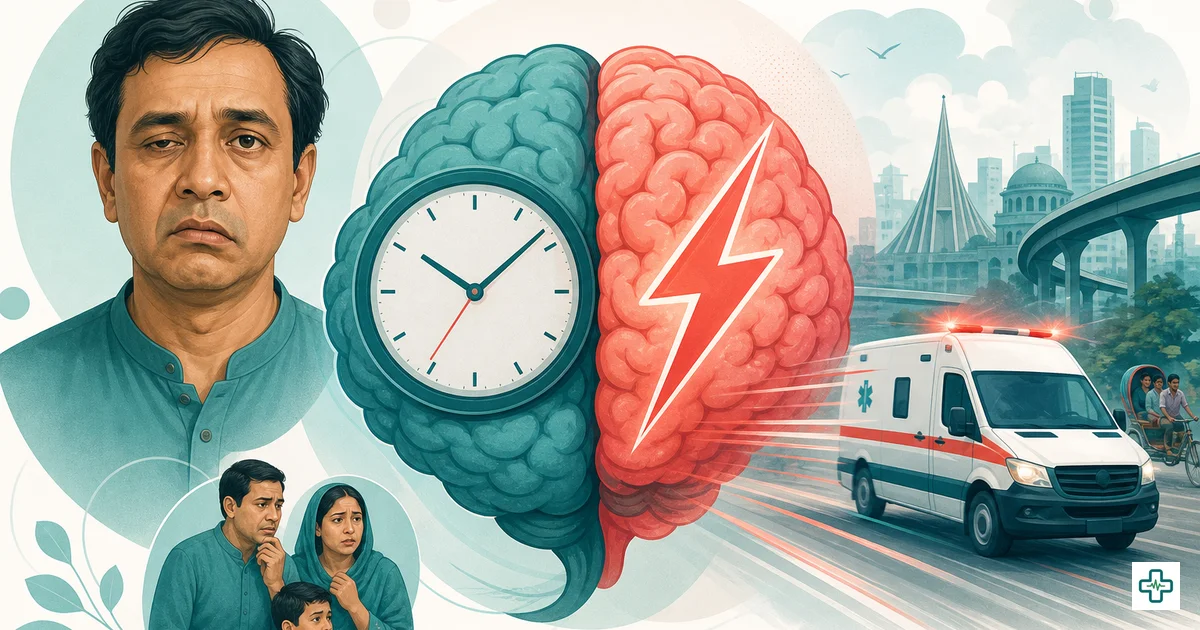
A stroke is a sudden "brain attack" that happens when blood supply to part of the brain is cut off, and in Bangladesh it is one of the biggest causes of death and lifelong disability. Every minute counts: the longer the brain goes without blood, the more cells die. Sadly, many families lose precious time taking the patient to a kobiraj for "jhar-fuk" or waiting to "see if it improves." Recognising a stroke instantly and reaching hospital fast can save a life and prevent permanent paralysis.
Why is the golden hour so important?
The "golden hour" refers to the narrow window — usually up to 4.5 hours from the first symptom — during which a clot-busting treatment called thrombolysis can work for an ischaemic stroke. Given inside this window, it can dissolve the clot and restore blood flow, dramatically improving recovery. After this time the brain damage is often permanent, so reaching a stroke-ready hospital quickly is everything.
What does F.A.S.T. mean?
F.A.S.T. is a simple way to remember the main warning signs of a stroke so anyone can spot it. It stands for Face, Arm, Speech and Time.
- F — Face drooping: one side of the face droops or feels numb; the smile looks uneven.
- A — Arm weakness: one arm is weak or numb and drifts down when both are raised.
- S — Speech difficulty: speech is slurred or strange, or the person cannot speak or understand.
- T — Time to call for help: if you see any of these, note the time and rush to hospital immediately.
Other signs include sudden severe headache, loss of balance, dizziness or sudden blurred vision in one or both eyes.
Why is a CT scan done first?
Strokes come in two main types: a blocked artery (ischaemic) or a bleed in the brain (haemorrhagic), and their treatments are opposite. A CT scan of the brain quickly shows which type it is. This is essential because clot-busting medicine can save an ischaemic stroke but would be dangerous in a brain bleed. That is why doctors never start treatment on guesswork.
What should you never do during a stroke?
The wrong response wastes the golden hour and can cost a life. Avoid these common mistakes:
- Do not give food or water — a stroke can affect swallowing, and food or drink may go into the lungs.
- Do not wait at home to see if symptoms ease, and do not lie the person down to rest it off.
- Do not rely on jhar-fuk, kobiraj or home remedies — these only delay real treatment.
- Do not give random medicines such as extra blood-pressure pills or aspirin without a doctor, as this can be harmful in a brain bleed.
Who is at risk and how can you prevent a stroke?
High blood pressure is by far the number one cause of stroke in Bangladesh, often silent and uncontrolled for years. Diabetes, smoking, high cholesterol, obesity, an irregular heartbeat and a previous mini-stroke all add to the risk. The good news is that most strokes are preventable.
- Keep your blood pressure in check — read our guide on 10 ways to control high blood pressure.
- Control diabetes and cholesterol, and take prescribed medicines regularly.
- Quit smoking and limit salty, fried and processed foods.
- Stay active and maintain a healthy weight.
When should you see a doctor?
Call for emergency help and rush to a hospital the moment you notice face drooping, arm weakness, slurred speech, sudden confusion, severe headache or loss of balance — even if the symptoms disappear within minutes. A brief mini-stroke (TIA) is a serious warning that a major stroke may follow. For long-term prevention and to manage blood pressure, diabetes or heart rhythm problems, book a verified doctor on ChamberBD to consult a neurologist or physician without delay.
This article is for general health education and is not a substitute for professional medical advice.