Migraine: Common Triggers, Prevention and Fast Relief
A migraine is far more than a bad headache. It is a neurological condition that can stop you in your tracks with intense, throbbing pain — often on one side of the head — along with nausea and a strong dislike of light and sound. In Bangladesh, long commutes, skipped meals, intense heat and screen-heavy days make migraine a frequent and exhausting problem. Understanding your triggers is the first step to taking back control.
How is a migraine different from an ordinary headache?
An ordinary tension headache usually feels like a dull, tight band around the whole head and lets you carry on with your day. A migraine is typically one-sided, throbbing or pulsing, and severe enough to disrupt work, often with nausea, vomiting and sensitivity to light and sound. Some people get an 'aura' beforehand — flashing lights, zigzag lines or tingling — that warns an attack is coming.
What are the common migraine triggers?
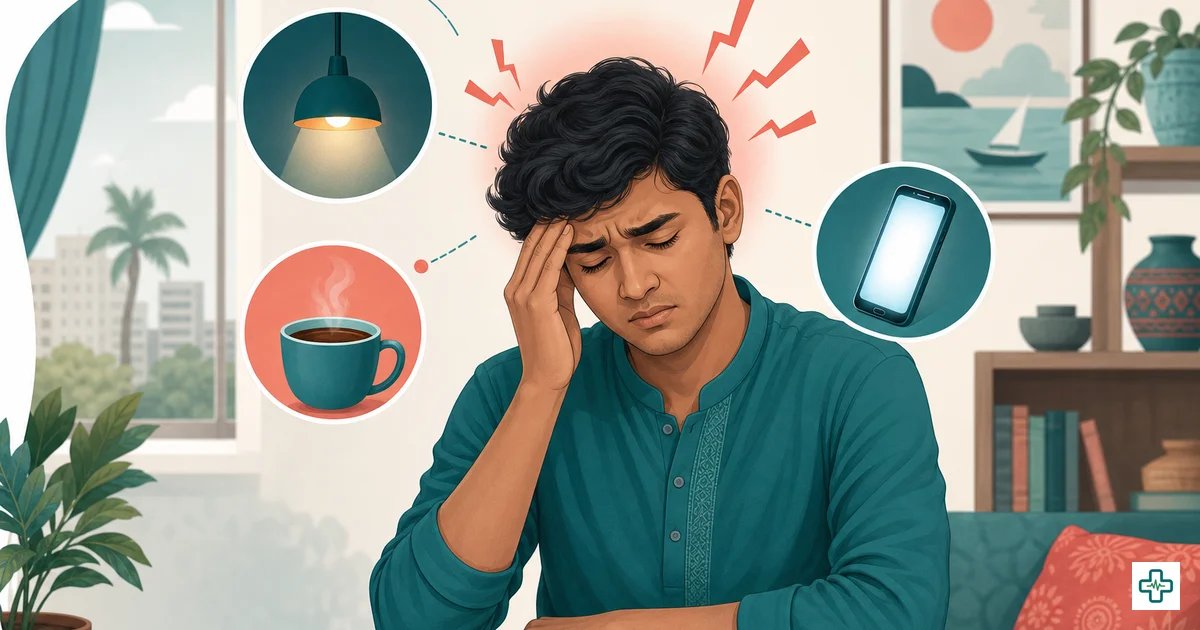
Triggers vary from person to person, but several are very common in everyday Bangladeshi life. Identifying yours can dramatically cut how often attacks strike.
- Skipping meals or going hungry for long periods
- Dehydration, especially in hot, humid weather
- Direct sun and high heat
- Too little or too much sleep, and changing sleep times
- Long hours on phones and computer screens
- Stress, or the relief period right after stress
- Certain foods and drinks, including excess caffeine, and for some, fermented or processed items
Can keeping a trigger diary help?
Yes — a simple diary is one of the most useful tools for migraine. For a few weeks, note when each attack starts, what you ate, your sleep, your stress levels and, for women, your menstrual cycle. Patterns often emerge that let you avoid specific triggers and give your doctor valuable information.
How can you get fast relief during an attack?
Acting early, at the first sign of an attack, works best. Many people feel better lying down until the worst of it passes. The following steps can help reduce the severity.
- Rest in a dark, quiet room and close your eyes
- Apply a cold compress to your forehead or neck
- Sip water slowly to stay hydrated
- Take a painkiller early if your doctor has advised one — with or after food, since painkillers on an empty stomach can irritate the stomach (see our guide on gastric acidity)
One important warning: using painkillers too often — more than a couple of days a week — can cause 'medication-overuse headache', where the very medicines you take start triggering more headaches. If you are reaching for painkillers that often, see a doctor instead of increasing the dose.
How can migraines be prevented?
Prevention is built on steady daily habits: regular sleep and wake times, never skipping meals, drinking enough water, regular gentle exercise and managing stress. If attacks are frequent or severe, doctors can prescribe daily preventive medicines that reduce how often they happen — these are different from painkillers and must be guided by a doctor. Cutting back on caffeine gradually, rather than stopping all at once, also helps, because sudden withdrawal can itself set off an attack.
When should you see a doctor?
Most migraines are not dangerous, but some headaches are emergencies. Seek urgent care for a sudden, severe 'thunderclap' headache that peaks within seconds, a headache with fever and a stiff neck, any headache after a head injury, or a brand-new type of headache after age 50. Also see a doctor if headaches are getting more frequent or stopping you from working. You can book a verified doctor on ChamberBD for a clear diagnosis and a prevention plan.
This article is for general health education and is not a substitute for professional medical advice.