Chamber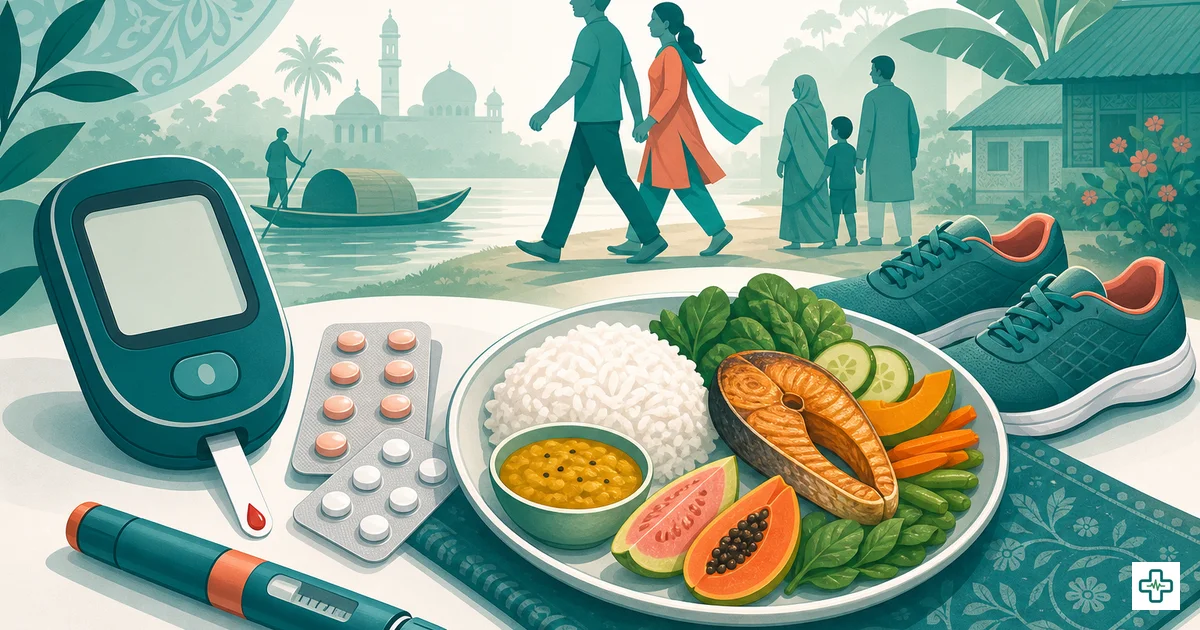
Diabetes Medicine in Bangladesh: A Complete 2026 Guide
If you have just been diagnosed with diabetes, or you are holding a strip of tablets and wondering what they actually do, here is the short answer first: diabetes medicines lower your blood sugar, but they are prescription-only medicines that a doctor chooses, doses and adjusts for you based on your HbA1c blood test — they are not something to buy on a shopkeeper's advice or to start, stop or change on your own. For most people with type-2 diabetes the first medicine is metformin. From there a doctor may add a gliptin (a DPP-4 inhibitor such as linagliptin, sitagliptin or vildagliptin), a sulfonylurea such as glimepiride, a modern SGLT2 inhibitor, or insulin injections — alone or as a combination tablet. The single most important safety message in this whole article is this: never self-adjust or suddenly stop your diabetes medicine, and learn the warning signs of low blood sugar (hypoglycaemia). This guide is general health information for Bangladesh and does not replace advice from your own qualified doctor.
What diabetes medicine is actually for
Diabetes means your blood sugar (glucose) runs too high, either because your body does not make enough insulin, cannot use it properly, or both. Over years, persistently high sugar quietly damages the eyes, kidneys, nerves, heart and blood vessels. The job of ডায়াবেটিসের ওষুধ is to bring that sugar down into a safer range and keep it there, so those complications are delayed or prevented. But medicine is only one leg of the stool: diet, physical activity, weight control and taking your tablets faithfully every day matter just as much. A tablet cannot undo a day of fried snacks, sweet drinks and no walking — the two have to work together.
This is also why people search so often for ডায়াবেটিস ট্যাবলেট or সুগারের ওষুধ by name. There are many brands in Bangladesh, but behind every brand is a generic (the actual active ingredient) and a drug class (the family it belongs to). Once you understand the few main classes below, the long list of brand names becomes much less confusing. You can always check the exact ingredient, strength and price of any brand in our medicine directory rather than relying on memory or a shop counter.
How your doctor measures control: HbA1c
Before talking about each medicine, you need to know the one number that drives all the decisions: HbA1c. A finger-prick glucometer reading shows your sugar at that moment; HbA1c is a blood test that reflects your average blood sugar over roughly the past three months. Your doctor uses it to decide whether your current medicine and dose are enough, or whether something needs to be added or increased. This is exactly why diabetes medicines are doctor-titrated — the dose is set, checked and adjusted against this test, usually every three to six months. If you raise or lower your own dose by guesswork, you are flying blind. To track your day-to-day sugar at home between these tests, see our guide on home blood sugar testing with a glucometer.
Metformin — the first-line tablet (Comet)
Metformin is the standard first-line oral medicine for type-2 diabetes almost everywhere in the world, and Bangladesh is no exception. In our market it is sold under brands such as Comet and many others. It works mainly by reducing the amount of glucose your liver releases and helping your body's own insulin work better, so your blood sugar comes down. Three things make it the favourite starting medicine: it is effective, it is inexpensive, and on its own it does not usually cause low blood sugar.
Its commonest side effects are in the gut — nausea, loose motions, a metallic taste or stomach upset, especially in the first weeks. Doctors get around this by starting low, increasing slowly, and asking you to take it with or just after food. The most important caution is the kidneys: metformin must be used carefully, at a reduced dose or avoided, in people with significant kidney disease, and it is usually paused around major surgery or scans that use contrast dye. Tell your doctor if you have kidney or liver problems or drink alcohol heavily. You can read the generic overview on the metformin hydrochloride page, and a common brand strength on the Comet 500 mg tablet page.
Gliptins (DPP-4 inhibitors): linagliptin, sitagliptin, vildagliptin
The gliptins — known properly as DPP-4 inhibitors — are one of the most widely prescribed newer classes in Bangladesh, and the keyword গ্লিপটিন is searched constantly. They work in a clever, sugar-sensitive way: they boost your body's own incretin hormones, which prompt the pancreas to release insulin mainly when blood sugar is high (for example after a meal) and reduce the sugar the liver makes. Because they act in this glucose-dependent way, gliptins are weight-neutral and carry a low risk of hypoglycaemia when used on their own — two reasons doctors like them, especially for older patients. They can be taken with or without metformin.
The three gliptins you will meet most often here are:
- Linagliptin — sold under brands such as Linatin and Linera. A practical advantage is that it is cleared largely without relying on the kidneys, so it is often a convenient choice when kidney function is reduced (though your doctor still decides). See the Linatin 5 mg tablet page and the generic linagliptin overview.
- Sitagliptin — sold under brands such as Sliptin and Glipita. A well-established gliptin; the dose may be lowered in kidney impairment. See the Sliptin 25 mg tablet page, the Glipita 50 mg tablet page, and the generic sitagliptin overview.
- Vildagliptin — another common gliptin in Bangladesh, frequently used as a combination tablet (see below).
Gliptins are generally well tolerated. Possible side effects include mild upper-respiratory or nose-and-throat symptoms, headache, and rarely joint pain or, with some gliptins, an effect on the pancreas — so any severe, persistent abdominal pain should be reported to a doctor at once. As always, these are prescription medicines; do not start a gliptin yourself just because a relative takes one.
Sulfonylureas: glimepiride (Limpet)
Sulfonylureas are an older, effective and inexpensive class, and glimepiride — sold under brands such as Limpet — is one of the most used in Bangladesh. They work differently from the medicines above: they directly stimulate the pancreas to release more insulin. That makes them powerful at lowering sugar, but it also creates their single most important risk. Because a sulfonylurea pushes out insulin whether or not you have eaten, it can cause hypoglycaemia — low blood sugar — particularly if you skip or delay a meal, eat less than usual, exercise hard, or take alcohol.
For this reason a sulfonylurea is usually taken with food (commonly with breakfast), and you must know the warning signs of a low (covered in the next section). They can also cause some weight gain. They need extra caution in older people, those with kidney or liver disease, and anyone who eats irregularly, because these groups are more prone to dangerous lows. None of this means glimepiride is a bad medicine — it is a useful, affordable tool — but it is precisely the kind of drug that is dangerous to buy and take without a doctor setting the dose. See the generic glimepiride overview and the Limpet 1 mg tablet page.
Hypoglycaemia: low blood sugar warning signs
If you take a sulfonylurea such as glimepiride, or insulin, you must recognise hypoglycaemia (low blood sugar) — it can come on quickly and, left untreated, becomes dangerous. Early warning signs include sweating, shaking or trembling, a fast or pounding heartbeat, sudden hunger, feeling anxious or irritable, dizziness, blurred vision, tingling lips, and difficulty concentrating. If it is not treated, it can progress to confusion, slurred speech, drowsiness, fits (seizures) or loss of consciousness.
The standard first response if you feel a low and are awake and able to swallow is the “15 rule”: take about 15 grams of fast sugar — for example a few glucose tablets, half a glass of regular (not diet) soft drink or fruit juice, or a tablespoon of sugar or honey in water — wait about 15 minutes, and check your sugar again; repeat if it is still low, then eat a small meal or snack. If the person is drowsy, confused or unconscious, do not force food or drink into their mouth — this is an emergency; get medical help immediately. Always tell your doctor about any low, because it may mean your dose needs adjusting. The safest habit is to carry a little sugar with you and never skip meals when you are on sugar-lowering tablets.
Combination tablets: a gliptin plus metformin (Lijenta-M, Vildapin Plus)
To reduce the number of pills, drug companies combine two medicines into one tablet. A very common combination in Bangladesh pairs a gliptin with metformin in a single pill. Two examples you will see often are Lijenta-M (linagliptin plus metformin) and Vildapin Plus (vildagliptin plus metformin). The idea is convenience and better adherence — one tablet, two actions — when a doctor has already decided you need both medicines. They are not a stronger “super-pill” to jump to on your own; the doctor chooses the right pairing and the right strengths of each part. See the Lijenta-M 500/2.5 mg tablet page and the Vildapin Plus 500 mg / 50 mg tablet page for the exact ingredients and strengths. Because these contain metformin, the same kidney and gut cautions as plain metformin apply.
A note on SGLT2 inhibitors and insulin
SGLT2 inhibitors (for example empagliflozin, dapagliflozin) are a modern class that lowers sugar in a completely different way — they make the kidneys remove excess glucose into the urine. Beyond lowering sugar, several have been shown to protect the heart and kidneys, which is why doctors increasingly use them, especially in people with heart or kidney disease. They can cause more urination, and a higher chance of urinary and genital infections; staying well hydrated and clean helps. Rarely they can cause a serious condition called ketoacidosis, so any unusual sickness, breathlessness or fruity-smelling breath needs urgent care. They are, again, doctor-prescribed.
Insulin is the medicine that replaces what the body cannot make. It is essential and lifelong for type-1 diabetes, and it is also used in advanced type-2 diabetes when tablets are no longer enough, during pregnancy, around surgery, or when sugars are very high. Insulin is given by injection, and its dose is carefully matched to meals and activity, because too much can cause hypoglycaemia. Needing insulin is not a personal failure or the “end of the road” — it is simply the right tool when the body needs it, and many people use it safely for years.
Diabetes medicine classes at a glance
| Class (examples) | How it works | Key cautions |
|---|---|---|
| Biguanide — metformin (Comet) | Cuts glucose released by the liver; helps insulin work; first-line | Gut upset early on; caution/avoid in significant kidney disease; take with food |
| DPP-4 inhibitors / gliptins — linagliptin (Linatin), sitagliptin (Sliptin, Glipita), vildagliptin | Boost incretin hormones; release insulin mainly when sugar is high | Weight-neutral, low hypo risk alone; report severe abdominal pain; dose may change in kidney disease |
| Sulfonylureas — glimepiride (Limpet) | Directly stimulate the pancreas to release more insulin | Can cause low blood sugar (hypoglycaemia); take with food; care in elderly, kidney/liver disease, irregular eating; some weight gain |
| Gliptin + metformin combos — Lijenta-M, Vildapin Plus | Two medicines (a gliptin + metformin) in one tablet for convenience | Same metformin kidney/gut cautions; doctor sets the pairing and strengths |
| SGLT2 inhibitors — empagliflozin, dapagliflozin | Make kidneys pass excess glucose into urine; protect heart/kidneys | More urination; urinary/genital infections; stay hydrated; rare ketoacidosis |
| Insulin (injection) | Replaces the insulin the body lacks; essential in type-1, advanced type-2 | Can cause hypoglycaemia; dose matched to meals; injection technique matters |
Use this table to understand your prescription, not to choose or change a medicine. The right combination depends on your HbA1c, your kidneys and heart, your weight, your budget and your daily routine — which is exactly what a doctor weighs up for you.
Taking your diabetes medicine safely
- Never start, stop or change a dose on your own. Feeling well does not mean the diabetes is gone; stopping suddenly lets sugar climb again. Any change must come from your doctor, guided by your HbA1c.
- Take it on time, every day. Diabetes control depends on steady levels. Use a pill box or a phone alarm, and keep a tidy record of what you take — our free prescription generator helps you keep an organised medicine list to show any doctor.
- Respect food timing with sulfonylureas and insulin. Skipping or delaying meals while on glimepiride or insulin is the commonest cause of dangerous lows. Eat regularly and carry a little sugar.
- Take metformin with or after food to reduce stomach upset, and tell your doctor if gut side effects are severe rather than quietly stopping it.
- Get your HbA1c and kidney tests done as advised, usually every few months. These tests are how the dose is kept correct over time.
- Tell your doctor about everything else you take — blood pressure tablets, painkillers, herbal or “sugar-control” products, and any over-the-counter medicine — because interactions can change your sugar.
- Do not buy diabetes drugs on a shopkeeper’s or neighbour’s advice. The same brand and strength that suits one person can cause a dangerous low in another. Confirm the ingredient and strength in our medicine directory, but let a doctor prescribe.
The danger of buying diabetes drugs without a doctor
It is tempting to skip the clinic and simply ask a pharmacy for the same tablet a relative takes, or to keep refilling an old prescription for years without review. With diabetes this is genuinely risky. The wrong class or dose can drive your sugar too low (a sulfonylurea or insulin taken without proper guidance can cause a severe hypo) or leave it too high for months, silently damaging your eyes, kidneys, nerves and heart. Your kidney function changes over time, which changes which medicines are safe — metformin and some gliptins need dose adjustment as kidneys age. Only a doctor reviewing your HbA1c, your other conditions and your other medicines can keep the treatment both effective and safe. Self-medicating in diabetes is not a money-saver; it is a gamble with organs you cannot replace.
Diet, exercise and weight still come first
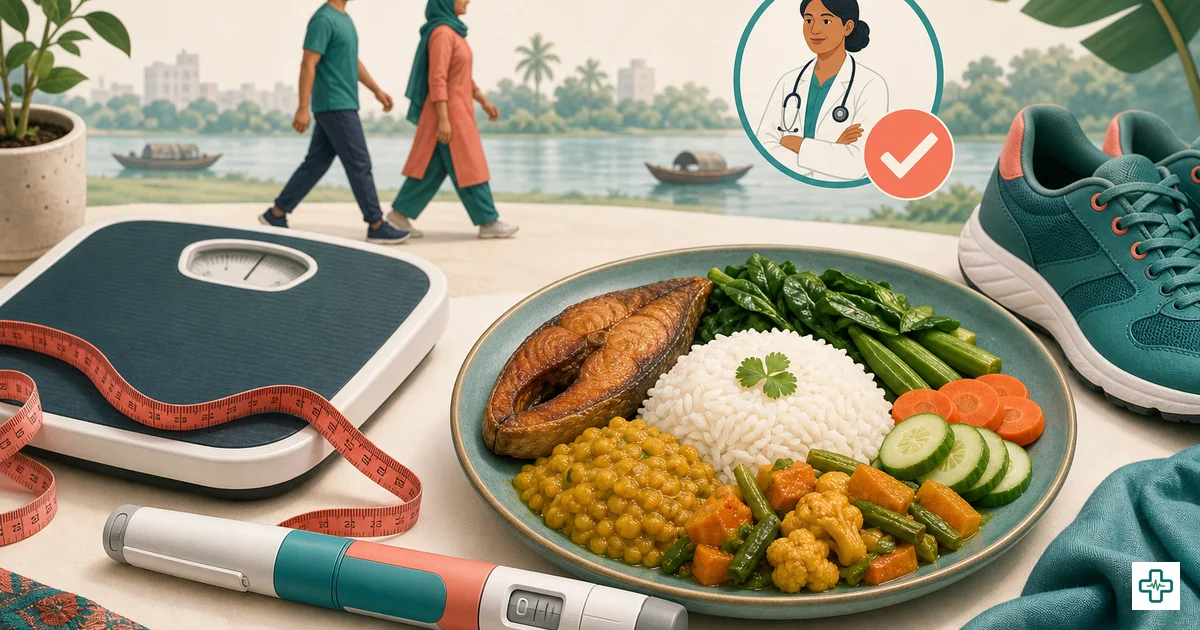
No diabetes tablet works in isolation. The foundation of control is lifestyle: balanced meals with controlled portions of rice and refined carbohydrates, more vegetables and fibre, fewer sweets, fried items and sugary drinks; regular physical activity such as 30 minutes of brisk walking on most days; losing excess weight; not smoking; and managing blood pressure and cholesterol. Done consistently, these can lower how much medicine you need and improve your HbA1c — sometimes dramatically. Think of medicine and lifestyle as partners: the tablet handles part of the job, and your daily habits handle the rest. For more practical reading, browse our health tips library.
When should you see a doctor?
See a doctor promptly if your sugars are persistently high or low despite taking your medicine, if you have frequent lows (sweating, shaking, confusion), if you develop new symptoms such as blurred vision, numbness or tingling in the feet, frequent infections or unexplained weight loss, if your kidney function changes, or before stopping or changing any tablet. Seek emergency care immediately for a severe low with confusion, fits or unconsciousness, or for vomiting, deep rapid breathing, drowsiness and fruity-smelling breath, which can signal a diabetic emergency. To stay on top of routine care, you can find a registered doctor on ChamberBD, book a chamber visit through app.chamberbd.com, and keep your prescribed medicines neatly recorded with our free prescription generator.
Frequently Asked Questions
Can I buy diabetes medicine without a prescription?
You should not. All diabetes medicines are prescription-only and are chosen, dosed and adjusted by a doctor based on your HbA1c, kidney function and other conditions. The same tablet that suits one person can cause a dangerous low or be unsafe for another. Buying on a shopkeeper’s or neighbour’s advice risks both severe low blood sugar and uncontrolled high sugar, so always get a proper prescription.
Which diabetes tablet is started first?
For most people with type-2 diabetes the first-line tablet is metformin (sold as Comet and other brands), because it is effective, inexpensive and does not usually cause low blood sugar on its own. If metformin alone is not enough, a doctor may add a gliptin, a sulfonylurea, an SGLT2 inhibitor or insulin, guided by your HbA1c. The right choice depends on your individual health, so it is decided by your doctor.
What are gliptins and how do they work?
Gliptins, or DPP-4 inhibitors, are a class of diabetes medicine that includes linagliptin (Linatin), sitagliptin (Sliptin, Glipita) and vildagliptin. They boost your body’s incretin hormones, which make the pancreas release insulin mainly when blood sugar is high, and reduce sugar made by the liver. Because they act in this sugar-sensitive way, they are weight-neutral and carry a low risk of hypoglycaemia when used alone, and can be taken with or without metformin.
Which diabetes medicine can cause low blood sugar?
Sulfonylureas such as glimepiride (Limpet) and insulin are the ones most likely to cause hypoglycaemia, because they push insulin into the blood whether or not you have eaten. Metformin and gliptins on their own rarely cause lows. Warning signs include sweating, shaking, a fast heartbeat, hunger, confusion and dizziness. If you take a sulfonylurea or insulin, eat regularly, carry a little sugar and learn how to treat a low.
What is a combination diabetes tablet like Lijenta-M or Vildapin Plus?
These combine two medicines in one pill to cut the number of tablets. Lijenta-M pairs linagliptin with metformin, and Vildapin Plus pairs vildagliptin with metformin. They are used when a doctor has already decided you need both a gliptin and metformin, and they improve convenience and adherence. They are not a stronger “super-pill” to switch to on your own; the doctor selects the right pairing and the strength of each part.
Can I stop my diabetes medicine once my sugar is normal?
No, not on your own. A normal reading usually means the medicine is working, not that the diabetes is cured. Stopping suddenly typically lets your sugar rise again and, over time, raises the risk of complications. If lifestyle changes have improved your control, your doctor may carefully reduce the dose while monitoring your HbA1c, but any change must be a medical decision, never a self-made one.
Do I still need diet and exercise if I take tablets?
Yes, very much so. Diabetes medicines work best alongside a healthy diet, regular activity and weight control, not instead of them. Good lifestyle habits can lower how much medicine you need and improve your HbA1c, while a poor diet can overwhelm any tablet. Think of medicine and lifestyle as partners: the drug does part of the work and your daily habits do the rest.
This article is for general health education only and is not a substitute for professional medical advice; please consult a qualified doctor before starting, changing, combining or stopping any diabetes medicine.