Dental Care: Preventing Cavities, Gum Disease and Bad Breath
Most of us in Bangladesh only think about our teeth when something starts to hurt — and by then, a small, cheap fix has often become a painful, expensive one. Sweet milk tea several times a day, biscuits, paan-supari and the habit of skipping night-time brushing quietly damage teeth and gums for years. The encouraging part: a few minutes of correct daily care prevents most cavities, gum disease and bad breath.
How should you actually brush your teeth?
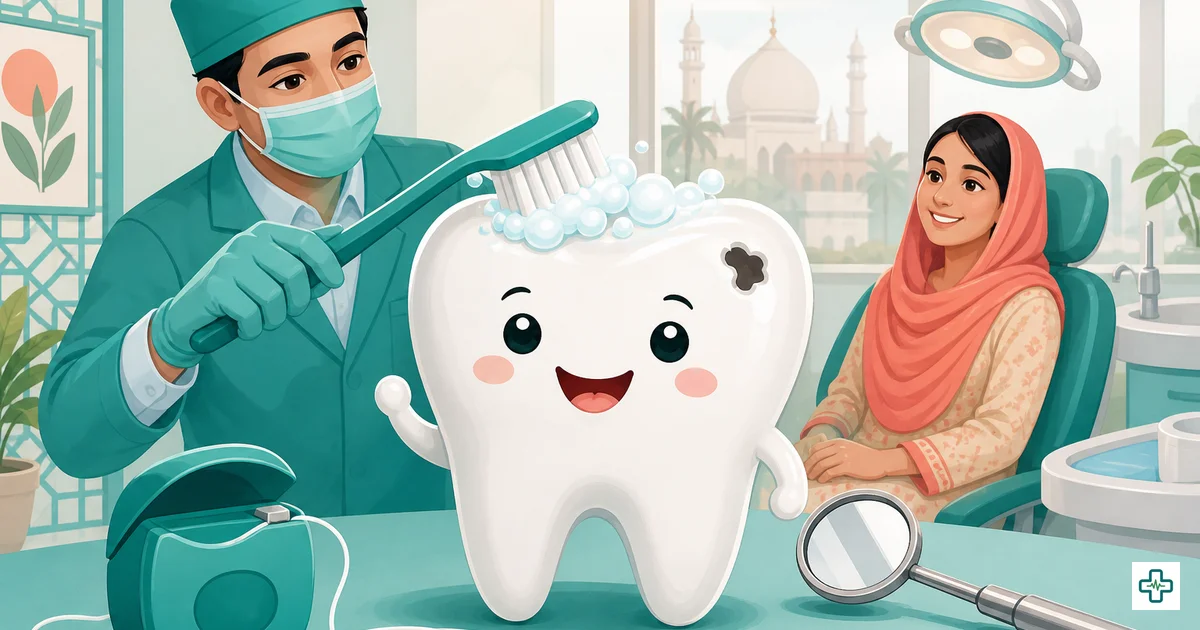
Brush twice a day for two full minutes with a soft-bristled brush and a fluoride toothpaste. The night-time brush is the most important one, because saliva flow drops while you sleep and bacteria work undisturbed on food left between teeth. Use gentle circular strokes along the gum line instead of hard back-and-forth scrubbing, which wears down enamel and gums.
- Replace your brush every 3 months, or sooner if the bristles flare.
- Do not rinse with lots of water immediately after brushing — spit out the foam so the fluoride keeps working.
- Clean your tongue gently; it harbours odour-causing bacteria.
What really causes cavities?
Cavities depend less on how much sugar you eat and more on how often. Every cup of sweet tea, biscuit or cold drink gives mouth bacteria a fresh dose of sugar, and they produce enamel-eating acid for about half an hour each time. Six small sugary 'hits' a day are far worse for teeth than one dessert taken with a meal.
A special warning for Bangladesh: paan, supari, jorda and gul stain and wear down teeth, damage gums and — most importantly — are major causes of oral cancer. Any white or red patch, or a mouth ulcer that does not heal within two weeks, must be checked without delay.
Bleeding gums are not normal
If your gums bleed when you brush, that is gum disease (gingivitis) — not a sign that you brushed 'too hard'. Plaque along the gum line inflames the gums; left untreated it can progress to periodontitis, where the bone holding the teeth slowly dissolves and teeth become loose. Other signs include swollen or dark red gums, gums pulling away from the teeth, and persistent bad breath. People with diabetes get gum disease earlier and more severely, and infected gums in turn make blood sugar harder to control — if you have diabetes, see our diabetes diet guide and take gum care doubly seriously.
Bad breath: find the cause, not just mints
Persistent bad breath usually comes from the mouth itself: food trapped between teeth, gum disease, a coated tongue, dry mouth or smoking. Cleaning between the teeth once a day — with floss or an interdental brush — removes what your toothbrush physically cannot reach. If breath stays bad despite good cleaning, a dentist should look for hidden cavities or gum pockets; occasionally sinus, stomach or other problems are responsible.
Children's teeth need care from the first tooth
- Never put a baby to sleep with a bottle of milk or sweetened liquid — it causes 'bottle caries' that can destroy the front teeth.
- Start brushing as soon as the first tooth appears, using a rice-grain smear of fluoride paste.
- Milk teeth matter: they hold space for permanent teeth, so cavities in them should be treated, not ignored.
- Take your child for a first dental visit around the first birthday, and make check-ups routine rather than scary emergencies.
When should you see a doctor?
Visit a dentist every 6 to 12 months for a check-up and cleaning even when nothing hurts — most dental problems are silent at the stage when they are easiest to treat. See one promptly if you notice any of the following:
- Toothache, sensitivity to hot or cold, or pain on chewing
- Gums that bleed regularly, or pus between the teeth and gums
- A loose adult tooth
- A mouth ulcer, or a white or red patch, not healing after two weeks
- Swelling of the face or jaw with fever — this can become a serious infection
You can find a registered dentist or oral and maxillofacial surgeon on ChamberBD and book a visit before small problems grow.
This article is for general health education and is not a substitute for professional medical advice.