Chamber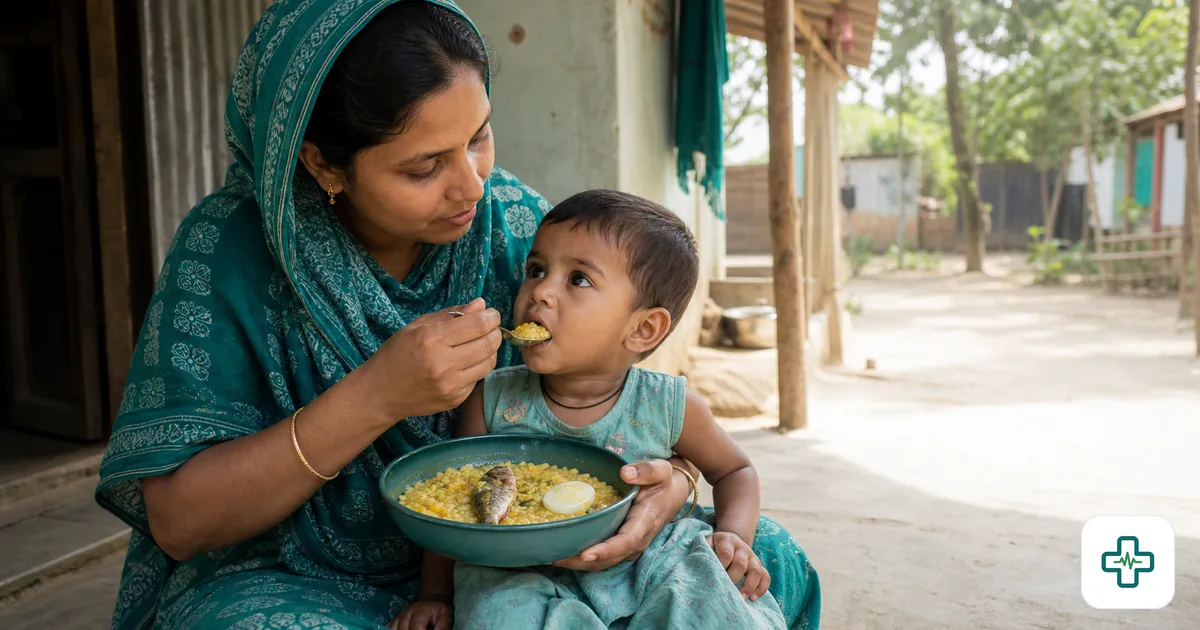
Child Malnutrition: Stunting Signs and Feeding Tips
Good nutrition in the first few years of life shapes a child's growth, brain development and future health. Yet undernutrition remains common in Bangladesh, and much of it is silent: a child may look small but otherwise well, while their growth quietly falls behind. The most important window is from pregnancy to the second birthday, the so-called first 1,000 days. The encouraging news is that with the right feeding, mostly from ordinary local foods, most undernutrition can be prevented and improved.
What is child malnutrition and stunting?
Malnutrition means the body is not getting the right balance of energy and nutrients. In young children it shows up mainly as undernutrition. Stunting is when a child is too short for their age because of long-term poor nutrition and repeated illness; wasting is when a child is too thin for their height, often after a recent illness; and underweight combines both. Stunting matters because it affects not just height but also brain development, learning and lifelong health.
What are the warning signs?
Parents and grandparents are often the first to sense that something is not right. Warning signs of undernutrition include:
- The child is clearly shorter or lighter than other children of the same age.
- Weight or height is not increasing on the growth chart over time.
- Thin arms and legs, a swollen belly, or loose skin.
- Frequent infections, slow recovery, and low energy or interest in play.
- Pale skin and tiredness, which can point to anaemia.
Swelling of both feet, severe thinness, or refusing to eat or drink are danger signs that need medical care quickly.
What causes undernutrition?
Undernutrition is rarely about one single thing. Common contributors in Bangladesh include too little dietary variety, starting complementary foods too late or too early, feeding mostly watery rice or thin khichuri with little protein, and repeated diarrhoea or infections that drain nutrients. Poor appetite during illness, unsafe drinking water, and not enough feeds during the day also play a part. Importantly, undernutrition is not a sign of bad parenting; it can be improved with simple, practical changes.
How can you feed a child well with local foods?
You do not need expensive products. A balanced plate can be built from affordable, everyday foods:
- Continue breastfeeding up to two years, alongside family foods after six months.
- Make khichuri thicker and richer by adding egg, small fish (mola, with soft bones), lentils (dal), or a little oil for energy.
- Give colourful vegetables and seasonal fruits such as spinach, pumpkin, carrot, banana, papaya and mango.
- Offer protein daily where possible: egg, fish, chicken, dal, or milk.
- Feed small amounts often, three meals plus two snacks, and be patient and encouraging.
- Use safe, boiled or purified water and wash hands before feeding to prevent infections.
During and after illness, keep feeding and add an extra meal a day to help the child catch up.
When should you see a doctor?
See a doctor or visit a community clinic if your child is not gaining weight, has fallen behind on the growth chart, is much smaller than peers, or keeps getting sick. Seek prompt care for swelling of both feet, severe visible thinness, refusal of all food and drink, or signs of dehydration during diarrhoea. For loose motions, give ORS (oral saline) at home to prevent dehydration while you arrange care. A paediatrician or nutrition counsellor can guide you; find one through our list of registered doctors. Vitamin or iron supplements should only be given on medical advice, and you can look them up in our medicine directory or keep any prescription tidy with our free prescription tool.
Frequently Asked Questions
Can stunting be reversed?
Early stunting can often be improved, especially within the first two years, with better feeding, treatment of infections and regular growth monitoring. The earlier you act the better, because some effects of long-standing stunting are harder to reverse later.
My child is small but active and eats well. Should I worry?
Some children are naturally smaller, especially if the parents are short. What matters most is whether the child is steadily gaining weight and height on the growth chart. If growth is tracking well and the child is active and developing normally, that is reassuring; if growth flattens, see a health worker.
Are expensive baby foods or supplements necessary?
No. A varied diet of local foods, egg, fish, dal, vegetables and fruit, with continued breastfeeding, meets most children's needs. Supplements such as vitamin A or iron are given through health programmes or on a doctor's advice, not as a substitute for food.
How often should my child's growth be checked?
Regular growth monitoring at a community clinic or EPI session helps catch problems early. You can find more child-nutrition guidance in our collection of health tips.
This article is for general health education and is not a substitute for professional medical advice; please consult a qualified doctor or nutrition counsellor about your own child.