Tuberculosis (TB): Symptoms, Free Treatment and Why You Must Finish the Course
Tuberculosis, known to most people in Bangladesh as "jokkha," remains one of the country's biggest infectious disease challenges, with hundreds of thousands of new cases every year. The good news is that TB is curable, the treatment is completely free at government centres, and with the right knowledge it can be both prevented and beaten. Fear and stigma, not the disease itself, are often the biggest barriers to getting better. Every year many lives are lost simply because people hide their illness or stop treatment too early.
What are the warning signs of tuberculosis?
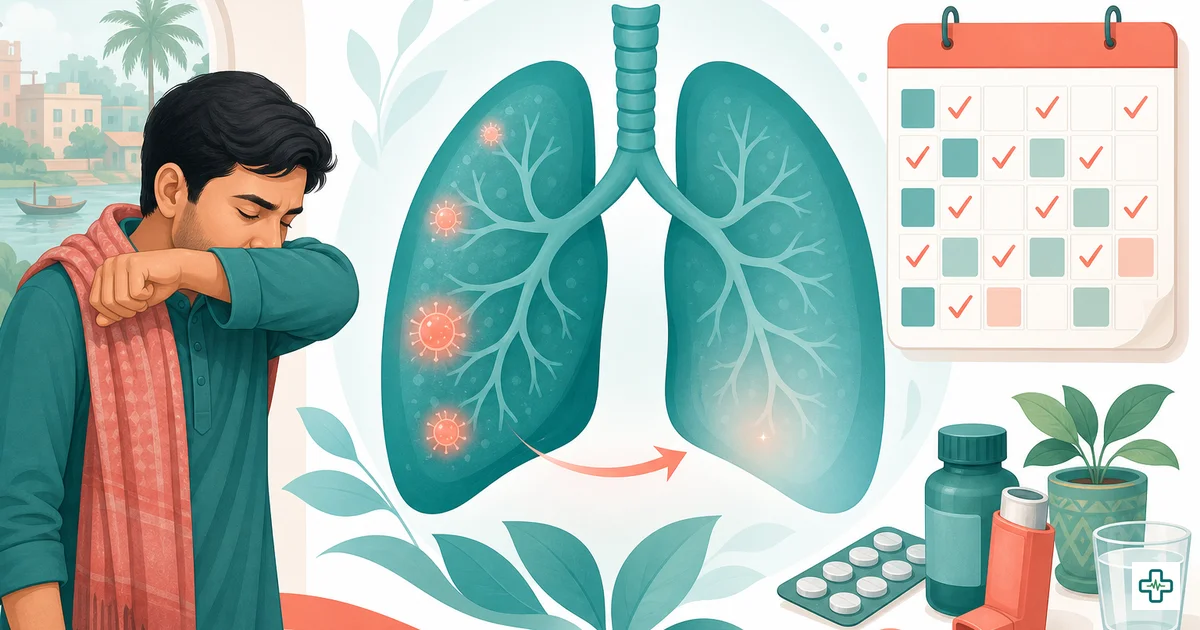
The most important warning sign is a cough that lasts two weeks or longer, especially if you are coughing up phlegm or blood. Other common signs include a low-grade fever that rises in the evening, drenching night sweats, loss of appetite, unexplained weight loss and constant tiredness. TB usually affects the lungs but can also attack the glands, bones, spine or other organs. Anyone with a persistent cough should get tested rather than assume it is an ordinary cold.
How does TB spread and who is most at risk?
TB spreads through the air when a person with active lung TB coughs, sneezes or speaks, releasing tiny droplets that others breathe in. It does not spread by sharing food, plates or shaking hands. People living in crowded homes, those with diabetes, HIV, malnutrition, or who smoke are at higher risk, as are close family members of a TB patient. Crowded living and poor ventilation, common in many parts of Bangladesh, make spread easier.
Where can you get free TB treatment in Bangladesh?
Bangladesh has a strong national TB programme, and both diagnosis and the full course of medicine are available free of charge. Government hospitals, upazila health complexes and many NGO-run DOTS centres provide sputum tests, X-rays and medicines at no cost. Under DOTS (Directly Observed Treatment, Short-course), a health worker helps make sure you take every dose correctly. You do not need to buy expensive medicines privately. Treatment is offered close to home, so distance and cost should never stop anyone from starting.
Why must you finish the entire course?
TB treatment usually lasts six months or more, and the biggest mistake patients make is stopping early once they start feeling better. When medicine is stopped too soon, the strongest bacteria survive and become drug-resistant, leading to multidrug-resistant TB (MDR-TB) that is far harder, longer and costlier to treat. This is the same danger described in our guide on why you should never self-prescribe antibiotics. Finishing the full course protects you and everyone around you.
How can you protect your family?
If someone in your home has TB, the rest of the family — especially children — should be screened, as early infection can be silent. The BCG vaccine given to newborns helps protect babies from severe forms of TB. Good ventilation, covering the mouth while coughing, and completing treatment all reduce spread. Remember, TB is a treatable infection, not a curse or a mark of shame; patients deserve support, not isolation. With understanding and timely care, a TB patient can recover fully and return to normal life.
When should you see a doctor?
See a doctor or visit a DOTS centre if you have had a cough for two weeks or more, are coughing blood, or have unexplained fever, night sweats and weight loss. Seek urgent care for chest pain, severe breathlessness or coughing up large amounts of blood. Early testing saves lives and protects your family. You can find chest specialists and physicians through our list of registered doctors if you need further evaluation after starting treatment.
This article is for general health education and is not a substitute for professional medical advice.