Chamber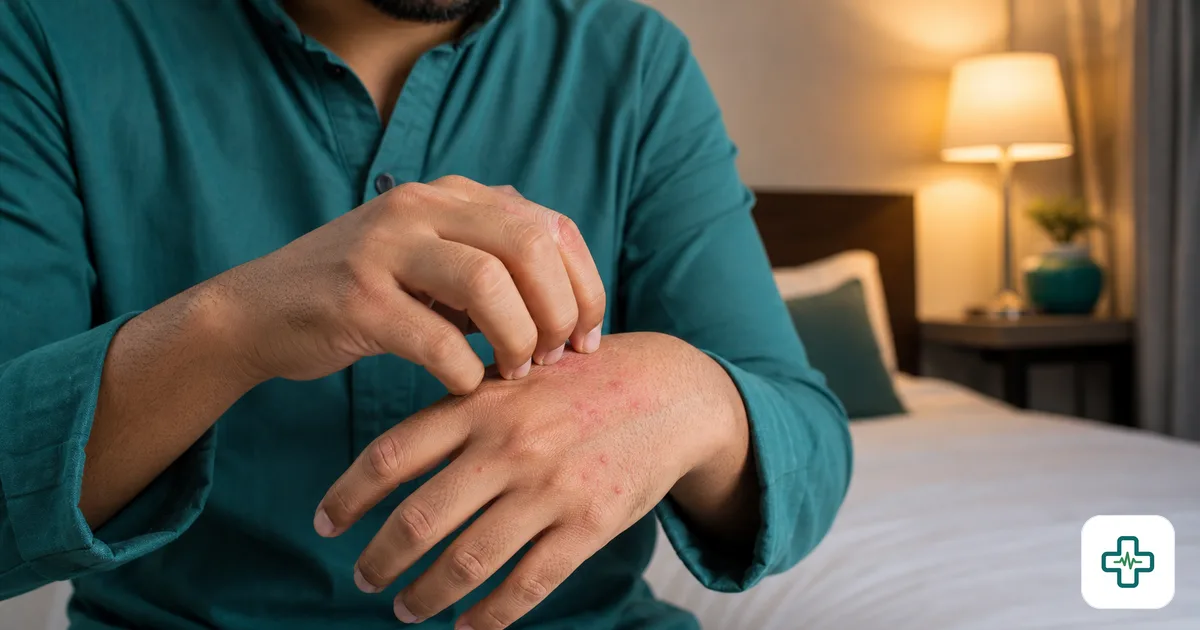
Scabies: Night Itch, Treatment and Family Care
Scabies, known in Bangla as khoshpachra, is a very common and intensely itchy skin condition that spreads easily in crowded homes, hostels and madrasas. It is caused by a tiny mite that burrows into the skin, and the relentless night-time itching can rob whole families of sleep. The good news is that scabies is completely curable with the right cream and a few simple household steps. The key, which many people miss, is treating everyone in the home at the same time. This article is general health information and is not a substitute for advice from a qualified doctor.
What is scabies and how does it spread?
Scabies is caused by a microscopic mite called Sarcoptes scabiei. The female mite burrows under the top layer of skin to lay eggs, and the body's reaction to the mites and their waste causes the itching and rash. It spreads mainly through prolonged skin-to-skin contact, which is why it passes so easily between family members who share a bed or sit close together. It can also spread through shared clothes, towels and bedding. Scabies has nothing to do with being unclean; even spotless homes can be affected.
What are the symptoms and warning signs?
The hallmark of scabies is itching that becomes much worse at night and after a warm bath.
- Intense itching, especially at night, that disturbs sleep.
- A pimple-like rash with tiny red bumps or thin, wavy burrow lines.
- Itching between the fingers, on the wrists, elbows, waist, buttocks and genitals.
- In infants and young children, the palms, soles, scalp and face can be affected.
- Sores and crusting from scratching, which can become infected with bacteria.
Often more than one person in the household is itching at the same time, which is a strong clue that it is scabies.
What causes it to keep coming back?
The most common reason scabies returns is incomplete treatment. Reinfection usually happens when only the person with the worst itching is treated while other family members, who may not yet be itching, still carry the mites and pass them back. Untreated bedding and clothes are another source. Stopping the cream too early, or applying it to only the itchy patches instead of the whole body, also allows the mites to survive.
How is scabies treated?
The standard treatment is a permethrin cream applied to the skin, prescribed by a doctor.
- Apply the cream over the entire body from the neck down, including between fingers and toes, under nails, the navel, genitals and soles; in babies, the scalp and face are included too.
- Leave it on for the time your doctor advises (often overnight, around 8 to 12 hours) and then wash off.
- A second application after about a week is usually advised to kill newly hatched mites.
- Treat every family member and close contact on the same day, even those without symptoms.
- Your doctor may add an antihistamine to ease itching or an antibiotic if sores are infected.
You can check a prescribed cream such as permethrin in our medicine directory rather than buying random products on a shopkeeper's advice. If you want a clear written record of the cream and the family treatment plan, our free prescription tool can help you keep everything organised.
How do you stop reinfection at home?
Treating the skin is only half the job; the home must be cleared of mites at the same time.
- Wash all clothes, bedsheets, pillow covers and towels used in the last few days in hot water and dry them in strong sun.
- Items that cannot be washed can be sealed in a plastic bag for about a week, as the mites die without skin contact.
- Sun-dry mattresses and pillows, since heat and sunlight kill mites.
- Keep fingernails short to reduce damage from scratching.
- Remember that itching can continue for one to two weeks even after successful treatment, because the skin is still reacting; this does not mean the treatment failed.
When should you see a doctor?
See a doctor to confirm the diagnosis and get the correct cream, especially for infants, pregnant women and elderly people, who may need a specific safe option. Seek medical care if the itching and rash do not improve two to four weeks after correct treatment, if the sores become red, swollen, warm or start oozing pus (a sign of bacterial infection), or if the skin becomes thick and crusted, which can happen in people with weak immunity and is highly contagious. A skin specialist can guide tricky or repeated cases; you can see a relevant specialist through our directory and read more health tips on common skin problems.
Frequently Asked Questions
Why must the whole family be treated even if only one person itches?
Because scabies spreads through close contact long before the itching starts. Family members who feel fine may already carry the mites and will reinfect the treated person. Treating everyone in the home on the same day is the only reliable way to break the cycle.
I finished the cream but I am still itching. Did it fail?
Not necessarily. Itching can continue for one to two weeks after successful treatment because your skin is still reacting to the dead mites. If new burrows or fresh bumps keep appearing beyond that, or the itch is worsening, see your doctor to review the treatment.
Can scabies spread through clothes and bedding?
Yes, though less commonly than skin-to-skin contact. Mites can survive a short time off the body, so washing clothes and bedding in hot water, sun-drying, or sealing unwashable items in a bag for about a week is an important part of treatment.
Is scabies a sign of poor hygiene?
No. Scabies can affect anyone regardless of how clean they are, because it spreads by contact. There is no reason for shame; the focus should simply be on treating everyone and clearing bedding.
This article is for general health education and is not a substitute for professional medical advice.