Quit Smoking: The Benefits Timeline and a Plan That Works
In Bangladesh, smoking and smokeless tobacco like jorda, gul, sadapata and paan-supari are woven into daily life, yet they remain the single most preventable cause of early death in the country. Whether you smoke cigarettes or bidi, or keep tobacco tucked in your cheek, the harm is real — and so is the recovery. The good news is that your body begins to repair itself within minutes of your last puff, no matter how long you have used tobacco.
What do cigarettes, bidi and jorda really do to your body?
Tobacco smoke damages almost every organ. It narrows and hardens your arteries, raising the risk of heart attack and stroke; it scars the lungs and causes chronic cough, breathlessness and lung cancer. Smokeless tobacco kept in the mouth is a leading cause of oral cancer, gum disease and stained, loosening teeth — a problem doctors see far too often in Bangladesh.
How fast does your body heal after you quit?
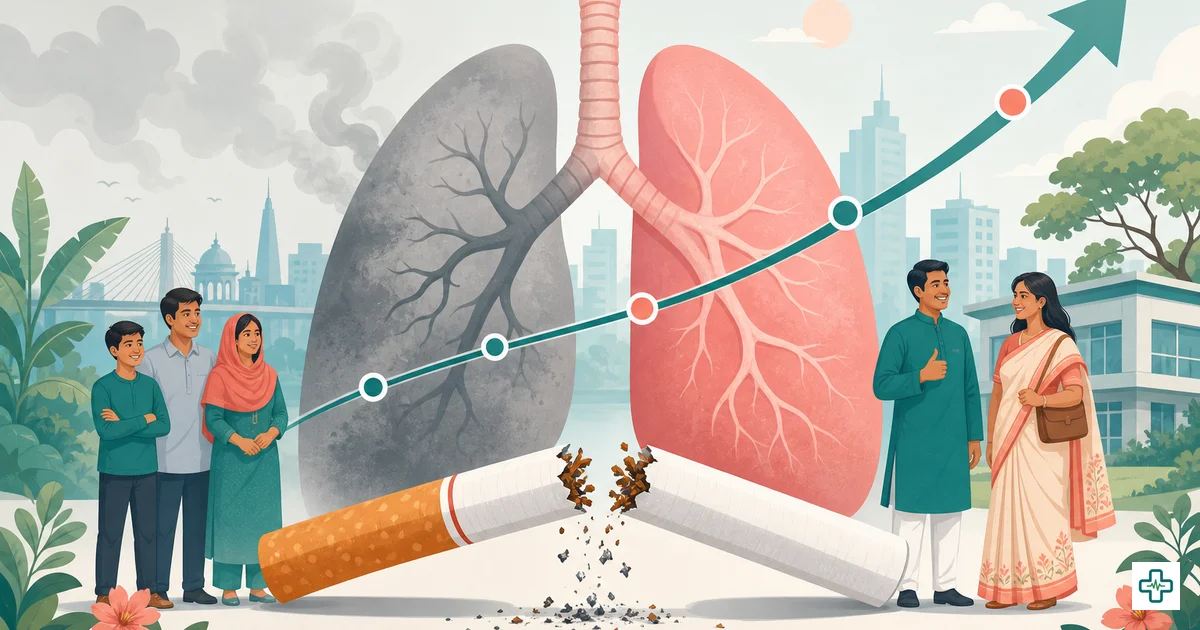
Recovery starts almost immediately and keeps improving for years. The timeline below shows what most people can expect, which is why no quit attempt is ever 'too late.'
- 20 minutes: heart rate and blood pressure begin to drop.
- 12 hours: carbon monoxide levels in your blood return to normal.
- 2–12 weeks: circulation improves and breathing becomes easier.
- 1 year: your risk of a heart attack falls to about half that of a smoker — read our guide on heart attack warning signs.
- 10 years: lung cancer risk drops to roughly half, and many other risks keep falling.
Why willpower alone often fails
If you have tried to quit and slipped back, it is not because you are weak. Nicotine is a genuinely addictive drug that rewires the brain to crave the next dose. Within hours of stopping, many people feel irritable, restless, unable to concentrate or low in mood. These are real withdrawal symptoms, not a character flaw, and they fade over a few weeks. Understanding this helps you plan instead of relying on willpower at the worst moment.
A practical plan to quit for good
A little preparation makes success far more likely. Try this approach:
- Set a quit date within the next two weeks and mark it on the calendar.
- Remove triggers: throw away cigarettes, jorda, lighters and ashtrays from home, work and vehicle.
- Tell your family and friends so they support you and do not offer you tobacco.
- Beat cravings with the 4 Ds: Delay (wait a few minutes for the urge to pass), Drink water, Deep-breathe, and Distract yourself with a task.
- Replace the ritual: swap the after-meal cigarette for a cup of tea, a short walk, a piece of fruit or brushing your teeth.
Worried about gaining weight? Some people do gain a few kilograms, but the health gain from quitting far outweighs it; walking daily and keeping healthy snacks nearby usually keeps it in check. And if you slip and have one cigarette, that is not failure — note what triggered it, learn from it, and get straight back on track the same day.
Can a doctor help you stop smoking?
Yes, and proper support roughly doubles your chance of success. A doctor can offer counselling, help you build a plan, and where appropriate prescribe nicotine replacement (gum, patches) or other medicines that ease withdrawal. Never self-prescribe these — speak to a qualified professional first. You can find registered doctors through our doctor directory, and learn about approved products in our medicine directory.
When should you see a doctor?
See a doctor soon if you have a lasting cough, cough up blood, feel breathless, notice chest pain, or find a non-healing ulcer, white patch or lump in your mouth — these need urgent checking. Remember too that your smoke harms others: secondhand smoke causes asthma, repeated chest infections and even cot death in children. Quitting protects not only you, but everyone who shares your home.
This article is for general health education and is not a substitute for professional medical advice.