Hepatitis B: Symptoms, Spread, Vaccine and Liver Protection
Hepatitis B is one of the most common causes of serious liver disease in Bangladesh, yet many people carry the virus for years without knowing it. Because it often shows no symptoms in the early stages, it can quietly damage the liver while a person feels completely healthy. The encouraging news is that a safe, affordable vaccine can prevent hepatitis B almost completely, and a simple blood test can tell you your status today. Sadly, hepatitis B causes a large share of liver cirrhosis and liver cancer cases in our country, almost all of which are preventable.
What is hepatitis B and what is a silent carrier?
Hepatitis B is a viral infection that attacks the liver. In many people the immune system clears it, but in others the virus stays in the body for life — these people are called chronic carriers. A silent carrier may feel perfectly well and have no symptoms for years, yet can still pass the virus to others and slowly develop liver damage, cirrhosis or even liver cancer over decades. This is why testing matters even when you feel fine.
How does hepatitis B spread?
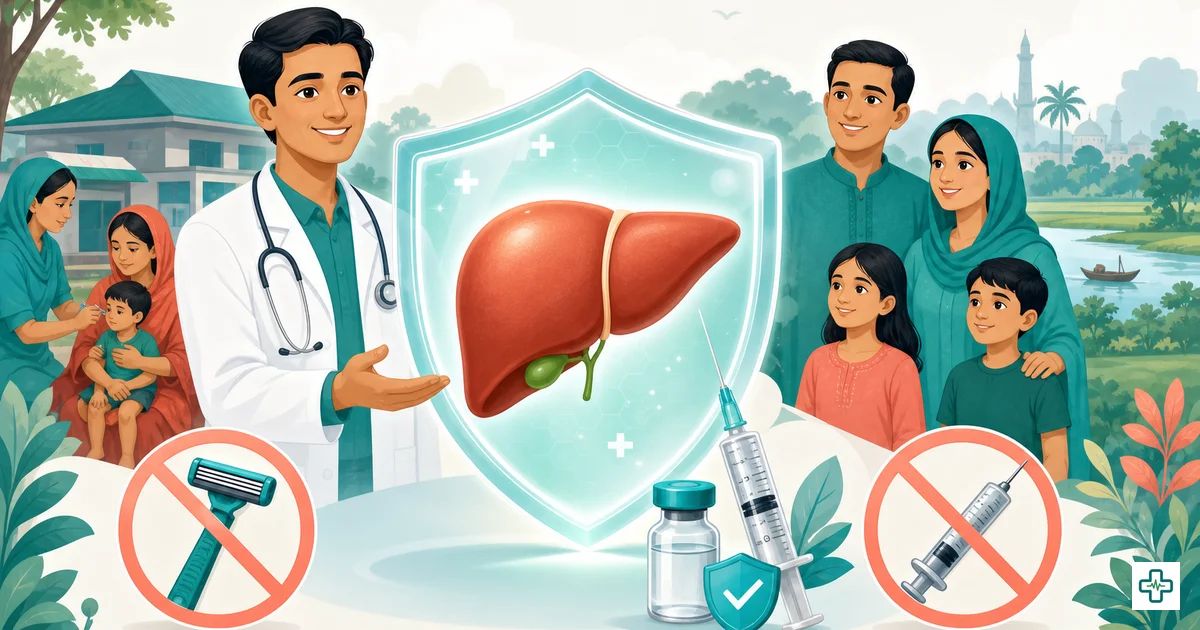
Hepatitis B spreads through infected blood and body fluids, not through sharing food or eating together. Common routes in Bangladesh include unsafe needles and syringes, unsterilised razors and blades at barber shops and salons, unscreened blood transfusions, and from an infected mother to her baby during birth. It can also spread through unprotected sex. You cannot catch it by hugging, sharing meals, or using the same plate.
What are the symptoms and which test confirms it?
Many people have no symptoms at all. When symptoms do appear they may include yellow eyes and skin (jaundice), dark urine, extreme tiredness, nausea, loss of appetite and pain in the upper-right abdomen. A simple, inexpensive blood test called HBsAg shows whether you currently carry the virus. Anyone unsure of their status — especially health workers, salon-goers and family members of a patient — should ask a doctor for this test.
Who should take the hepatitis B vaccine?
The hepatitis B vaccine is safe and highly effective, usually given as three doses over six months. It is part of the routine childhood immunisation schedule in Bangladesh, but many adults remain unvaccinated. Everyone in the family of a carrier should be tested and, if not already infected, vaccinated. Health workers, dialysis patients and anyone at higher risk should also be protected. If you have already had the infection and recovered, you may not need the vaccine, so a quick test guides the decision.
Living with chronic hepatitis B
If you are a chronic carrier, do not panic, but do see a liver specialist regularly. Chronic hepatitis B needs monitoring with blood tests and ultrasound, and some patients need long-term medicine prescribed by a doctor. Avoid alcohol and never rely on herbal "liver tonics" or unproven remedies, which can do more harm than good — the same caution applies to other liver conditions, as explained in our article on reversing fatty liver naturally. Pregnant women should always be screened, because timely steps at birth can protect the baby.
When should you see a doctor?
See a doctor for an HBsAg test if you have never been tested, are planning pregnancy, or live with a known carrier. Seek prompt care if you notice yellowing of the eyes or skin, dark urine, persistent vomiting, swelling of the abdomen, or confusion and drowsiness, which can signal serious liver trouble. You can find liver specialists and physicians through our list of registered doctors, and any hepatitis B medicine should be taken strictly under medical supervision.
This article is for general health education and is not a substitute for professional medical advice.