Chamber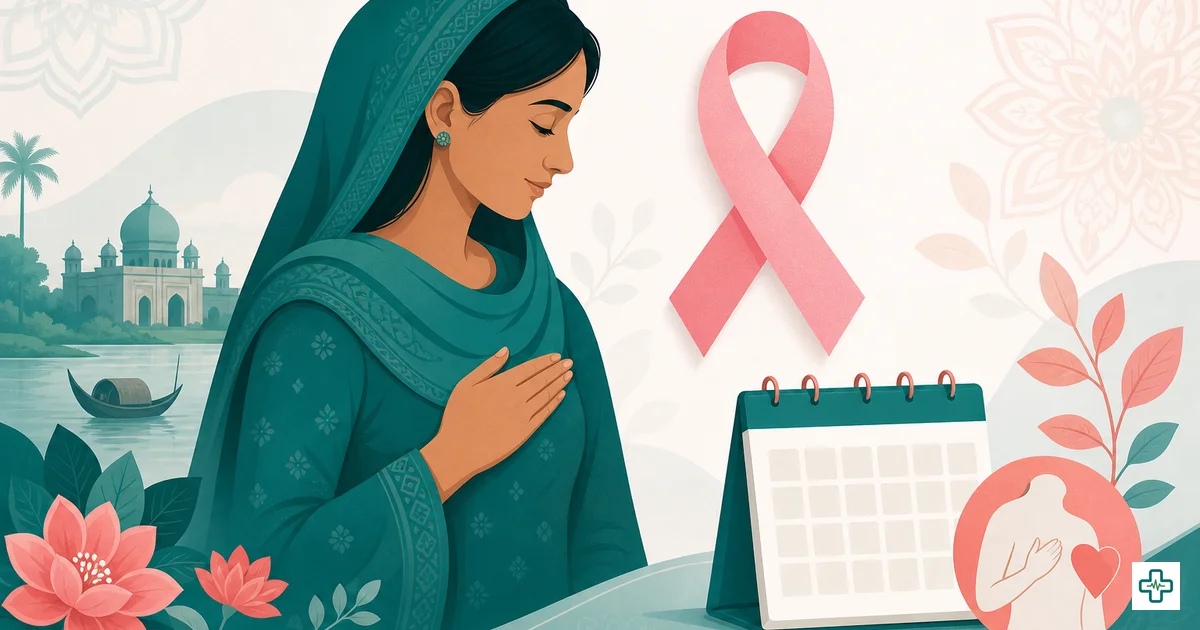
Breast Cancer: Early Signs, Self-Examination Steps and Screening
Breast cancer is the most common cancer among women in Bangladesh — and also one of the most treatable, when it is found early. Sadly, most patients here reach a doctor at a late stage, often because of shame, fear of the word "cancer", or the habit of quietly ignoring one's own health while caring for everyone else. This article explains the early signs, how to check your own breasts each month, and what screening is available — because a lump found early can mean a long, healthy life.
What are the early signs of breast cancer?
The most common early sign is a painless lump in the breast or armpit that does not go away after a period ends. Other warning signs include a change in breast size or shape, dimpling or puckering of the skin, a newly pulled-in (inverted) nipple, and blood-stained discharge from the nipple. Remember an important, reassuring fact: most breast lumps are not cancer — but every new lump deserves a doctor's check, because only tests can tell the difference.
- A new lump or hard area in the breast or underarm, usually painless
- Change in the size, shape or outline of one breast
- Skin dimpling, puckering or an orange-peel look
- Nipple turning inward, a rash around it, or blood-stained discharge
- Unusual one-sided breast pain that persists, though pain alone is rarely cancer
How do you examine your breasts at home?
A monthly self-examination takes five minutes and is best done a few days after your period ends, when breasts are least tender; after menopause, simply pick the same date each month. It is a private, simple habit — done in your own room — that teaches you what is normal for your body so you notice any change quickly.
- Stand before a mirror with arms at your sides, then raised: look for changes in size, shape, skin or nipples.
- Lie down or do this while bathing. Use the flat pads of your three middle fingers, not the fingertips.
- With your left arm raised behind your head, use the right hand to feel the entire left breast in small circles — cover it fully, from collarbone to below the breast and from breastbone to armpit.
- Press gently, then a little deeper, feeling for any lump or thick area. Check the armpit too.
- Gently squeeze the nipple to check for discharge. Repeat everything on the other side.
Clinical examination and screening
Self-examination is awareness, not a complete shield, so combine it with professional checks. Women over 30 can have a clinical breast examination by a trained doctor or nurse every one to three years, and more often after 40. Where available, a mammogram or breast ultrasound may be advised from around age 40, or earlier for women with a strong family history — your doctor will set the right schedule. If you feel anything unusual, do not wait for a screening date; you can find a female doctor or surgeon on ChamberBD and book a visit confidentially.
What raises the risk — and what protects?
Risk rises with age, a family history of breast or ovarian cancer, early first period, late menopause, having a first child after 30 or not breastfeeding, obesity and tobacco or alcohol use. On the protective side, breastfeeding your children, staying physically active and keeping a healthy weight all lower risk — our safe weight loss guide can help with the last one. Having a risk factor does not mean you will get cancer; it simply means screening matters even more for you.
Myths, shame and the role of the family
Let us say it clearly: breast cancer is not contagious, it is not anyone's fault, and it is not a punishment for any "sin". Hiding a lump out of shame only gives the disease time to grow. Husbands and family members have a life-saving role — encourage the women in your family to do monthly self-checks, take any complaint seriously, arrange the doctor visit and go along for support. In Bangladesh, women who are supported by their families are far more likely to be diagnosed early, and early diagnosis is when treatment works best — often with simpler surgery and better long-term survival.
When should you see a doctor?
See a doctor promptly — within days, not months — if you notice any new breast change. Early breast cancer is usually painless, so do not wait for pain before acting. A quick examination and, if needed, an ultrasound or biopsy can settle the question and give you peace of mind.
- Any new lump or hard area in the breast or armpit, even if painless
- Blood-stained or spontaneous nipple discharge
- Skin dimpling, ulceration, redness or an orange-peel appearance
- A nipple that has newly turned inward or changed shape
- A known lump that is growing, or breast changes during pregnancy or breastfeeding that do not settle
This article is for general health education and is not a substitute for professional medical advice.