Telemedicine in Bangladesh: a practical guide for doctors (2026)
Telemedicine did not leave when the pandemic eased. Patients liked skipping the rickshaw ride and the waiting room, and many doctors kept taking calls. The problem is how most of that practice runs: a personal WhatsApp number, voice notes at 11pm, no records, no fixed fee, and no boundary between "doctor" and "available human." This guide is about doing telemedicine deliberately — keeping what works, fixing what leaks, and staying safe for both you and the patient.
Why telemedicine in Bangladesh is here to stay
The shift was forced by COVID-19, when the DGHS issued telemedicine guidance and remote consultation became the only safe option for routine care. What surprised many practitioners is that demand did not vanish afterward. A patient in a district town who needs a follow-up no longer assumes a four-hour round trip is unavoidable. A working professional in Dhaka would rather pay for a clean video slot than lose half a day in traffic and a crowded chamber.
So telemedicine is now a permanent part of practice for most doctors — but for the majority it is an accidental, messy add-on rather than a designed service. The doctors who treat it as a real consultation channel, with the same discipline as their chamber, are the ones who earn from it without burning out.
Which consultations actually suit video — and which absolutely do not
The single most important skill in telemedicine is knowing what you cannot safely do over a screen. Get this right and everything else is manageable. Get it wrong and you put a patient at risk.
Good fits for video
- Follow-up visits. Reviewing progress after an in-person diagnosis, adjusting a dose, confirming improvement.
- Report and test reviews. Going through blood work, imaging reports, or pathology results the patient already has.
- Chronic disease management. Stable diabetes, hypertension, thyroid follow-ups — conditions you are monitoring, not diagnosing fresh.
- Mental health consultations. Counselling and psychiatric follow-ups often work as well or better remotely, where the patient is comfortable at home.
- Medication refills and minor queries. Straightforward continuation of an established plan.
What does NOT belong on video
Anything that needs a physical examination is the obvious line. You cannot palpate an abdomen, auscultate a chest, or check a reflex over a phone. Beyond that, certain presentations are red flags that mandate in-person care or an immediate referral — and a good telemedicine doctor says so without hesitation:
- Chest pain, severe breathlessness, or suspected cardiac symptoms.
- Acute severe abdominal pain.
- Signs of stroke — facial droop, weakness, slurred speech.
- High fever in a very young child, or a lethargic, poorly-feeding infant.
- Any bleeding that is heavy or unexplained, including in pregnancy.
- Sudden severe headache, confusion, or loss of consciousness.
- Trauma, fractures, deep wounds, or burns.
The safe rule: when a case needs your hands or your stethoscope, or when a red flag appears, the right telemedicine decision is to stop and direct the patient to a chamber, an emergency department, or a referral. Saying "this needs to be seen in person" is not a failure of the service — it is the service working correctly.
In-person vs telemedicine: suitability by case type
Use this as a quick triage frame when a patient asks whether a video visit will do.
| Case type | Telemedicine suitable? | Notes |
|---|---|---|
| Follow-up after diagnosis | Yes | Ideal use — progress review, dose change |
| Report / imaging review | Yes | Patient shares results beforehand |
| Chronic disease (stable) | Yes | Monitoring, not fresh diagnosis |
| Mental health / counselling | Yes | Often works well remotely |
| New undiagnosed symptom | Sometimes | Triage only; refer in if exam needed |
| Anything needing examination | No | Palpation, auscultation, etc. impossible |
| Red-flag / emergency symptoms | No | Direct to chamber or emergency immediately |
| Pregnancy with bleeding/pain | No | Needs in-person assessment |
Choosing your platform and workflow
Most doctors default to whatever app is already on their phone, which is how everything ends up in one chaotic chat thread. A workable telemedicine setup has three parts that should connect: the consultation itself, payment, and prescription delivery.
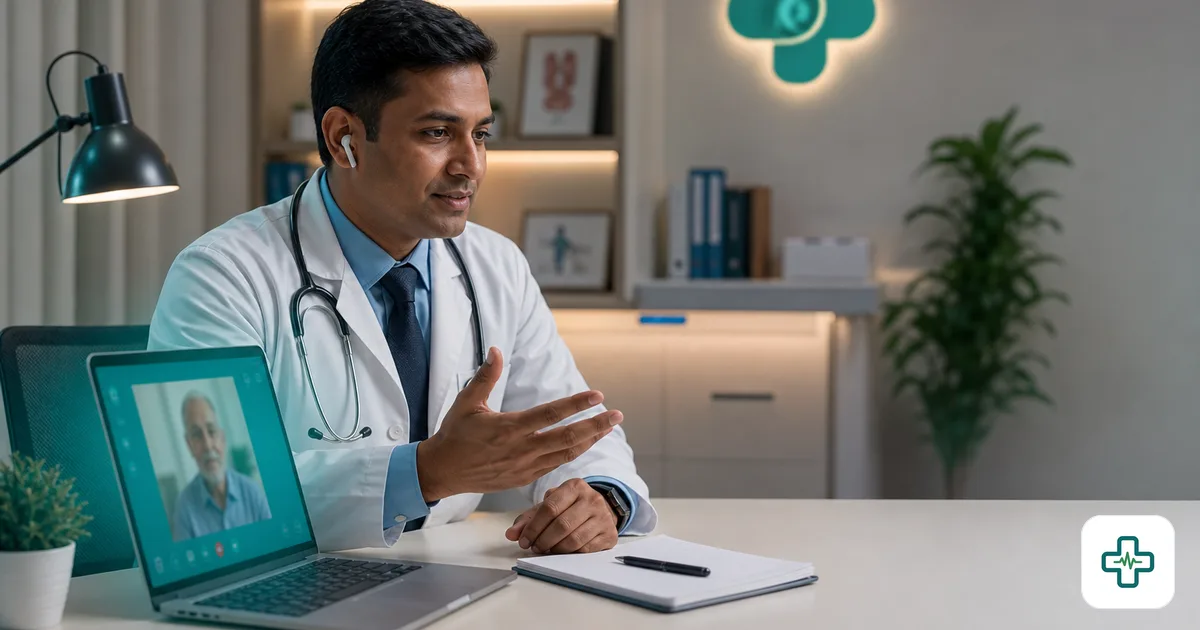
- The video call. A stable video tool with decent audio. Reliability matters more than features — a call that drops mid-consult during load-shedding is worse than a plain one that holds.
- Payment. A way to collect the fee before the call, typically via bKash or Nagad, so you are not chasing money afterward.
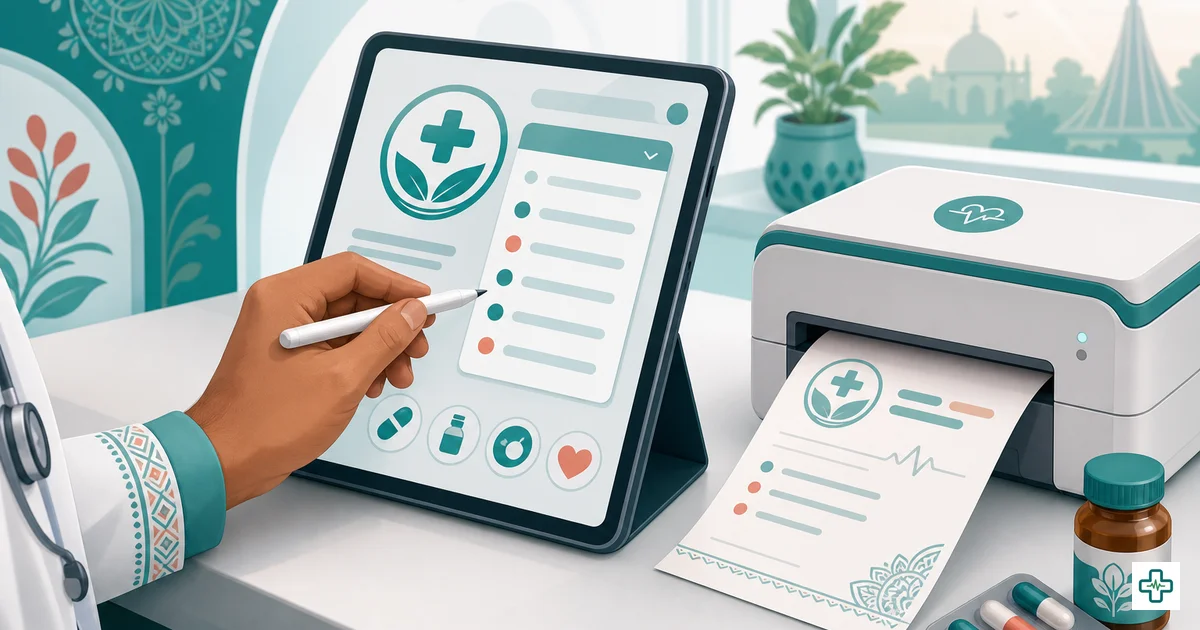
- Prescription delivery. A clean digital prescription sent to the patient after the consult — not a blurry photo of a handwritten slip. Whether a digitally shared prescription is valid is a fair question, and we answer it fully in our guide to whether digital prescriptions are legal in Bangladesh; the short version is that a properly identified, professionally formatted prescription is sound.
You can stitch these together manually, but the friction adds up fast across a day of calls. A chamber system that handles appointment booking, the consultation record, and a prescription share link in one flow removes most of the daily admin. If you want to see how that fits together, the ChamberBD feature set is built around exactly this kind of connected workflow.
Pricing a telemedicine visit without underselling yourself
A common mistake is treating telemedicine as a favour rather than a service — answering for free on WhatsApp and then wondering why patients never book a proper visit. A telemedicine consultation is real clinical work and should carry a real fee.
In practice, many doctors price a tele-visit slightly below their chamber fee, reflecting the lower overhead and shorter format, but it should never be free or trivial. If your chamber consultation is, say, ৳600–800 in a city, a tele-follow-up might sit a little lower — but set the number deliberately and state it upfront. Two principles help:
- Be transparent before the call. Tell the patient the fee when they book, not after. Surprise charges erode trust.
- Don't let "quick question" become free consulting. A two-minute voice note that changes a prescription is a consultation. If you answer everything free, you train patients to bypass booking entirely.
Consent, privacy, and the basics you can't skip
Telemedicine carries the same duty of confidentiality as a chamber visit, and a few habits keep you on the right side of it.
- Do not record without consent. If you ever record a consultation for your records, the patient must know and agree. Quietly recording a video call is a serious breach of trust and privacy.
- Store records securely. Patient information — reports, notes, prescriptions — should sit in a secure system, not scattered across a personal phone's gallery and chat backups that anyone borrowing the phone could see.
- Confirm identity. Make sure you are speaking to the patient (or a guardian for a minor), especially before sharing results or sensitive advice.
- Use a professional channel. A consultation conducted through a proper system, rather than your personal number, protects both your privacy and the patient's.
Patient data protection is a larger topic in its own right, and our guide to patient data privacy for doctors in Bangladesh goes deeper into secure storage and consent.
Documentation: telemedicine visits need records too
A consultation that leaves no trace is a problem waiting to happen. Just because no one walked into your chamber does not mean the visit did not occur. Every tele-consult should generate a record: the date, the patient, the complaint, your assessment, what you advised, and the prescription you issued. This protects you if a question arises later, lets you give continuous care across visits, and is simply good medicine.
This is one area where running telemedicine on a personal WhatsApp falls apart completely — chat history is not a medical record, it is not searchable when you need it, and it disappears when you change phones. A system that logs each consultation alongside your chamber patients keeps your records unified, whether the patient came in person or by video.
Collecting payment: the etiquette of asking upfront
Bangladeshi doctors sometimes feel awkward asking for payment before a remote consultation, but it is both normal and necessary. Collecting the fee through bKash or Nagad before the call is now common practice, and patients increasingly expect it. The way you frame it matters: a calm, standard message at booking — "the consultation fee is X, please send it via bKash to confirm your slot" — is professional, not greedy.
Upfront payment also reduces no-shows. When a patient has paid, they turn up and they take the call seriously. Leaving payment to "after the call" invites awkward chasing, partial payments, and people who book and vanish. Make the fee a precondition of the slot, handle it politely, and the whole transaction becomes cleaner for both sides.
Boundaries: published tele-hours, not 24/7 WhatsApp leakage
The biggest hidden cost of telemedicine is your own time and sanity. When patients have your personal number, the consultation never really ends. Questions arrive during dinner, on holidays, at midnight — and because you answered once, you are expected to answer always. This is how good doctors burn out.
The fix is structural, not willpower. Publish defined tele-hours, exactly as you publish chamber timings, and route telemedicine through a booking system rather than your personal phone. Patients book a slot within your hours; outside those hours, the channel is closed and genuine emergencies go to emergency services, where they belong. This is not coldness — it is the same boundary that lets you be fully present for the patient in front of you. A doctor who is "available" 24/7 is usually a tired doctor giving worse care.
If your wider concern is how patients find and judge you online, that connects to your online reputation as a doctor in Bangladesh — a well-run telemedicine service with clear hours and prompt, bounded responses builds exactly the reputation you want.
Putting it together with the right tools
Done well, telemedicine is a clean addition to your practice: defined hours, suitable cases only, upfront payment, proper records, and a digital prescription the patient can fill anywhere. Done badly, it is a leaking personal phone that drains your evenings. The difference is mostly structure. A chamber system that handles appointment booking, payment, the consultation record, and a digital prescription share link by SMS or WhatsApp turns the messy version into the clean one. You can see how the pieces fit on the ChamberBD doctor platform, and when you want to run your tele-practice properly, you can create a free ChamberBD account and set your tele-hours in minutes.
Frequently Asked Questions
Is telemedicine legal for doctors in Bangladesh?
Yes. Telemedicine became established practice during COVID-19 when the DGHS issued telemedicine guidance, and it has continued since. As long as you practise within your competence, keep proper records, maintain confidentiality, and refer cases that need in-person examination, remote consultation is a legitimate and accepted way to treat suitable patients.
Which cases should never be handled by telemedicine?
Any case needing a physical examination, and any red-flag presentation — chest pain, severe breathlessness, stroke signs, acute severe abdominal pain, heavy or unexplained bleeding, high fever in a young child, trauma, or loss of consciousness. For these, stop the consultation and direct the patient to a chamber, emergency department, or referral immediately.
How should I price a telemedicine consultation?
Treat it as real clinical work with a real fee. Many doctors set tele-visits slightly below their chamber fee to reflect lower overhead, but never free. State the fee clearly when the patient books, collect it upfront via bKash or Nagad, and avoid letting "quick questions" turn into unpaid consulting that trains patients to skip booking.
Do I need to keep records of telemedicine visits?
Yes. Every tele-consult should generate a record — date, patient, complaint, your assessment, advice, and the prescription issued. A chat history is not a medical record. Proper documentation protects you if questions arise, enables continuous care across visits, and keeps your telemedicine and chamber records unified in one place.
How do I stop telemedicine from taking over my personal time?
Publish defined tele-hours just like chamber timings and route consultations through a booking system, not your personal number. Patients book within your hours; outside them the channel is closed and emergencies go to emergency services. This boundary prevents burnout and is the same discipline that keeps your in-person care sharp.
Telemedicine rewards structure: clear hours, the right cases, upfront payment, and clean records. When you are ready to run it as a real service rather than a personal-phone afterthought, you can set up your free ChamberBD account, publish your tele-hours, and send digital prescriptions by SMS or WhatsApp from one place.