 Chamber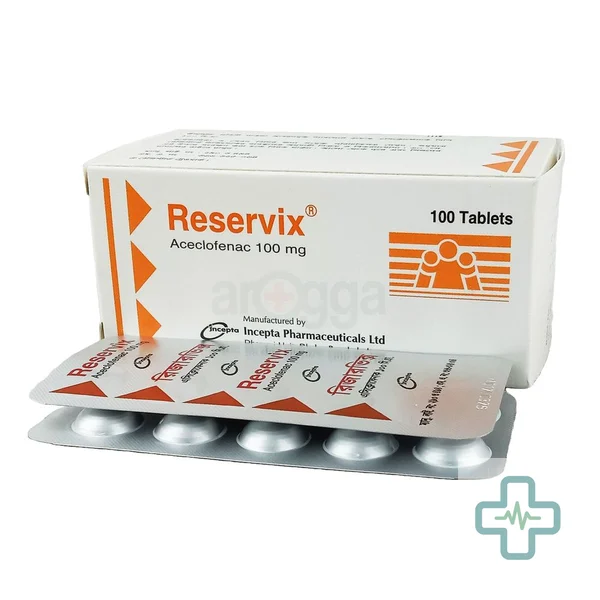
Tablet
Reservix 100 mg Tablet
Generic: Aceclofenac
Manufacturer: Incepta Pharmaceuticals Ltd.
Therapeutic class: Non-steroidal anti-inflammatory drug (NSAID)
What is Reservix used for?
Reservix 100 mg Tablet contains aceclofenac, a non-steroidal anti-inflammatory drug from Incepta Pharmaceuticals Ltd. It is used to relieve pain and inflammation in conditions such as osteoarthritis, rheumatoid arthritis, and ankylosing spo…
Price in Bangladesh
| Pack | Price (BDT) |
|---|---|
| Per tablet | ৳ 5.70 |
| Strip of 10 | ৳ 57.00 |
Prices are indicative — actual retail price may vary by pharmacy.
What is Reservix?
Reservix 100 mg Tablet contains aceclofenac, a non-steroidal anti-inflammatory drug from Incepta Pharmaceuticals Ltd. It is used to relieve pain and inflammation in conditions such as osteoarthritis, rheumatoid arthritis, and ankylosing spondylitis.
Reservix 100 mg tablet is manufactured and marketed by Incepta Pharmaceuticals Ltd. in Bangladesh. It contains Aceclofenac, a modern NSAID painkiller chemically related to diclofenac, very widely prescribed in Bangladesh for arthritis, back pain, dental pain and other inflammatory pain. Many patients find it somewhat gentler on the stomach than older NSAIDs, though the same core precautions still apply.
Aceclofenac works by blocking cyclo-oxygenase (COX) enzymes, which reduces the production of prostaglandins — the chemicals that cause pain, swelling and stiffness in inflamed joints and tissues. In the body it is partly converted into diclofenac-like active substances, giving steady relief with convenient twice-daily dosing. Because prostaglandins also protect the stomach and support kidney blood flow, it must be taken with food and used carefully.
Indications
Reservix is used to relieve pain and inflammation in:
- Osteoarthritis (knee, hip and other joints)
- Rheumatoid arthritis
- Ankylosing spondylitis
- Low back pain and neck pain
- Dental pain and pain after minor surgery
- Sprains, strains and sports injuries
- Period (menstrual) pain
- Frozen shoulder, tendonitis and other soft-tissue pain
It controls symptoms only; persistent or recurrent pain needs proper evaluation by a doctor to treat the underlying condition.
Dosage & Administration
The usual adult dose of Reservix is 100 mg twice daily — one tablet in the morning and one in the evening — taken with or immediately after food with a full glass of water. Sustained-release 200 mg preparations are taken once daily where prescribed.
- Maximum 200 mg per day
- Use the lowest effective dose for the shortest possible time
- Reduced doses may be needed in liver impairment and in the elderly
- Not recommended for children
Do not exceed the prescribed dose or extend the course yourself; your doctor will review whether you still need it.
Side Effects
Common side effects of Reservix include:
- Indigestion, stomach pain, heartburn, nausea or diarrhoea
- Dizziness or headache
- Mild rise in liver enzymes on blood tests
- Fluid retention and slightly raised blood pressure
Serious but less common: stomach or duodenal ulcer and bleeding (black stools, vomiting blood), kidney impairment, liver injury, severe skin or allergic reactions, and — with long-term high-dose use — a small increase in heart attack and stroke risk. Stop the medicine and see a doctor urgently for black stools, yellow eyes, swelling or chest pain.
Precautions & Warnings
Take these precautions with Reservix:
- Always take it with food; for longer courses your doctor may add a gastric-protective medicine (PPI)
- Avoid in dengue fever or suspected dengue — like all NSAIDs it raises bleeding risk; use paracetamol for fever
- Use cautiously if elderly, or with a history of ulcer, kidney disease, heart disease, hypertension, liver disease or asthma
- Avoid while dehydrated (vomiting, diarrhoea, poor intake)
- Do not take two NSAIDs together, including over-the-counter painkillers
- On long-term treatment, get periodic checks of blood pressure, kidney function, liver enzymes and haemoglobin
Drug Interactions
Important interactions of Reservix:
- Other NSAIDs and aspirin — greatly increased ulcer and bleeding risk
- Anticoagulants and antiplatelets (warfarin, clopidogrel, rivaroxaban) — higher bleeding risk
- Corticosteroids and SSRIs — added risk of stomach bleeding
- ACE inhibitors, ARBs and diuretics — combined use can harm the kidneys and weaken blood-pressure control
- Lithium, methotrexate and digoxin — aceclofenac can raise their blood levels
- Ciclosporin, tacrolimus — increased kidney toxicity
- Diabetes medicines — occasional blood-sugar fluctuations; monitor
Always give your doctor and pharmacist a full list of your medicines.
Contraindications
Do not take Reservix if you have:
- Active peptic ulcer or gastrointestinal bleeding, or previous NSAID-related bleeding
- Asthma attacks, hives or allergy triggered by aspirin or other NSAIDs
- Severe heart failure, established ischaemic heart disease, cerebrovascular or peripheral arterial disease
- Severe kidney or liver impairment
- Dengue fever or suspected dengue
- The last trimester of pregnancy
- Known allergy to aceclofenac, diclofenac or any ingredient
Pregnancy & Lactation
Pregnancy: Reservix should be avoided in pregnancy and is contraindicated in the last three months — like other NSAIDs it can prematurely close a vessel in the baby's heart, harm the baby's kidneys and delay labour. If pain relief is needed in pregnancy, paracetamol is the preferred choice under medical advice.
Breastfeeding: There is limited information on aceclofenac in breast milk, so it is generally not preferred during breastfeeding; doctors usually choose better-studied alternatives. Take it while nursing only if your doctor specifically advises it.
Storage Conditions
Store Reservix below 30°C in a cool, dry place, protected from light and moisture. Keep tablets in the original blister pack until use. Keep all medicines out of the reach and sight of children. Do not use after the expiry date printed on the package.
Frequently Asked Questions
Is Reservix the same as diclofenac?
They are close relatives but not identical. Aceclofenac is chemically derived from diclofenac and partly converts to diclofenac-like substances in the body, so their pain-relieving power is similar. Studies suggest aceclofenac may cause somewhat less stomach upset in many patients. However, all the major NSAID warnings — take with food, ulcer and bleeding risk, kidney and heart caution, and avoiding it in dengue — apply equally to Reservix.
Can I take Reservix on an empty stomach?
No. Take Reservix with food or immediately after a meal, with a full glass of water. NSAIDs reduce the prostaglandins that protect your stomach lining, so an empty-stomach dose markedly raises the risk of gastritis, pain and ulcers. If you experience persistent heartburn or stomach pain even with food, inform your doctor — they may add a gastric-protective medicine or switch you to a different painkiller.
Can I take Reservix for fever during dengue season?
No. Reservix is an NSAID, and all NSAIDs should be avoided when dengue is possible because they impair platelets and increase the risk of serious bleeding. For fever in dengue season, take paracetamol within its daily limit and drink plenty of fluids. If fever lasts more than two days, or warning signs such as severe abdominal pain, vomiting, bleeding gums or black stools appear, see a doctor and get tested for dengue.
Last updated: