 Chamber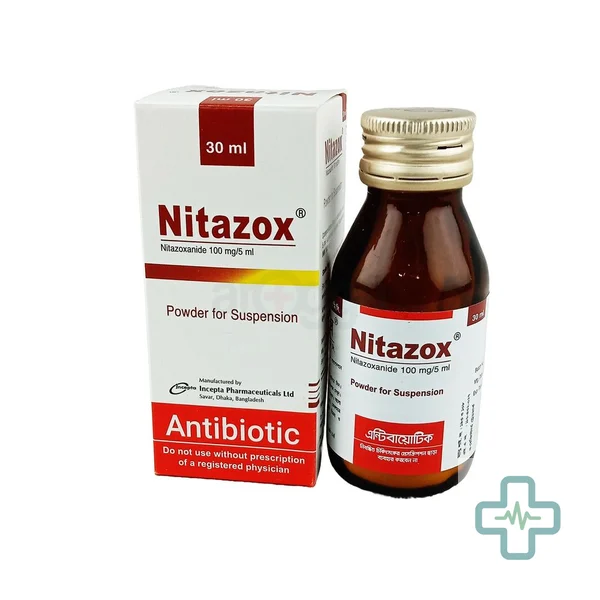
Powder For Suspension
Nitazox 100 mg/5 ml Powder For Suspension
Generic: Nitazoxanide
Manufacturer: Incepta Pharmaceuticals Ltd.
Therapeutic class: Antiprotozoal / Antiparasitic
What is Nitazox used for?
Nitazox 100 mg/5 ml powder for suspension contains nitazoxanide, an antiprotozoal and antiparasitic medicine. It is used for certain intestinal infections, including diarrhoea caused by Giardia lamblia or Cryptosporidium parvum, when prescr…
Price in Bangladesh
| Pack | Price (BDT) |
|---|---|
| Per powder for suspension | ৳ 40.00 |
| 30ml bot | ৳ 40.00 |
Prices are indicative — actual retail price may vary by pharmacy.
What is Nitazox?
Nitazox 100 mg/5 ml powder for suspension contains nitazoxanide, an antiprotozoal and antiparasitic medicine. It is used for certain intestinal infections, including diarrhoea caused by Giardia lamblia or Cryptosporidium parvum, when prescribed by a doctor.
Nitazox 100 mg/5 ml powder for suspension is manufactured by Incepta Pharmaceuticals Ltd. and contains Nitazoxanide, a broad-spectrum antiprotozoal and antiparasitic medicine. It is mainly used to treat diarrhoea caused by the intestinal parasites Giardia lamblia and Cryptosporidium parvum, and doctors also prescribe it for certain worm infections and other persistent infective diarrhoeas. Nitazox should be taken with food.
Nitazoxanide works by blocking an enzyme system (pyruvate:ferredoxin oxidoreductase) that many parasites depend on for their energy production. Without this energy pathway, the parasites cannot survive or multiply, and the gut gradually clears the infection. Taking the medicine with food increases its absorption and improves its effectiveness.
Indications
Nitazoxanide is indicated for:
- Giardiasis — diarrhoea caused by Giardia lamblia
- Cryptosporidiosis — diarrhoea caused by Cryptosporidium parvum, including in children
- Amoebiasis and some helminth (worm) infections — as judged appropriate by a doctor
- Persistent or rotavirus-associated diarrhoea — in selected cases under medical guidance
Most short-lived diarrhoea is viral and needs only fluids and zinc (in children) — not antiparasitic medicine. Nitazox should be used when a doctor suspects or confirms a parasitic cause, not routinely for every loose motion.
Dosage & Administration
Usual dosing of Nitazox, always taken with food:
- Adults and children 12 years and older: 500 mg every 12 hours for 3 days
- Children 4-11 years: commonly 200 mg (10 ml suspension) every 12 hours for 3 days
- Children 1-3 years: commonly 100 mg (5 ml suspension) every 12 hours for 3 days
Shake the suspension well before measuring. Complete the full 3-day course even if diarrhoea settles earlier. Children's doses are ultimately weight- and age-based and must follow a registered doctor's prescription; longer courses for special situations are decided by the doctor. Maintain oral rehydration alongside treatment.
Side Effects
Nitazoxanide is generally well tolerated. Possible side effects:
- Common: abdominal pain, nausea, headache, and harmless bright yellow-green discolouration of urine (sometimes of the eyes' sclera appearing yellowish-tinged in reports, and of body fluids)
- Less common: vomiting, diarrhoea, dizziness, loss of appetite
- Rare: allergic reactions with rash, itching or swelling; raised liver enzymes
The yellowish urine is expected with this medicine and disappears after the course ends. Seek medical help for any swelling of the face or throat, breathing difficulty, severe rash, or worsening dehydration despite treatment.
Precautions & Warnings
Precautions with Nitazoxanide:
- Take with food — absorption is much better and stomach upset less likely
- Rehydration first: in any diarrhoea, fluids and electrolytes (ORS) remain the priority; the antiparasitic complements, never replaces, them
- Tell your doctor about liver or kidney disease and immune-suppressing conditions such as advanced HIV, where response may differ and longer therapy may be needed
- Diabetic patients should note the suspension contains sugar
- If diarrhoea persists beyond the course, returns, or contains blood, return to the doctor for stool testing rather than repeating courses on your own
Drug Interactions
Nitazoxanide has relatively few known drug interactions, but note:
- Highly protein-bound drugs: its active form (tizoxanide) binds strongly to blood proteins, so caution with warfarin, phenytoin and similar narrow-margin medicines — monitoring may be advised
- Other antiparasitics: combinations should be doctor-directed to avoid unnecessary duplication
- Alcohol: avoid during treatment of gut infections, as it worsens dehydration and stomach upset
Always give your doctor and pharmacist a complete list of your medicines, including blood thinners and anti-epileptics, before starting Nitazox.
Contraindications
Nitazoxanide should not be used in:
- Known hypersensitivity to nitazoxanide or any component of the powder for suspension
- Children below the age covered by the product's licence (suspension is generally for 1 year and above; tablets for 12 years and above) unless a doctor directs otherwise
Use with caution, under medical supervision, in significant liver or kidney impairment, as safety data in these groups are limited. In severely immunocompromised patients (such as advanced HIV), effectiveness may be reduced and specialist-guided treatment is required rather than standard self-medication.
Pregnancy & Lactation
Pregnancy: Animal studies with nitazoxanide have not shown harm to the foetus, but well-controlled human studies are lacking. It should be used in pregnancy only if a registered doctor judges the benefit to outweigh potential risk — particularly in the first trimester, when most medicines are minimised.
Lactation: It is not known whether nitazoxanide or its active metabolite passes into human breast milk. Breastfeeding mothers should use it only on a doctor's advice, who will weigh the importance of treating the mother's infection against any theoretical risk to the infant.
Storage Conditions
Store below 30°C in a dry place, protected from light. Keep tablets in the original blister. After reconstitution, the suspension should be kept as directed on the label and used within the stated period (commonly 7 days); shake well before every dose. Keep out of the reach and sight of children and never use after the expiry date.
Frequently Asked Questions
Why must Nitazox be taken with food?
Food substantially increases the absorption of nitazoxanide — taking Nitazox with a meal can roughly double the amount of active drug reaching your blood compared with an empty stomach, and it also reduces nausea and stomach discomfort. Take each dose during or immediately after a meal, roughly 12 hours apart, for the full 3-day course your doctor prescribed.
My urine turned yellow-green after taking Nitazox — is that dangerous?
No. A bright yellow or greenish tint to the urine is a well-known, harmless effect of nitazoxanide and its metabolites, and it fades within a day or two of finishing the course. It is not a sign of liver or kidney damage by itself. However, if you also notice yellowing of the eyes or skin, dark urine with pale stools, or severe tiredness, see a doctor promptly, as those suggest a different problem.
Can I take Nitazox for any diarrhoea without seeing a doctor?
No. Most acute diarrhoea is viral and self-limiting — the essential treatment is oral rehydration solution, continued feeding, and zinc for children, not antiparasitic drugs. Nitazox helps specifically when a parasite such as Giardia or Cryptosporidium is the suspected or confirmed cause, which a doctor judges from the history, duration and sometimes stool tests. Diarrhoea with high fever, blood, severe dehydration, or lasting more than a few days needs medical assessment, not self-medication.
Last updated: