 Chamber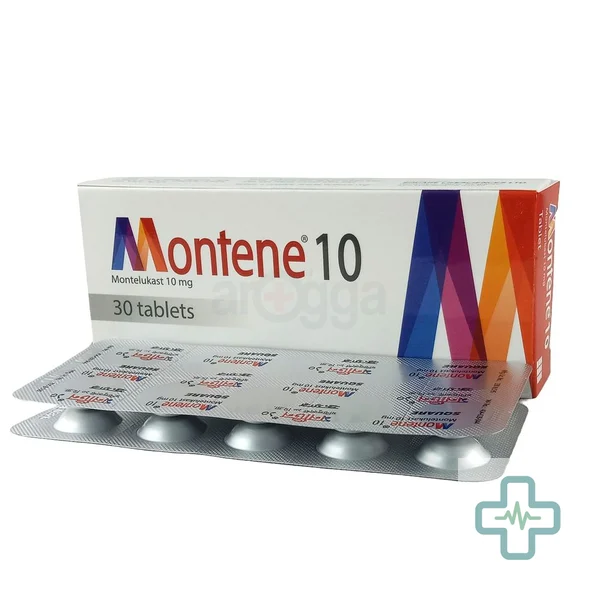
Tablet
Montene 10 mg Tablet
Generic: Montelukast
Manufacturer: Square Pharmaceuticals PLC, Pabna
Therapeutic class: Leukotriene Receptor Antagonist
What is Montene used for?
Montene 10 mg Tablet contains montelukast, a leukotriene receptor antagonist made by Square Pharmaceuticals PLC, Pabna. It is used in asthma management and to help relieve symptoms of allergic rhinitis, as advised by a healthcare profession…
Price in Bangladesh
| Pack | Price (BDT) |
|---|---|
| Per tablet | ৳ 17.50 |
| Strip of 10 | ৳ 175.00 |
Prices are indicative — actual retail price may vary by pharmacy.
What is Montene?
Montene 10 mg Tablet contains montelukast, a leukotriene receptor antagonist made by Square Pharmaceuticals PLC, Pabna. It is used in asthma management and to help relieve symptoms of allergic rhinitis, as advised by a healthcare professional.
Montene 10 mg tablet is a leukotriene receptor antagonist from Square Pharmaceuticals PLC, Pabna containing Montelukast. It is prescribed for the long-term control of asthma, for preventing exercise-induced breathing difficulty, and for relieving allergic rhinitis symptoms such as sneezing, runny nose, and nasal blockage. Montene is a controller medicine taken once daily — it is not a rescue treatment for a sudden asthma attack.
Montelukast works by blocking cysteinyl leukotriene receptors in the airways. Leukotrienes are chemicals released during allergic reactions that tighten airway muscles, cause swelling, and increase mucus. By blocking them, Montelukast reduces airway inflammation and narrowing, leading to fewer asthma symptoms, better night-time control, and less need for reliever inhalers over time.
Indications
- Long-term control and prevention of asthma (adults and children)
- Prevention of exercise-induced bronchospasm
- Seasonal and perennial allergic rhinitis
- Asthma with coexisting allergic rhinitis
- Aspirin-sensitive asthma (as advised by a doctor)
Dosage & Administration
Montene is taken once daily, preferably in the evening for asthma, with or without food. Usual doses are 10 mg for adults and adolescents over 15 years, 5 mg (chewable) for children 6–14 years, and 4 mg (chewable or granules) for children 2–5 years — children's treatment must be directed by a doctor. For exercise-induced symptoms, a dose may be taken at least 2 hours before exercise, but not within 24 hours of a previous dose. Take it regularly every day, even when symptom-free, and never use Montene to treat an attack that has already started — keep a fast-acting reliever inhaler for that.
Side Effects
Montelukast is generally well tolerated. Common side effects include headache, stomach pain, diarrhoea, and mild upper respiratory symptoms; children may have thirst or hyperactivity. Importantly, montelukast can rarely cause mood and behaviour changes — agitation, irritability, bad dreams, sleep disturbance, anxiety, depression, and in rare cases suicidal thoughts. Watch for any change in mood or behaviour, especially in children, and report it to the doctor immediately; the medicine is usually stopped if this occurs. Very rarely, allergic reactions or flu-like illness with rash may appear.
Precautions & Warnings
Tell your doctor about any history of depression, anxiety, or other mental health conditions before starting montelukast, and monitor mood and behaviour during treatment — particularly in children. Do not reduce or stop your inhaled steroid or other asthma medicines on your own when montelukast is added; changes should be gradual and doctor-guided. Continue carrying your reliever inhaler at all times. Chewable tablets contain aspartame, which matters for patients with phenylketonuria. If asthma worsens despite regular use, see your doctor promptly.
Drug Interactions
Montelukast has few clinically important interactions. Enzyme-inducing drugs such as rifampicin, phenytoin, carbamazepine, and phenobarbital can lower montelukast levels and reduce its effect; gemfibrozil can raise its levels. No dose adjustment is generally needed with theophylline, oral contraceptives, warfarin, or digoxin, but always tell your doctor and pharmacist about every medicine, supplement, or herbal product you take so they can check for problems.
Contraindications
Montelukast must not be taken by anyone with known hypersensitivity to montelukast or any component of the product. It should not be used as monotherapy for an acute asthma attack or for status asthmaticus. Patients who developed serious neuropsychiatric symptoms on montelukast previously should generally not restart it. Chewable tablets are contraindicated in phenylketonuria due to their aspartame content.
Pregnancy & Lactation
Pregnancy: Available data have not shown major harm, but montelukast is used in pregnancy only when the doctor considers it clearly needed — usually in women whose asthma responded well to it before pregnancy. Lactation: Small amounts pass into breast milk; use while breastfeeding only on a doctor's advice, weighing benefit against risk. Never stop asthma treatment in pregnancy without consulting your doctor, as uncontrolled asthma harms both mother and baby.
Storage Conditions
Store below 30°C in a dry place, protected from light and moisture. Keep tablets in the original blister until use; granule sachets should be used within 15 minutes of opening. Keep out of the reach of children and do not use after the expiry date.
Frequently Asked Questions
Why is Montene taken in the evening?
Can Montene be used during a sudden asthma attack?
I heard Montene can affect mood — should I be worried?
Last updated: