
Generic
Clarithromycin
Brand medicines containing Clarithromycin available in Bangladesh — compare prices, strengths and manufacturers.
Clarithromycin brands in Bangladesh
Showing 1–24 of 58 medicines
Binoclar 250 mg Tablet
Clarithromycin
Nevian Lifescience PLC

Binoclar 500 mg Tablet
Clarithromycin
Nevian Lifescience PLC
Binoclar 125 mg/5 ml Powder For Suspension
Clarithromycin
Nevian Lifescience PLC

Cla Mycin 125 mg/5 ml Powder For Suspension
Clarithromycin
Aristopharma Limited

Clacin 500 mg Tablet
Clarithromycin
Medimet Pharmaceuticals Ltd.
Clamycin 250 mg Tablet
Clarithromycin
Biopharma Ltd.
Clamycin 500 mg Tablet
Clarithromycin
Biopharma Ltd.
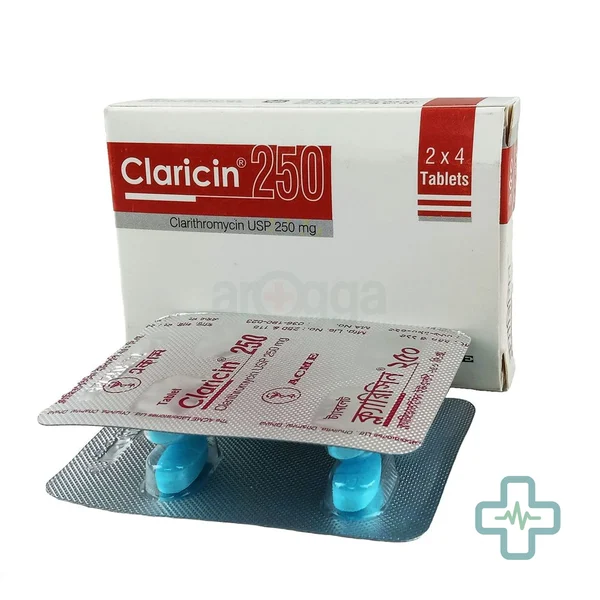
Claricin 250 mg Tablet
Clarithromycin
The ACME Laboratories Ltd.
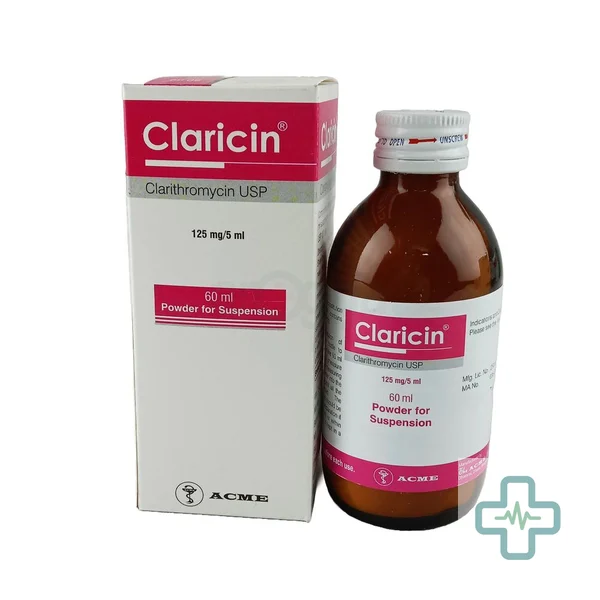
Claricin 125 mg/5 ml Powder For Suspension
Clarithromycin
The ACME Laboratories Ltd.
Clarifast 500 mg Tablet
Clarithromycin
Albion Laboratories Ltd.
Clarimax 250 mg Tablet
Clarithromycin
Advanced Chemical Industries Limited
Clarimax 500 F/C Tablet
Clarithromycin
Advanced Chemical Industries Limited
Clarimoax Granules for Suspens 125 mg/5 ml Powder For Suspension
Clarithromycin
Advanced Chemical Industries Limited

Clarimycin 500 mg Tablet
Clarithromycin
Amico Laboratories Ltd.

Clarin 250 mg Tablet
Clarithromycin
Drug International Ltd.

Clarin 125 mg/5 ml Powder For Suspension
Clarithromycin
Drug International Ltd.
Clarin-250 Tablet
Clarithromycin
Drug International Ltd., Gopalpur
Clarin-500 Tablet
Clarithromycin
Drug International Ltd., Gopalpur

Clarison 500 mg Tablet
Clarithromycin
Hudson Pharmaceuticals Ltd.
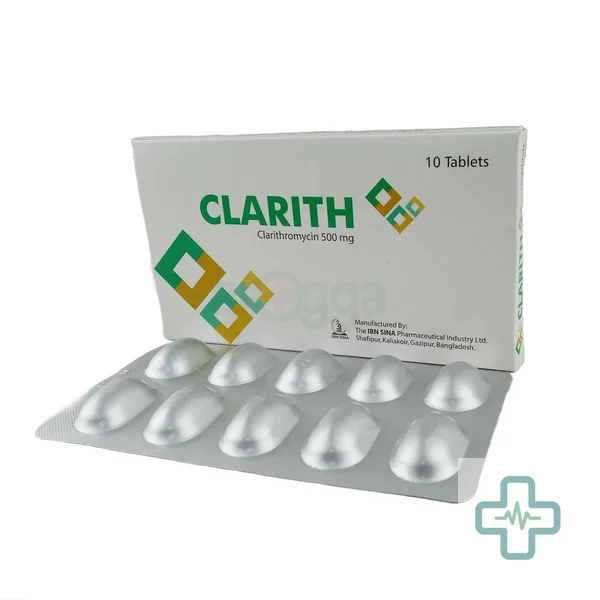
Clarith 500 mg Tablet
Clarithromycin
Ibn Sina Pharmaceutical Ind. Ltd.
Clarith 125 mg/5 ml Powder For Suspension
Clarithromycin
Ibn Sina Pharmaceutical Ind. Ltd.
Clarocin 500 mg Tablet
Clarithromycin
Desh Pharmaceuticals Ltd.
Clarox 500 mg Tablet
Clarithromycin
Renata PLC
Clix 125 mg/5 ml Powder For Suspension
Clarithromycin
Eskayef Pharmaceuticals Ltd. Mirpur.
All Clarithromycin brands (58)
- Binoclar 125 mg/5 ml Powder For Suspension
- Binoclar 250 mg Tablet
- Binoclar 500 mg Tablet
- Cla Mycin 125 mg/5 ml Powder For Suspension
- Clacin 500 mg Tablet
- Clamycin 250 mg Tablet
- Clamycin 500 mg Tablet
- Claricin 125 mg/5 ml Powder For Suspension
- Claricin 250 mg Tablet
- Clarifast 500 mg Tablet
- Clarimax 250 mg Tablet
- Clarimax 500 F/C Tablet
- Clarimoax Granules for Suspens 125 mg/5 ml Powder For Suspension
- Clarimycin 500 mg Tablet
- Clarin 125 mg/5 ml Powder For Suspension
- Clarin 250 mg Tablet
- Clarin-250 Tablet
- Clarin-500 Tablet
- Clarison 500 mg Tablet
- Clarith 125 mg/5 ml Powder For Suspension
- Clarith 500 mg Tablet
- Clarocin 500 mg Tablet
- Clarox 500 mg Tablet
- Clix 125 mg/5 ml Powder For Suspension
- CLIX 500 Film Coated Tablet
- Delamycin 500 mg Tablet
- Klabex 125 mg/5 ml Powder For Suspension
- Klabex 250 mg Tablet
- Klabex 250 mg/5 ml Powder For Suspension
- Klabex 500 mg Tablet
- Klabex SR 500 mg Er Tablet
- Klabid 125 mg/5 ml Paediatric Drops
- Klabid 250 mg Tablet
- Klabid 500 mg Er Tablet
- Klabid 500 mg Tablet
- Klabid DS 250 mg/5 ml Powder For Suspension
- Klarix 250 mg Tablet
- Klarix 500 mg Tablet
- Klavin 125 mg/5 ml Powder For Suspension
- Klavin 500 mg Tablet
- Maclar 125 mg/5 ml Powder For Suspension
- Maclar 500 mg IV Injection
- Maclar 500 mg Tablet
- Maclar IV 500 mg IV Injection
- Macrobid 500 mg Tablet
- Maxbac 250 mg Tablet
- pneumoclar 125 mg/5 ml Powder For Suspension
- Pneumoclar 500 mg Tablet
- Remac 250 mg Tablet
- Remac 500 500 mg Tablet
- Remac 500 mg Tablet
- Remac Granules 125 mg/5 ml Powder For Suspension
- Remac Granules for Suspension 125 mg/5 ml Powder For Suspension
- Remnac 500 mg Tablet
- Rith Powder for Suspension 125 mg/5 ml
- Rith Tablet 500 mg
- Rolacin 125 mg/5 ml Powder For Suspension
- Rolacin 500 mg Tablet
What is Clarithromycin?
Clarithromycin is a macrolide antibiotic medicine available in Bangladesh under many brand names. Below are its uses, side effects and precautions — and every brand with its current price.
What is Clarithromycin used for?
Clarithromycin is prescribed for infections caused by clarithromycin-sensitive bacteria, including:
- Respiratory infections: pharyngitis, tonsillitis, sinusitis, acute otitis media, bronchitis and community-acquired pneumonia
- Skin and soft-tissue infections such as folliculitis and cellulitis
- Helicobacter pylori eradication in peptic ulcer disease, combined with amoxicillin and an acid-reducing medicine
- Certain atypical mycobacterial infections, under specialist care
Your doctor will decide whether Clarithromycin is appropriate based on the site of infection, your medical history and local resistance patterns. Do not use it for viral sore throat, the common cold or uncomplicated diarrhoea, where antibiotics give no benefit.
Side Effects
Most people tolerate Clarithromycin well, but some experience:
- An unusual metallic or bitter taste in the mouth — very common and harmless; it disappears once the course ends
- Nausea, vomiting, abdominal pain, indigestion or diarrhoea
- Headache, dizziness or difficulty sleeping
- Oral or vaginal thrush after prolonged use
Rare but serious effects include severe watery or bloody diarrhoea, irregular or racing heartbeat, fainting, yellowing of the eyes or skin, dark urine, severe skin rash, or unusual confusion. Stop the medicine and seek medical help immediately if any of these occur, and report all side effects to your doctor.
Precautions & Warnings
Clarithromycin is a prescription-only antibiotic. Bangladesh is facing a serious antibiotic-resistance crisis, driven largely by antibiotics bought without prescription and courses stopped halfway. Take Clarithromycin only when a doctor prescribes it, and complete the full course even if you feel better after two or three days — stopping early lets the strongest bacteria survive and return as resistant infections.
- Tell your doctor if you have heart rhythm problems, a slow heartbeat or low potassium, as Clarithromycin can prolong the QT interval
- Use cautiously in liver disease, kidney disease and myasthenia gravis
- Report severe or persistent diarrhoea during or after treatment without delay
Drug Interactions
Clarithromycin blocks a liver enzyme (CYP3A4) and interacts with many medicines. Tell your doctor about everything you take, especially:
- Statins: simvastatin and lovastatin must not be taken with Clarithromycin, and atorvastatin needs caution — there is a risk of severe muscle damage
- Domperidone and other QT-prolonging drugs — risk of dangerous heart rhythms
- Warfarin (bleeding risk), digoxin, theophylline, carbamazepine, colchicine and ergot medicines
- Verapamil, amlodipine and other blood-pressure medicines
- Some diabetes medicines, midazolam and certain psychiatric drugs
Do not start any new medicine, including herbal products, during the course without asking your doctor or pharmacist first.
Contraindications
Do not take Clarithromycin if you:
- Are allergic to clarithromycin, erythromycin, azithromycin or any other macrolide antibiotic
- Have a history of QT prolongation, ventricular arrhythmia (including torsades de pointes) or uncorrected low potassium or magnesium
- Are currently taking simvastatin, lovastatin, ergotamine, dihydroergotamine, ticagrelor, ranolazine or oral midazolam
- Have severe liver failure together with kidney impairment
- Take colchicine and also have kidney or liver disease
Always show your doctor your full medicine list and allergy history before starting Clarithromycin, and mention any previous reaction to an antibiotic, however mild it may have seemed.
Pregnancy & Lactation
Pregnancy: Clarithromycin is generally avoided in pregnancy, particularly in the first trimester, because animal studies have suggested possible harm to the foetus. It should be used only if the doctor judges that no safer alternative antibiotic is suitable. Always tell your doctor if you are pregnant or planning pregnancy before taking Clarithromycin.
Breastfeeding: Clarithromycin passes into breast milk in small amounts. Short courses are usually considered compatible with breastfeeding, but the baby may develop loose stools, oral thrush or feeding changes. Consult your doctor before use while nursing and report any unusual symptoms in the baby promptly.
Storage
Store Clarithromycin below 30°C in a cool, dry place away from direct sunlight and moisture — avoid bathroom cabinets and car dashboards, especially in Bangladesh's humid climate. Keep the medicine in its original blister or bottle, tightly closed, and always out of the reach and sight of children.
- Reconstituted Clarithromycin suspension should be kept at room temperature — do not refrigerate, as chilling can make it bitter and thick — and discarded after 14 days
- Never use the medicine after the expiry date printed on the pack
- Do not flush unused antibiotics; return them to a pharmacy where possible
Frequently asked questions about Clarithromycin
Can I stop taking Clarithromycin once I feel better?
No. Feeling better usually means the weakest bacteria have died, but the strongest ones are still alive. Stopping Clarithromycin early allows these survivors to multiply and develop resistance, making future infections much harder to treat — a major and growing crisis in Bangladesh. Always complete the exact number of days your doctor prescribed, even if symptoms disappear after two or three days. If side effects are troubling you, contact your doctor instead of stopping on your own.
General information about Clarithromycin, written from a shared template for every medicine with this ingredient by the ChamberBD content team. This page has not been individually reviewed by a clinician and does not replace a doctor's advice — always follow your doctor's prescription.