 Chamber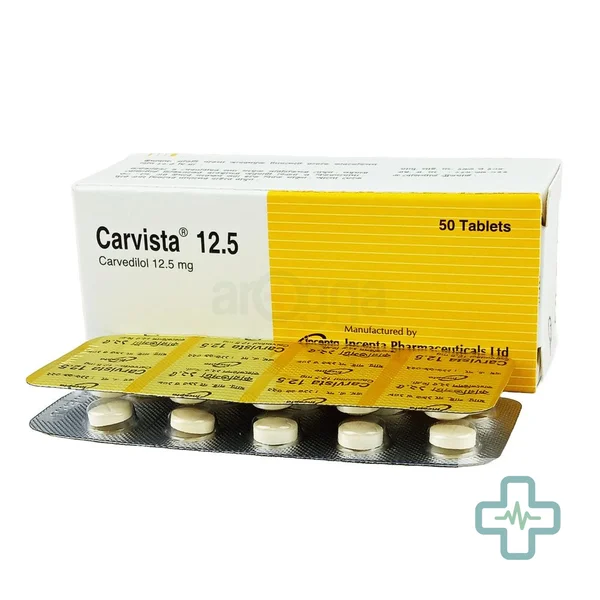
Tablet
Carvista 12.5 mg Tablet
Generic: Carvedilol
Manufacturer: Incepta Pharmaceuticals Ltd.
Therapeutic class: Beta-Blocker (Non-selective, with Alpha-blocking activity)
What is Carvista used for?
Carvista 12.5 mg Tablet contains carvedilol, a beta-blocker with additional alpha-blocking action, made by Incepta Pharmaceuticals Ltd.
Price in Bangladesh
| Pack | Price (BDT) |
|---|---|
| Per tablet | ৳ 5.00 |
| Strip of 10 | ৳ 50.00 |
Prices are indicative — actual retail price may vary by pharmacy.
What is Carvista?
Carvista 12.5 mg Tablet contains carvedilol, a beta-blocker with additional alpha-blocking action, made by Incepta Pharmaceuticals Ltd. It is used in conditions such as high blood pressure and certain heart problems, including heart failure, when prescribed by a doctor.
Carvista 12.5 mg tablet is a medicine from Incepta Pharmaceuticals Ltd. containing Carvedilol, a third-generation beta-blocker used to treat chronic heart failure, high blood pressure and to protect the heart after a heart attack.
Carvedilol works in two ways. It blocks beta receptors in the heart, slowing the heart rate and reducing the heart's workload, and it also blocks alpha receptors in blood vessels, relaxing and widening them. This double action lowers blood pressure and, over months, helps a weakened heart pump more efficiently — which is why it is a key medicine in heart failure treatment.
Indications
- Chronic heart failure — mild to severe, together with other heart failure medicines
- High blood pressure (hypertension) — alone or in combination
- After a heart attack with reduced heart pumping function (left ventricular dysfunction)
- Angina (chest pain) — in selected patients
Dosage & Administration
Your doctor will decide your dose of Carvista. In heart failure it is always started very low and doubled slowly every 2 weeks or more, watching your weight, pulse and pressure — this slow build-up is essential and must not be rushed.
- Take Carvista with food — this slows absorption and reduces dizziness from a sudden pressure drop.
- Usually taken twice daily at the same times each day.
- If you miss a dose, take it when remembered unless the next dose is near; never double up.
- Weigh yourself regularly in heart failure; report rapid weight gain or swelling.
Never stop Carvista suddenly or on your own, even when you feel fine — abrupt stopping can sharply worsen heart failure or trigger chest pain and rebound high pressure. Any change must be made gradually by your doctor.
Side Effects
Possible side effects of carvedilol include:
- Dizziness or light-headedness, especially after dose increases — usually settles in 1–2 weeks
- Tiredness, weakness, slow pulse
- Low blood pressure on standing
- Temporary fluid retention or slight weight gain when starting (in heart failure)
- Cold hands and feet, headache, nausea, diarrhoea
- Blurred vision, dry eyes
- Worsening wheeze in asthma patients
- Seek prompt care for fainting, very slow pulse, marked breathlessness or rapid swelling
Precautions & Warnings
- Monitor pulse, blood pressure and (in heart failure) daily weight; report a gain of more than 1.5–2 kg in a few days.
- Rise slowly from sitting or lying; avoid driving until dizziness settles after each dose increase.
- Tell your doctor about asthma, COPD, diabetes, liver disease, kidney disease, thyroid problems or circulation disorders.
- Diabetics: carvedilol can mask low-sugar warning signs — monitor sugar more closely.
- Wearers of contact lenses may notice dry eyes.
- Inform doctors before surgery or anaesthesia; do not stop the medicine before surgery unless instructed.
- Avoid alcohol close to dosing (especially extended-release forms) — it can speed up drug release.
Drug Interactions
- Verapamil, diltiazem: risk of very slow pulse and heart block — close monitoring needed
- Digoxin: carvedilol can raise digoxin levels and further slow the heart
- Insulin and diabetes medicines: enhanced sugar-lowering and masked hypoglycaemia symptoms
- Rifampicin: markedly reduces carvedilol levels
- Fluoxetine, paroxetine and other CYP2D6 inhibitors: may increase carvedilol effects
- Clonidine: careful sequencing needed when stopping
- Other antihypertensives, nitrates: additive pressure lowering
- NSAIDs: may blunt the blood-pressure effect
Contraindications
- Allergy to carvedilol or any component
- Acute decompensated heart failure needing intravenous medicines
- Severe asthma or history of severe bronchospasm
- Very slow pulse, sick sinus syndrome or second/third-degree heart block without a pacemaker
- Cardiogenic shock or severe symptomatic low blood pressure
- Severe liver impairment
Pregnancy & Lactation
Pregnancy: Carvedilol should be used in pregnancy only if your doctor judges the benefit outweighs the risk. Beta-blockers can slow the baby's growth and heart rate, and may cause low blood sugar in the newborn. Tell your doctor immediately if you are or plan to become pregnant — a safer alternative may be chosen.
Lactation: Small amounts may pass into breast milk. Breastfeeding is generally not recommended during treatment unless your doctor advises otherwise after weighing the benefits.
Storage Conditions
Store below 30°C in a dry place, protected from light and moisture. Keep in the original packaging and out of the reach of children. Do not use after the expiry date.
Frequently Asked Questions
Can I stop Carvista when I feel better?
No. In heart failure and high blood pressure, feeling better is proof that Carvista is doing its job — the underlying disease has not gone away. Stopping a beta-blocker suddenly can cause rebound fast heartbeat, soaring pressure, severe chest pain and a dangerous worsening of heart failure within days. If stopping is ever necessary, your doctor will taper the dose over 1–2 weeks. Keep taking it exactly as prescribed.
Why should I take Carvista with food?
Taking Carvista with food slows down how quickly the medicine is absorbed. A slower rise in blood level means a gentler drop in blood pressure, which greatly reduces the dizziness and light-headed feeling that can occur after a dose — especially when treatment starts or the dose is increased. Make it a habit to take Carvista with breakfast and dinner, at the same times each day.
I have heart failure — why did my doctor start Carvista at such a small dose?
This is deliberate and important. In heart failure the heart is weak, and even a helpful medicine like Carvista initially slows the heart slightly. Starting very low and doubling the dose every two weeks or more gives your heart time to adapt; over 2–3 months the heart actually pumps better, hospital admissions fall and survival improves. Some tiredness or dizziness in the first weeks is common and usually passes — report it rather than stopping.
Last updated: