
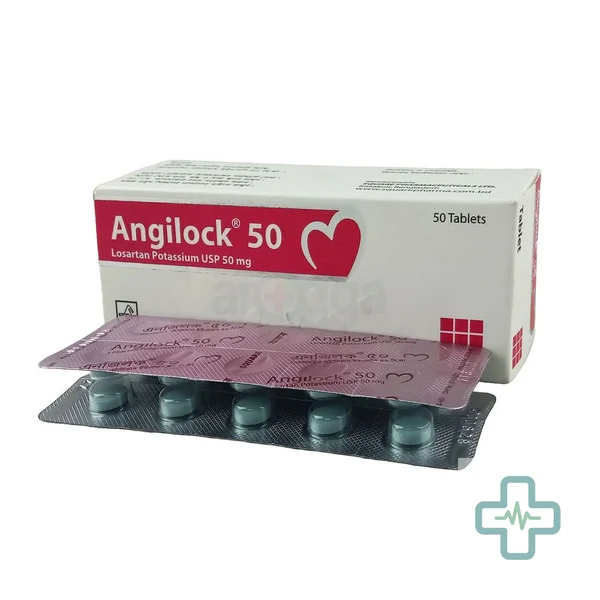
Tablet
Angilock 50 mg Tablet
Generic: Losartan Potassium
Manufacturer: Square Pharmaceuticals PLC, Gazipur
Therapeutic class: Angiotensin II receptor blocker (ARB) — antihypertensive
What is Angilock used for?
Angilock (Tablet) contains Losartan Potassium 50 mg and is made by Square Pharmaceuticals PLC, Gazipur. Therapeutic class: Angiotensin II receptor blocker (ARB) — antihypertensive.
Price in Bangladesh
| Pack | Price (BDT) |
|---|---|
| Per tablet | ৳ 10.00 |
| Strip of 10 | ৳ 100.00 |
Prices are indicative — actual retail price may vary by pharmacy.
What is Angilock?
Angilock 50 mg tablet contains losartan potassium, an angiotensin II receptor blocker used in blood pressure management. It is prescribed for hypertension and may also be used in selected patients to help protect the kidneys or reduce cardiovascular risk.
Angilock 50 mg tablet is a product of Square Pharmaceuticals PLC, Gazipur containing the generic Losartan Potassium. It belongs to the angiotensin receptor blocker (ARB) family and is widely used in Bangladesh to treat high blood pressure, to protect the kidneys of people with type 2 diabetes, and in selected patients with heart failure. Unlike ACE inhibitors, it rarely causes a dry cough, which makes it a popular alternative.
Losartan works by blocking angiotensin II, a natural hormone that tightens blood vessels and raises blood pressure. With the hormone's receptor blocked, the vessels stay relaxed and wide, so blood pressure falls and the heart works against less resistance. The same mechanism lowers pressure inside the kidneys' filters, which slows protein leakage and protects kidney function over the years — especially valuable for diabetic patients.
Indications
Angilock is prescribed for:
- Hypertension — alone or combined with a diuretic, amlodipine or other agents.
- Diabetic kidney disease (nephropathy) — in type 2 diabetes with protein in the urine, to slow kidney damage.
- Heart failure — in selected patients, particularly when ACE inhibitors cause cough.
- Stroke risk reduction — in hypertensive patients with thickening of the heart muscle (left ventricular hypertrophy).
Your doctor will choose losartan considering your kidney function, potassium level and the other medicines you take.
Dosage & Administration
ChamberBD shows dosing only from the approved product label, with its source named, and no label is on file for Angilock 50 mg Tablet. Use the dose your doctor prescribed and the instructions in the pack leaflet.
Side Effects
Angilock is usually well tolerated. Possible side effects:
- Dizziness or light-headedness — especially after the first dose or in hot weather and dehydration; rise slowly.
- Raised potassium (hyperkalaemia) — may cause muscle weakness or irregular heartbeat; detected by blood tests.
- Tiredness, headache.
- Changes in kidney test values — usually small and monitored by your doctor.
- Low blood pressure — fainting is uncommon but possible with dehydration or diuretics.
- Rarely: rash, muscle cramps, or angioedema (sudden swelling of lips, tongue or face) — stop the drug and seek emergency care if this happens.
A dry cough is much less common than with ACE inhibitors.
Precautions & Warnings
Take these precautions with Angilock:
- Pregnancy must be excluded and prevented — ARBs can seriously harm the unborn baby; use reliable contraception and tell your doctor immediately if pregnancy occurs.
- Avoid potassium supplements, potassium-containing salt substitutes and unsupervised potassium-sparing diuretics.
- Tell your doctor about kidney disease, renal artery stenosis, liver disease or dehydration (vomiting, diarrhoea) before and during treatment.
- During acute illness with fluid loss, ask whether to pause the tablet temporarily.
- Attend scheduled kidney function and potassium tests.
- Limit salt, maintain weight, walk regularly and avoid tobacco — lifestyle remains essential.
Drug Interactions
Important interactions of Angilock:
- Potassium supplements, salt substitutes, spironolactone, amiloride — risk of dangerous potassium rise.
- ACE inhibitors or aliskiren together with an ARB — dual blockade is generally avoided (kidney injury, hyperkalaemia, low pressure).
- NSAID painkillers (ibuprofen, diclofenac etc.) — blunt the blood-pressure effect and, with dehydration, can strain the kidneys.
- Lithium — levels can rise to toxicity; monitoring required.
- Diuretics and other antihypertensives — additive pressure lowering; doses balanced by the doctor.
- Rifampicin and fluconazole — can alter losartan's conversion to its active form.
Contraindications
Angilock must not be used in:
- Pregnancy — especially the second and third trimesters; ARBs can cause kidney failure, low amniotic fluid and death of the unborn baby. Stop and contact your doctor immediately if pregnancy is confirmed.
- Known allergy to losartan or any component.
- Severe liver impairment.
- Combined use with aliskiren in diabetes or significant kidney impairment.
- Previous angioedema related to an ARB.
Pregnancy & Lactation
Pregnancy: Angilock is contraindicated in pregnancy. Taken in the second or third trimester, ARBs can damage the baby's kidneys, reduce amniotic fluid, impair skull development and even cause fetal death. Women of child-bearing age should use reliable contraception throughout treatment. If you plan pregnancy or miss a period, see your doctor at once — the medicine will be switched to a pregnancy-safe alternative such as methyldopa or labetalol; do not leave high blood pressure untreated.
Breastfeeding: It is not known how much losartan passes into breast milk, so it is not recommended while breastfeeding, particularly with newborn or premature babies. Your doctor will select a safer alternative for this period.
Storage Conditions
Store Angilock below 30°C in a dry place away from light and moisture, keeping the tablets in their original blister pack until use. Keep all medicines out of the reach and sight of children. Do not take it after the expiry date printed on the packaging; return expired or leftover tablets to a pharmacy for safe disposal rather than throwing them into household waste.
Frequently Asked Questions
Is Angilock safe during pregnancy?
No. Angilock and all ARB medicines are contraindicated in pregnancy. Especially in the second and third trimesters they can injure the unborn baby's kidneys, reduce the amniotic fluid around the baby, affect skull development and in severe cases cause fetal death. If you are planning a pregnancy, tell your doctor in advance so your blood pressure medicine can be switched to a pregnancy-safe option; if you discover you are already pregnant while taking it, stop the tablet and contact your doctor the same day — but do not leave your blood pressure untreated.