Chamber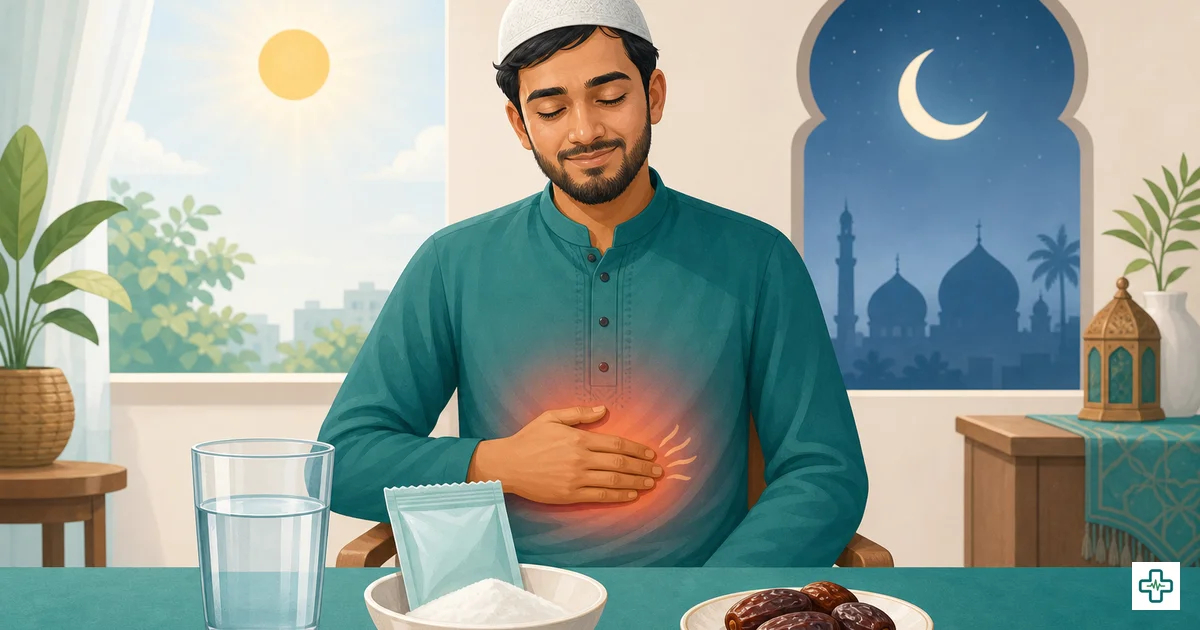
Acidity, Dehydration and Headaches While Fasting: What Helps
For many people the hardest part of fasting is not hunger but a burning stomach, a heavy afternoon headache and a wave of dizziness near asr. These are among the most common Ramadan complaints, and the reassuring news is that most of them come from habits you can change, not from fasting itself.
Why does acidity get worse during fasting?
The stomach keeps making acid even when it is empty, and a long gap without food can leave it burning, especially if iftar is heavy, fried and rushed. Lying down soon after a large iftar, smoking, and strong tea make reflux worse. The fix is gentler eating: break the fast slowly, keep iftar lighter and less fried, avoid lying flat for two to three hours, and have a calm, slow-release sehri. If you already take an acidity medicine, ask your doctor how to re-time it to sehri or iftar rather than stopping it.
What causes the fasting headache, and how do you prevent it?
Most fasting headaches come from three things together: dehydration, missing your usual caffeine, and low blood sugar. They typically build through the afternoon. To prevent them, drink enough water between iftar and sehri, do not skip sehri, and cut down caffeine gradually in the week before Ramadan rather than stopping suddenly. A short rest in a cool, dim room during the day also helps. A headache alone is not a reason to break the fast, but it is a signal to drink and eat better that evening.
How do you avoid dehydration and dizziness?
Dizziness, weakness and dark urine point to dehydration, which is easy to slip into when you cannot drink for many hours, particularly in hot weather. Spread your fluids across the evening instead of one big glass, add water-rich foods such as cucumber, watermelon and soup, and avoid very salty food that makes you thirstier. If you feel faint, sit or lie down and protect yourself from falling. Standing up slowly from sujood or from bed reduces the head-rush many people feel.
What are the warning signs to break the fast?
Break your fast if you feel persistently faint, your heartbeat is racing, you stop passing urine, you vomit repeatedly, or you have severe stomach pain rather than ordinary acidity. These suggest significant dehydration or another problem, and protecting your health comes first. Severe or sudden chest pain, a one-sided weakness, or a worst-ever headache are emergencies — seek care immediately, fasting or not.
When should you see a doctor?
See a doctor if acidity, headaches or dizziness keep returning despite these steps, if you have an ulcer, heart or kidney condition, or if you take regular medicines you are unsure how to time. A short visit can prevent a spoiled month. You can find a doctor through our list of registered doctors, and you can read about any antacid or painkiller in the medicine directory before relying on it daily.
This article is for general health education and is not a substitute for professional medical advice.