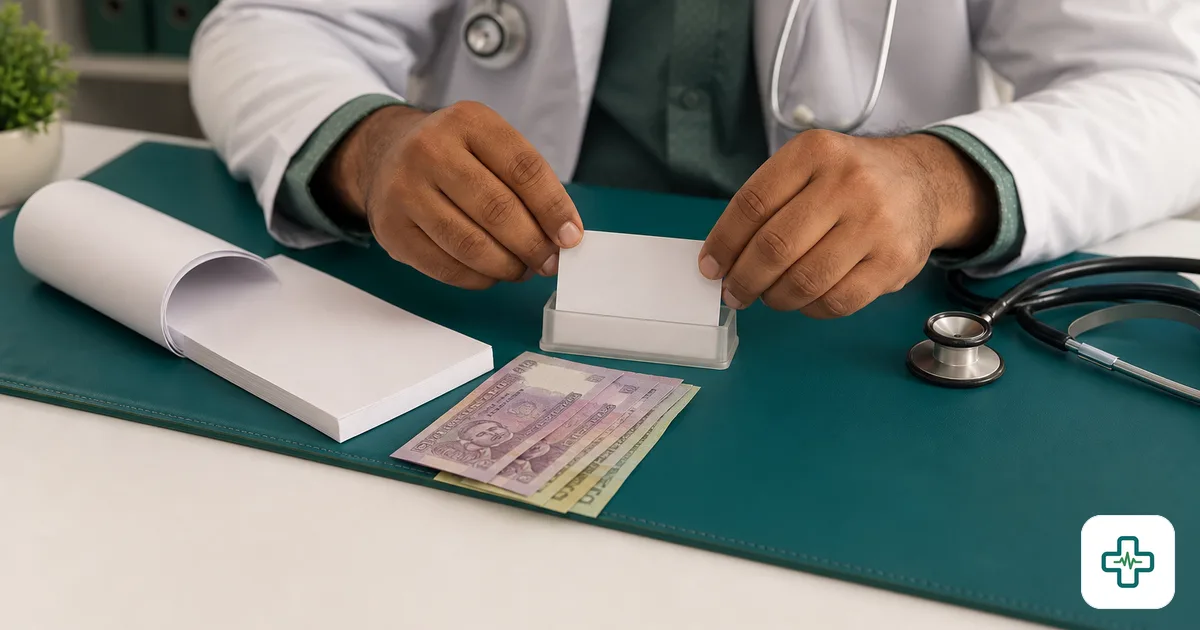
Facebook and YouTube for doctors: ethical medical marketing in Bangladesh
Your next patient is on Facebook right now — reading a panicked dengue post, half-believing a neighbour's claim that antibiotics cure the flu, scrolling past three reels before reaching one trustworthy voice. In Bangladesh, the question is no longer whether you should have a presence there. It is whether the voice they find will be a doctor teaching calmly, or a quack selling fear.
Doctors who explain health honestly on Facebook and YouTube build something no signboard can: trust at scale, with people who have never sat in their chamber. But the line between educating and advertising is real, and crossing it can cost your reputation and run against the BMDC Code of Medical Ethics. This guide is about staying on the right side of that line while still growing.
Why Facebook is where doctor marketing in Bangladesh actually happens
Bangladeshis do not search Google the way Western patients do — for millions, Facebook is the internet. They get health news from group posts, ask "ভালো ডাক্তার কে আছেন?" in local community groups, and watch video in feed rather than seeking out a website. A doctor who shows up there consistently becomes a familiar, safe face long before the person needs an appointment.
This is also where the harm spreads. Dengue season brings a wave of dangerous folk advice; every fever becomes a reason to demand antibiotics from a pharmacy counter; "miracle" cures for diabetes and infertility get thousands of shares. When a real doctor explains things in plain Bangla, calmly and without selling anything, the contrast does the marketing for you. You are not competing with other doctors on Facebook so much as filling a vacuum the misinformation has left.
Educating versus advertising: the line you must not cross
The simplest test: does the post make the reader healthier or better-informed even if they never visit you? If yes, it is education. If its real purpose is to praise you, list your fees, or promise outcomes, it drifts into advertising — and that is where ethics and credibility both suffer.
A few rails keep you safe and, not coincidentally, keep your content trustworthy:
- No cure guarantees. Never promise to "cure" diabetes, gastric, infertility or anything else. Guarantees are the signature of quackery, and patients are learning to distrust them.
- No diagnosing individuals in public. General education only. The moment you tell a specific commenter "you have X, take Y," you are practising medicine blind, on a public stage, with no examination and no records.
- No patient photos or stories without explicit consent — and often not even then (more on why below).
- Never rubbish other doctors. Tearing down colleagues to look better is unethical and, to patients, looks petty rather than authoritative.
None of this kills your reach. The most-followed doctor educators in Bangladesh grew precisely because they were calm, careful and free of hype — that restraint is the brand. We go deeper into perception management in our guide to protecting your online reputation as a doctor.
What to post: content that teaches and travels
You do not need an endless stream of ideas. Three or four formats, repeated well, carry a whole year.
Short myth-busting posts
These are your bread and butter because they are useful and shareable. Pick one common, harmful belief and correct it in a few lines of plain Bangla. "একটা সর্দি-জ্বরে অ্যান্টিবায়োটিক লাগে না — কেন লাগে না, আর কখন সত্যিই লাগে" does more good than a dozen generic wellness posts. Antibiotic misuse, "saline" demands, steroid-laden skin creams, painkiller overuse — each is a post that families forward to each other.
Seasonal advisories
Bangladesh runs on seasons, and so should your calendar. Dengue panic in monsoon, heatstroke and diarrhoea in the hot months, cold-and-cough and asthma flares in winter, food-safety and rush-hour eating around Eid. A timely, level-headed advisory — what to watch for, when home care is fine, when to come in — lands hard because it answers a worry people already have that week.
Plain-Bangla FAQ videos
The single most powerful format is you, on camera, answering the question patients ask you ten times a day. "ডায়াবেটিস রোগী রোজা রাখতে পারবেন কি?" or "বাচ্চার জ্বর হলে বাসায় কী করবেন, কখন ডাক্তারের কাছে আসবেন?" Sixty to ninety seconds, one question, one clear answer. People trust a face and a voice far more than text, and these videos quietly establish that you can explain things simply — which is exactly what a patient wants before choosing a doctor.
You don't need a studio: production that's good enough
The biggest reason doctors never start is they imagine they need a videographer. They do not. A reasonably recent phone, daylight, and a quiet room are enough to look professional.
- Light from a window. Face a window so daylight falls on you; never sit with the window behind you or you become a silhouette. Daylight is free and flatters everyone.
- Steady the phone. Lean it against books or use a cheap tripod. A still frame instantly looks more credible than a shaky handheld one.
- Mind the sound. Audio matters more than picture. Record in a quiet room, away from fans and street noise; bring the phone closer rather than shouting. A ৳300–500 clip-on mic is the one upgrade worth making.
- Keep the background plain. A clean wall, your chamber, or a bookshelf is fine. Tidy and uncluttered beats fancy.
Vertical video for reels and Facebook, horizontal for a proper YouTube library. Either way, done-and-published beats perfect-and-never-posted.
Live Q&A discipline: educate the room, never diagnose one person
Facebook Live is excellent for reach and feels personal — but it is also where doctors get into the most trouble. The rule is simple and absolute: general education only, never diagnose an individual publicly. When someone types their symptoms and asks "আমার এমন হচ্ছে, কী করব?", you cannot responsibly answer. You have no history, no examination, no investigations, and your reply is visible to thousands who may apply it to themselves.
Have a redirect script ready and use it warmly, not coldly: "আপনার নির্দিষ্ট সমস্যার সঠিক সমাধানের জন্য পরীক্ষা দরকার — এই প্রশ্নের জন্য চেম্বারে আসুন। আজ আমি সাধারণভাবে বিষয়টা বুঝিয়ে দিচ্ছি।" Then teach the general principle behind their question so the whole audience learns. Done well, redirecting actually strengthens trust — it signals that you take their problem seriously enough to want to examine them, rather than guessing. If a chamber visit is genuinely hard, a proper teleconsultation is the ethical alternative to a public reply, as we explain in our telemedicine practice guide for Bangladesh.
Disclaimers that protect you without killing engagement
You need a disclaimer; you do not need a wall of legal text that makes people scroll away. One clean line does the job: "এই পরামর্শ সাধারণ স্বাস্থ্য শিক্ষার জন্য, ব্যক্তিগত চিকিৎসার বিকল্প নয়। নিজের সমস্যার জন্য সরাসরি ডাক্তার দেখান।" Pin it in your page's About section and add a short version to videos. Say it once, naturally, rather than reciting a paragraph that signals fear and dampens the warmth that makes people watch.
Consistency over virality: the weekly cadence that actually wins
The doctors who win on social media are almost never the ones chasing a viral hit. They are the ones who show up every week for two years. Virality is luck; consistency is a system, and the algorithm rewards regular posting far more than it rewards one lucky reel followed by silence.
Pick a cadence you can sustain through chamber days, on-call nights and Eid — for most working doctors that is one or two posts a week, not daily. Daily output sounds ambitious and ends in burnout by month two, after which the page goes dead, which looks worse than never starting. A quiet, steady weekly rhythm compounds: a year of fifty honest posts makes you a known educator in your specialty. This patience mirrors what it takes to grow a chamber generally, which we cover in our guide to getting more patients into your chamber in Bangladesh.
The 2-hour-a-week content system
Sustainability comes from batching, not from squeezing posts into gaps you do not have. Here is a system that fits a busy practice in roughly two hours a week.
- Keep a running idea list. Every time a patient asks a question in chamber, jot it in your phone. By month's end you have twenty real, relevant topics — no brainstorming required.
- Batch-record once a month. Block one quiet hour and shoot four short videos back to back, in the same shirt and spot. Filming four at once costs far less than four times the effort of filming one.
- Schedule, don't post live. Use Meta Business Suite to schedule your four videos and a few text posts across the weeks. Now your page looks active daily while you touch it only once a month.
- Spend the weekly half-hour on replies. The remaining time goes to answering comments politely and redirecting clinical questions to the chamber. Engagement, not just posting, is what the algorithm and patients both notice.
Converting attention into appointments — ethically
Education earns attention; the ethical question is what you do with it. The answer is to make it effortless for an interested patient to find and reach you, without ever turning a health post into a sales pitch.
- Pin your chamber details. Keep your chamber address, sitting hours and serial-booking link pinned at the top of your page and filled into the About section. Someone convinced by your videos should not have to hunt for where you sit.
- Use a public profile patients can book from. A clean public profile with an online booking link turns a viewer into a serial in a couple of taps. ChamberBD gives each doctor a public profile in its doctor directory with online booking, so the link you pin actually leads to a confirmed appointment rather than a dead phone number. The same appointment and patient-record features then handle the serial queue once bookings arrive.
- Set a Messenger auto-reply with your hours, not medical advice. When people message your page, an automatic reply can share your chamber timing, location and booking link — and explicitly say that personal medical questions need a consultation, not a chat. Never let an auto-reply, or an assistant, dispense medical advice in DMs.
This is the whole conversion model: teach in public, make the path to your chamber obvious, and let the booking happen on its own terms. If you want that booking link to lead somewhere reliable, you can set up your chamber profile and online booking on ChamberBD in a few minutes.
Handling trolls and misinformation commenters
Put yourself online and you will meet two kinds of difficult comments: the troll looking for a reaction, and the well-meaning person spreading something false. Treat them differently. Trolls feed on engagement — do not argue, hide or delete clearly abusive comments, and never trade insults where patients can see it. One ugly public spat undoes months of careful trust-building.
Misinformation deserves a reply, but for the silent audience, not to win the argument. Correct it once, calmly, with the fact and a brief why — "আসলে এই দাবিটা ঠিক নয়, কারণ…" — and then disengage. You are not trying to convince the one commenter; you are showing the hundred quiet readers what the accurate answer is. Keep a thick skin and a short reply, and let your overall body of helpful content speak louder than any single fight.
Content types at a glance: effort, value and cautions
Not every format is worth equal effort, and each carries its own risk. This table compares the main options so you can pick a mix that builds trust without exposing you.
| Content type | Effort | Trust-building value | Caution notes |
|---|---|---|---|
| Myth-busting text post | Low | High — easily shared | Cite the principle, not a fake statistic |
| Seasonal advisory | Low–medium | High — timely and relevant | Keep advice general; say when to seek care |
| Plain-Bangla FAQ video | Medium | Very high — face and voice build trust | One question, no individual diagnosis |
| Facebook/YouTube Live Q&A | Medium–high | Very high — feels personal | Highest risk; never diagnose; use redirect script |
| Patient story or testimonial | Low | Medium | Avoid unless truly anonymised with explicit consent |
| Crest/award photo | Low | Low — boastful, not useful | Use sparingly; it teaches the reader nothing |
Frequently Asked Questions
Is it ethical for doctors to do Facebook marketing in Bangladesh?
Yes, when it is genuine health education rather than advertising. Sharing accurate information, busting myths and answering common questions is well within the spirit of the BMDC Code of Medical Ethics. Problems arise only with cure guarantees, public diagnosis of individuals, fee-led promotion, or using patient images without consent.
Can I share a patient's case or photo if I hide their name?
Be very cautious. Even "anonymised" cases can identify someone through rare details, locality, timing or an unusual photo, and patients may recognise themselves. Always get explicit, informed consent, remove every identifying detail, and when in doubt, do not post. Protecting confidentiality matters more than any single engaging post.
How often should a doctor post to grow without burning out?
One or two well-made posts a week beats a daily burst that fizzles in a month. Consistency over years is what builds a following and what the algorithm rewards. Batch-record four short videos monthly and schedule them, so your page stays active while you invest only about two hours a week.
What should I do when someone describes symptoms in a live or comment?
Do not diagnose publicly — you have no examination or history, and your reply reaches thousands. Use a warm redirect such as "এই প্রশ্নের জন্য চেম্বারে আসুন," then explain the general principle behind their question for the whole audience. This protects the patient, protects you, and actually strengthens trust.
Do I need expensive equipment to make health videos?
No. A recent phone, daylight from a window, a steady surface or cheap tripod, and a quiet room are enough to look professional. The single upgrade worth ৳300–500 is a clip-on microphone, because clear audio matters more than picture quality. Clarity and consistency beat production value every time.
The hard part of medical marketing was never the camera — it is staying ethical while you grow, and turning attention into appointments without becoming a salesman. Teach honestly, pin a booking link that actually works, and let patients come to you. When you are ready to give those followers a clean public profile and one-tap online booking, you can create your chamber on ChamberBD and connect your Facebook audience straight to your serial list.