
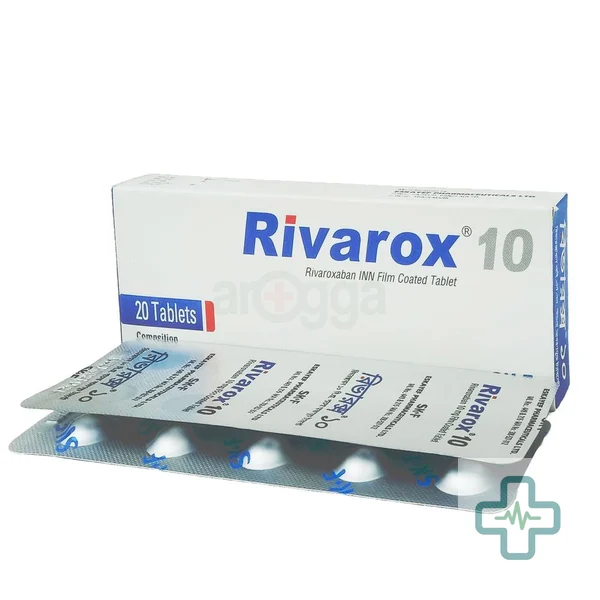
Tablet
Rivarox 10 mg Tablet
Generic: Rivaroxaban
Manufacturer: Eskayef Pharmaceuticals Ltd., Tongi,Gazipur
Therapeutic class: Direct Oral Anticoagulant (DOAC, Factor Xa Inhibitor)
What is Rivarox 10 used for?
Rivarox 10 (Tablet) contains Rivaroxaban 10 mg and is made by Eskayef Pharmaceuticals Ltd., Tongi,Gazipur. Therapeutic class: Direct Oral Anticoagulant (DOAC, Factor Xa Inhibitor).
Price in Bangladesh
| Pack | Price (BDT) |
|---|---|
| Per tablet | ৳ 25.00 |
| Strip of 10 | ৳ 250.00 |
Prices are indicative — actual retail price may vary by pharmacy.
What is Rivarox 10?
Rivarox 10 is a 10 mg rivaroxaban tablet, a direct oral anticoagulant that blocks factor Xa in the clotting process. It is used to help prevent or treat harmful blood clots and to lower stroke risk in selected patients with atrial fibrillation.
Rivarox 10 10 mg tablet is a medicine from Eskayef Pharmaceuticals Ltd., Tongi,Gazipur that contains Rivaroxaban, a direct oral anticoagulant (DOAC) — a modern "blood thinner" used to prevent and treat dangerous blood clots, including stroke prevention in atrial fibrillation and treatment of clots in the legs (DVT) and lungs (pulmonary embolism).
Rivaroxaban works by directly blocking factor Xa, a key enzyme in the chain reaction that turns liquid blood into a clot. With factor Xa inhibited, the body produces much less thrombin, so unwanted clots cannot form or grow, while the blood retains enough function to seal normal cuts. Unlike older anticoagulants such as warfarin, it works at a fixed dose and does not need routine INR blood-test monitoring or major food restrictions.
Indications
- Stroke prevention in atrial fibrillation — non-valvular irregular heartbeat
- Deep vein thrombosis (DVT) — treatment and prevention of recurrence
- Pulmonary embolism (PE) — treatment and prevention of recurrence
- After hip or knee replacement surgery — preventing clots
- Coronary or peripheral artery disease — low "vascular dose" with aspirin in selected patients, per specialist
Dosage & Administration
ChamberBD shows dosing only from the approved product label, with its source named, and no label is on file for Rivarox 10 mg Tablet. Use the dose your doctor prescribed and the instructions in the pack leaflet.
Side Effects
Bleeding is the main side effect, because the medicine deliberately reduces clotting:
- Easy bruising, longer bleeding from cuts
- Nosebleeds, bleeding gums
- Heavier or longer menstrual periods
- Anaemia, tiredness, dizziness
- Nausea, stomach discomfort; occasional liver test changes
- Itching or rash
Seek emergency help for signs of serious bleeding:
- Black or tarry stools, red or pink urine, vomiting blood or coffee-ground material
- Coughing up blood; unusually heavy menstrual flooding
- Bleeding that will not stop with 10 minutes of firm pressure
- Sudden severe headache, one-sided weakness, vision or speech change (possible brain bleed)
- Severe unexplained back pain or weakness after a spinal injection/anaesthesia
Precautions & Warnings
- Tell every doctor, dentist and surgeon that you take Rivarox 10 before any procedure, operation, tooth extraction or injection — it is usually paused 24–48 hours beforehand, but only on the prescriber's instruction, and restarted on schedule afterwards.
- Never miss doses and never run out of tablets — keep a few days' reserve, including when travelling.
- Your doctor will check kidney function (and sometimes liver tests and haemoglobin) periodically; attend all reviews.
- Avoid NSAID painkillers (ibuprofen, diclofenac) and aspirin unless specifically prescribed — use paracetamol for everyday pain.
- Limit alcohol; avoid activities with high injury risk; use a soft toothbrush and shave carefully.
- Carry an anticoagulant alert card so emergency staff know you take a blood thinner.
- Tell your doctor about kidney or liver disease, previous bleeding, ulcers or planned pregnancy.
Drug Interactions
- Other blood thinners (warfarin, heparin, clopidogrel, aspirin): major bleeding risk — combined only under specialist supervision
- NSAID painkillers (ibuprofen, diclofenac, naproxen): increase bleeding risk
- Azole antifungals (ketoconazole, itraconazole) and HIV protease inhibitors (ritonavir): strongly raise rivaroxaban levels — combination avoided
- Rifampicin, carbamazepine, phenytoin, St John's Wort: reduce rivaroxaban levels — risk of clot despite taking the medicine
- SSRIs/SNRIs (escitalopram, venlafaxine): add to bleeding tendency
- Clarithromycin, erythromycin: may raise levels, important in kidney impairment
Tell your doctor about all medicines, supplements and herbal products you use.
Contraindications
- Allergy to rivaroxaban
- Active major bleeding — such as bleeding ulcer or brain haemorrhage
- Conditions with high risk of major bleeding (recent brain/spine surgery, oesophageal varices, certain aneurysms)
- Liver disease with coagulopathy (including Child-Pugh B and C cirrhosis)
- Severe kidney failure (per the doctor's assessment of creatinine clearance)
- Pregnancy and breastfeeding
- Mechanical heart valves and antiphospholipid syndrome — warfarin is required instead
Pregnancy & Lactation
Pregnancy: Rivaroxaban is contraindicated in pregnancy — it crosses the placenta, carries a bleeding risk and safety has not been established. Women of childbearing age should use reliable contraception while taking it. If you become pregnant or plan to conceive, contact your doctor immediately; anticoagulation is usually switched to injectable heparin, which does not cross the placenta.
Lactation: Rivaroxaban passes into breast milk and must not be used while breastfeeding. Your doctor will either choose a breastfeeding-compatible anticoagulant or advise on feeding options.
Storage Conditions
Store below 30°C in a cool, dry place away from direct sunlight and moisture. Keep in the original blister pack until use, and keep out of the reach of children. Do not use after the expiry date.
Frequently Asked Questions
What should I do about Rivarox 10 before an operation, endoscopy or tooth extraction?
Tell the surgeon, endoscopist or dentist about Rivarox 10 as soon as the procedure is planned, and inform the doctor who prescribed it. Unlike warfarin, rivaroxaban clears quickly, so it is usually paused only 24–48 hours before (longer if your kidneys are weak or the bleeding risk is high) — but the exact timing must come from your prescribing doctor, never your own guess. Stopping too early risks a stroke; too late risks bleeding. Equally important: restart it exactly when instructed after the procedure. Carry your anticoagulant card to every appointment.