
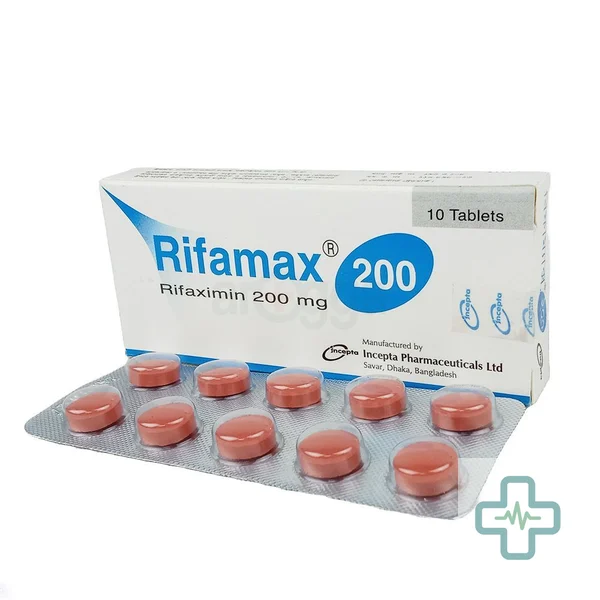
Tablet
Rifamax 200 mg Tablet
Generic: Rifaximin
Manufacturer: Incepta Pharmaceuticals Ltd.
Therapeutic class: Gut-Selective (Non-Absorbable) Antibiotic
What is Rifamax used for?
Rifamax (Tablet) contains Rifaximin 200 mg and is made by Incepta Pharmaceuticals Ltd. Therapeutic class: Gut-Selective (Non-Absorbable) Antibiotic.
Price in Bangladesh
| Pack | Price (BDT) |
|---|---|
| Per tablet | ৳ 20.00 |
| Box of 10 | ৳ 200.00 |
Prices are indicative — actual retail price may vary by pharmacy.
What is Rifamax?
Rifamax 200 mg Tablet contains rifaximin, a gut-selective antibiotic that acts mainly inside the intestine. It is used for certain bacterial gut conditions, including traveller’s diarrhoea, and may also be prescribed to help reduce recurrence of hepatic encephalopathy.
Rifamax 200 mg tablet by Incepta Pharmaceuticals Ltd. contains Rifaximin, a special gut-targeted antibiotic. Unlike ordinary antibiotics, less than one percent of it is absorbed into the blood — it stays and works inside the intestine. In Bangladesh, doctors prescribe it for irritable bowel syndrome with diarrhoea (IBS-D), to prevent hepatic encephalopathy (confusion caused by advanced liver disease) and for certain infective diarrhoeas. It is prescription-only.
Rifaximin works by binding to bacterial RNA polymerase, the enzyme bacteria need to read their genes and make proteins. Blocked bacteria stop multiplying and die. Because the drug remains inside the gut, it reshapes harmful gut bacteria with very few effects elsewhere in the body.
Indications
Rifamax is prescribed for conditions where targeting gut bacteria helps, including:
- Irritable bowel syndrome with diarrhoea (IBS-D) in adults — a 14-day course can reduce bloating, loose stools and abdominal discomfort
- Prevention of hepatic encephalopathy in chronic liver disease — taken continuously to reduce ammonia-producing gut bacteria, often with lactulose
- Travellers' diarrhoea caused by non-invasive strains of E. coli
- Small intestinal bacterial overgrowth (SIBO), at the doctor's discretion
It is not suitable for diarrhoea with fever or blood in the stool, which suggests invasive infection needing different treatment. Use it only for the condition your doctor diagnosed.
Dosage & Administration
ChamberBD shows dosing only from the approved product label, with its source named, and no label is on file for Rifamax 200 mg Tablet. Use the dose your doctor prescribed and the instructions in the pack leaflet.
Side Effects
Because so little Rifaximin enters the bloodstream, Rifamax is one of the better-tolerated antibiotics. Possible side effects include:
- Nausea, bloating or constipation
- Headache, dizziness or tiredness
- Ankle swelling (peripheral oedema), mainly in liver-disease patients
- Muscle cramps or joint pain, occasionally
Seek medical help promptly if you develop an allergic rash, swelling of the face or throat, breathing difficulty, or severe watery diarrhoea during or after the course (a possible sign of C. difficile infection). If diarrhoea you were treating worsens, or fever or blood in the stool appears, stop relying on the medicine and see your doctor immediately.
Precautions & Warnings
Rifamax is a prescription-only antibiotic. Even though it stays in the gut, misusing it still breeds resistant bacteria — and Bangladesh is already deep in an antibiotic-resistance crisis. Take it only for the condition your doctor diagnosed and complete the full prescribed course; stopping an IBS or encephalopathy course midway invites the problem straight back.
- Do not self-treat diarrhoea with Rifamax: diarrhoea with fever or bloody stools needs medical evaluation, not this drug
- Tell your doctor if you have severe liver impairment — supervision is needed even though absorption is minimal
- Report severe or persistent diarrhoea during or after treatment
- If symptoms do not improve within the expected time, return to your doctor rather than extending the course yourself
Drug Interactions
Because Rifaximin barely enters the bloodstream, it has fewer interactions than most antibiotics — but a few matter. Tell your doctor about every medicine you take, especially:
- Ciclosporin and other strong P-glycoprotein inhibitors: these can raise rifaximin blood levels many-fold
- Warfarin: both increases and decreases in INR have been reported when starting or stopping rifaximin — extra INR checks are sensible
- Other antibiotics or long-term gut medicines: mention them so therapy can be sequenced properly
No clinically significant interaction is expected with food, and Rifamax does not interfere with oral contraceptives in the way enzyme-inducing rifamycins (like rifampicin) do. Still, avoid adding any new medicine during the course without advice.
Contraindications
Do not take Rifamax if you:
- Are allergic to rifaximin or any rifamycin antibiotic, such as rifampicin or rifabutin
- Have intestinal obstruction or suspected blockage of the bowel
- Have diarrhoea with high fever or blood in the stool — this needs urgent medical assessment, not gut-selective antibiotics
Use only under close medical supervision in severe (Child-Pugh C) liver impairment, although the drug is commonly used in liver disease. As always, give your doctor a full account of your allergies, bowel history and current symptoms before starting Rifamax, so they can confirm it is the right and safe choice for you.
Pregnancy & Lactation
Pregnancy: Although very little Rifaximin is absorbed, animal studies have shown possible effects on the foetus, so Rifamax should be avoided in pregnancy unless the doctor judges it clearly necessary. Tell your doctor if you are pregnant or planning a pregnancy before starting.
Breastfeeding: It is not known how much rifaximin reaches breast milk, but levels are expected to be very low because so little enters the mother's blood. A decision to use it while nursing should be made with your doctor, weighing the benefit of treatment against any possible risk to the baby. Report any feeding changes or diarrhoea in the infant.
Storage Conditions
Store Rifamax below 30°C in a dry place, protected from direct sunlight and moisture. In Bangladesh's humid seasons, keep the strip inside its original carton in a cool cupboard — never in the bathroom or near the kitchen stove. Keep all medicines well out of the reach and sight of children.
- Do not transfer tablets to open containers; the original blister protects them from humidity
- Never use Rifamax after the expiry date printed on the strip or carton
- Dispose of unused tablets through a pharmacy take-back rather than household waste or drains, to help limit antibiotic pollution and resistance
Frequently Asked Questions
Does Rifamax spread through my whole body like other antibiotics?
No — and that is its specialty. Less than 1% of rifaximin is absorbed into the blood; the rest stays inside your intestine, where the problem bacteria live. This gut-targeted action is why doctors choose Rifamax for IBS-D, hepatic encephalopathy and certain gut infections, and why it causes fewer body-wide side effects than ordinary antibiotics. It also means Rifamax cannot treat infections elsewhere — chest, urine, skin or throat infections need a different, properly absorbed antibiotic.
Can I take Rifamax on my own whenever I get diarrhoea?
No. Rifamax helps only specific conditions — IBS-D, hepatic encephalopathy prevention and travellers' diarrhoea caused by non-invasive germs. Diarrhoea with fever, blood or mucus in the stool, or severe dehydration suggests invasive infection (or another disease) that this gut-selective drug cannot treat, and delaying proper care is dangerous. Most acute diarrhoea in Bangladesh needs oral saline (ORS) and fluids first, not antibiotics. See a doctor for diagnosis; take Rifamax only when it is actually prescribed.