 Chamber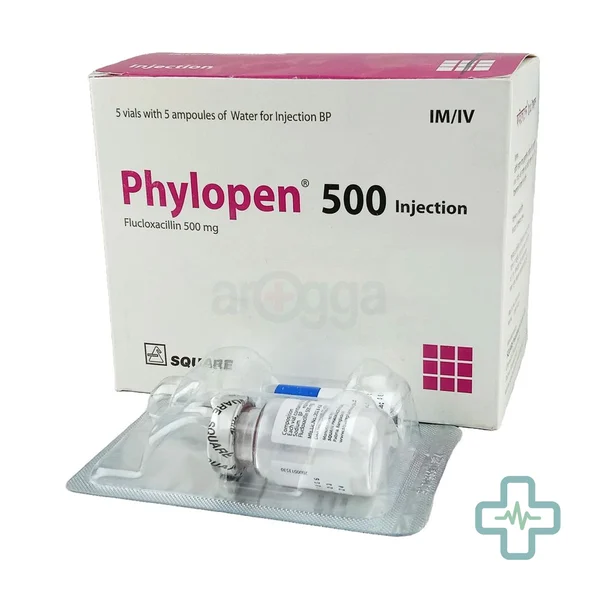
Injection
Phylopen 500 mg/VIAL Injection
Generic: Flucloxacillin
Manufacturer: Square Pharmaceuticals PLC, Pabna
Therapeutic class: Penicillinase-resistant penicillin antibiotic
What is Phylopen used for?
Phylopen 500 mg/VIAL Injection contains flucloxacillin, a penicillinase-resistant penicillin antibiotic. It is used for bacterial infections caused by susceptible organisms, especially penicillinase-producing staphylococci affecting the ski…
Price in Bangladesh
| Pack | Price (BDT) |
|---|---|
| Per injection | ৳ 55.00 |
| Injection | ৳ 55.00 |
Prices are indicative — actual retail price may vary by pharmacy.
What is Phylopen?
Phylopen 500 mg/VIAL Injection contains flucloxacillin, a penicillinase-resistant penicillin antibiotic. It is used for bacterial infections caused by susceptible organisms, especially penicillinase-producing staphylococci affecting the skin, soft tissue, bones, joints, or other sites.
Phylopen 500 mg/VIAL injection by Square Pharmaceuticals PLC, Pabna contains Flucloxacillin, a penicillin-type antibiotic that is especially effective against staphylococcus ("staph") bacteria. It is mainly used for skin and soft-tissue infections such as cellulitis, infected wounds, boils, and abscesses, as well as some bone, ear, and chest infections. Phylopen is a prescription-only medicine and must be taken exactly as a registered doctor instructs.
Flucloxacillin works by breaking down the protective cell wall that bacteria build to survive. Unlike ordinary penicillin, it resists an enzyme (penicillinase) that staph bacteria use to defend themselves, so it can kill these otherwise resistant bacteria. It acts only against bacteria and has no effect on viral illnesses.
Indications
- Skin and soft-tissue infections (cellulitis, boils, abscesses)
- Infected wounds, burns, and insect bites
- Impetigo and other staph skin infections
- Bone and joint infections (often with other treatment)
- Some ear, chest, and surgical-wound infections
Dosage & Administration
The dose of Phylopen depends on the infection. A common adult dose is 250-500 mg four times a day for about 7 days, sometimes longer for bone or deep infections as the doctor decides. Take Phylopen on an empty stomach — at least 1 hour before, or 2 hours after, food — with a full glass of water, because food reduces its absorption.
Children's doses are based on body weight and must be set by a doctor. Space the four daily doses evenly, complete the whole course, and do not stop once the skin or wound starts to look better.
Side Effects
Flucloxacillin is usually well tolerated. Possible side effects include:
- Nausea, vomiting, or diarrhoea
- Indigestion or abdominal discomfort
- Mild skin rash
- Thrush with longer courses
Rarely, flucloxacillin can cause liver problems (sometimes appearing days or weeks after stopping) with yellowing of the skin or eyes, dark urine, and itching. Seek urgent care for serious allergic reactions, jaundice, or severe, persistent diarrhoea.
Precautions & Warnings
Phylopen is a prescription-only antibiotic — never self-medicate. Take it only when a registered doctor prescribes it, and never share it with others or buy it over the counter for a skin problem. Always complete the full course, even after the wound or rash looks healed; the infection can reach deeper than it appears, and stopping early lets resistant bacteria survive and return.
Tell your doctor about any penicillin allergy or past liver problems with this medicine. Antibiotic resistance is a serious national crisis in Bangladesh, and using antibiotics like Flucloxacillin without proper advice or for the wrong reasons makes it worse.
Drug Interactions
Tell your doctor about all medicines you take. Notable interactions with Flucloxacillin include:
- Methotrexate — its toxicity can increase
- Probenecid — raises flucloxacillin levels in the blood
- Warfarin — bleeding tendency may change
- Paracetamol — taken together in high doses long term, a rare blood-acid problem has been reported
- Oral typhoid vaccine may be less effective
Contraindications
Do not take Phylopen if you:
- Are allergic to flucloxacillin, penicillin, or related antibiotics
- Have had jaundice or liver problems caused by flucloxacillin before
Use with caution and tell your doctor if you have liver or kidney disease, or are elderly, as the rare risk of liver effects is higher. Your doctor will decide whether Phylopen is suitable for you.
Pregnancy & Lactation
Flucloxacillin is generally considered acceptable during pregnancy when needed, as penicillins have a long record of use, but take it only on a doctor's advice. Tell your doctor if you are pregnant or planning to conceive.
Only tiny amounts pass into breast milk and it is usually regarded as compatible with breastfeeding, though the baby may occasionally have loose stools or thrush. Always mention breastfeeding before starting Phylopen.
Storage Conditions
Store Phylopen in a cool, dry place below 30°C, away from direct sunlight and moisture, in its original pack. Reconstituted suspension for children should be kept as advised on the label (often refrigerated) and used within the stated time. Keep all forms out of children's reach and do not use after the expiry date.
Frequently Asked Questions
Why must I take Phylopen on an empty stomach?
My skin infection looks healed — can I stop Phylopen now?
I am allergic to penicillin — is Phylopen safe for me?
Last updated: