 Chamber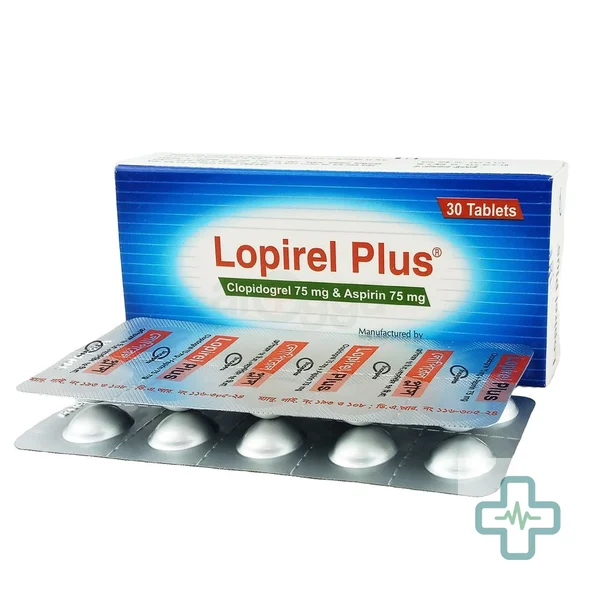
Tablet
Lopirel Plus 75 mg + 75 mg Tablet
Generic: Aspirin + Clopidogrel
Manufacturer: Incepta Pharmaceuticals Ltd. (Dhamrai Unit)
Therapeutic class: Dual Antiplatelet Therapy (DAPT)
What is Lopirel Plus used for?
Lopirel Plus is a tablet containing aspirin and clopidogrel, two antiplatelet medicines that help reduce blood clot formation.
Price in Bangladesh
| Pack | Price (BDT) |
|---|---|
| Per tablet | ৳ 12.00 |
| Strip of 10 | ৳ 120.00 |
Prices are indicative — actual retail price may vary by pharmacy.
What is Lopirel Plus?
Lopirel Plus is a tablet containing aspirin and clopidogrel, two antiplatelet medicines that help reduce blood clot formation. It is used in dual antiplatelet therapy for conditions such as acute coronary syndrome or after coronary stent placement when prescribed by a doctor.
Lopirel Plus 75 mg + 75 mg tablet is a combination medicine from Incepta Pharmaceuticals Ltd. (Dhamrai Unit) that contains Aspirin + Clopidogrel — two antiplatelet agents in one tablet. This combination, called dual antiplatelet therapy (DAPT), is prescribed after a heart attack, coronary stent (ring) placement or acute coronary syndrome to prevent dangerous blood clots.
The two ingredients attack clot formation from two different directions. Aspirin blocks an enzyme (COX-1) that platelets need to make thromboxane, a clot-promoting chemical, while clopidogrel blocks the P2Y12 receptor on the platelet surface. Together they make platelets far less sticky than either alone, keeping blood flowing freely through narrowed arteries and stents in the heart.
Indications
- After coronary stent (ring) placement / PCI — to prevent stent thrombosis
- Acute coronary syndrome — unstable angina or heart attack (with or without stenting)
- After a heart attack — to reduce the risk of another cardiovascular event
- Selected high-risk patients — short-term use after certain minor strokes or TIAs, strictly under specialist supervision
Dosage & Administration
Your cardiologist will decide the dose and, importantly, the duration of Lopirel Plus. Dual antiplatelet therapy is usually continued for a fixed period (often 6–12 months after a stent, sometimes shorter or longer), after which one of the two medicines is typically stopped — this decision belongs to the cardiologist alone.
- Take it once daily at about the same time, preferably after food to protect the stomach.
- If you miss a dose, take it when you remember the same day; if the next dose is near, skip it — never double up.
Never stop Lopirel Plus on your own and never miss doses — stopping suddenly after a stent can cause the stent to block and trigger a fatal heart attack. Never stop before any surgery or dental work without the cardiologist's instruction.
Side Effects
Because both ingredients reduce clotting, bleeding is the main side effect — more than with either medicine alone:
- Easy bruising, longer bleeding from small cuts
- Nosebleeds, bleeding gums
- Stomach pain, heartburn, indigestion (mainly from aspirin)
- Diarrhoea, rash, itching
Seek urgent medical help if you notice:
- Black or tarry stools, vomiting blood or material like coffee grounds
- Blood in urine, unusually heavy menstrual bleeding
- Bleeding that does not stop with pressure
- Sudden severe headache, weakness of one side, or confusion (possible brain bleed)
- Wheezing or breathing difficulty after a dose (aspirin-sensitive asthma)
Precautions & Warnings
- Tell every doctor, dentist or surgeon that you take Lopirel Plus before any operation, endoscopy or tooth extraction — timing of stopping and restarting is decided only by your cardiologist.
- Take after food and report any stomach pain early; your doctor may add a stomach-protecting medicine.
- Tell your doctor about any history of ulcer, gastrointestinal bleeding, asthma, gout, liver or kidney disease.
- Use a soft toothbrush, shave carefully, and avoid contact sports or work with high injury risk.
- Avoid alcohol — it multiplies the risk of stomach bleeding.
- Carry a card or note saying you are on dual antiplatelet therapy, especially in the first year after a stent.
Drug Interactions
- Anticoagulants (warfarin, rivaroxaban, heparin): major bleeding risk — "triple therapy" is used only briefly under strict specialist supervision
- NSAID painkillers (ibuprofen, diclofenac, naproxen): greatly increase stomach bleeding risk and ibuprofen can blunt aspirin's effect — use paracetamol instead for everyday pain
- Omeprazole/esomeprazole: may reduce the clopidogrel component's effect — pantoprazole or rabeprazole preferred for stomach protection
- SSRIs (escitalopram, sertraline) and corticosteroids: add to bleeding tendency
- Methotrexate: aspirin can raise its toxicity
- Gout medicines: aspirin can blunt their effect and raise uric acid
Tell your doctor about all medicines, supplements and herbal products (including fish oil, ginkgo) you use.
Contraindications
- Allergy to aspirin, other NSAIDs or clopidogrel
- Active bleeding — bleeding peptic ulcer, brain haemorrhage
- Aspirin-induced asthma or nasal polyps with asthma
- Severe liver disease
- Children and adolescents under 16 with viral illness (Reye's syndrome risk from aspirin)
- Third trimester of pregnancy
Pregnancy & Lactation
Pregnancy: This combination is generally avoided in pregnancy. Aspirin at full antiplatelet doses is contraindicated in the third trimester (risk of bleeding and premature closure of a heart vessel in the baby), and clopidogrel has limited human data. If you are pregnant or planning pregnancy, inform your cardiologist immediately so therapy can be adjusted.
Lactation: Small amounts of aspirin pass into breast milk and clopidogrel data are lacking, so breastfeeding during dual antiplatelet therapy is generally not recommended. Discuss the safest plan with your doctor.
Storage Conditions
Store below 30°C in a cool, dry place away from direct sunlight and moisture. Keep in the original blister pack until use — aspirin degrades in humid conditions. Keep out of the reach of children. Do not use after the expiry date or if tablets smell of vinegar.
Frequently Asked Questions
How long do I need to take Lopirel Plus, and can I stop when I feel better?
The duration is decided only by your cardiologist — commonly 6–12 months after a stent or heart attack, sometimes shorter or longer depending on your stent type and bleeding risk. Feeling well is not a reason to stop: the medicine is preventing an invisible clot. Stopping early on your own is one of the most dangerous things a stent patient can do, as the stent can block suddenly and cause a fatal heart attack.
What should I do about Lopirel Plus before surgery or dental treatment?
Tell the surgeon or dentist about Lopirel Plus as early as possible, and inform your cardiologist about the planned procedure. Minor dental work can often go ahead without stopping, but bigger operations may need part of the therapy paused for some days. Only your cardiologist decides what to stop and when — stopping both medicines without guidance soon after a stent can be fatal. Also never miss doses around travel or illness; if vomiting prevents you from keeping the tablet down, contact your doctor the same day.
Why do I bruise and bleed easily on Lopirel Plus, and when is it serious?
Lopirel Plus deliberately makes platelets less sticky, so minor bruises, small gum bleeds or slightly longer bleeding from cuts are expected and usually harmless. Press firmly on any cut for 10 minutes. It becomes serious — needing urgent care — if you see black tarry stools, blood in vomit or urine, bleeding that will not stop, or a sudden severe headache or one-sided weakness. Never reduce the dose yourself because of minor bruising; tell your doctor instead.
Last updated: