 Chamber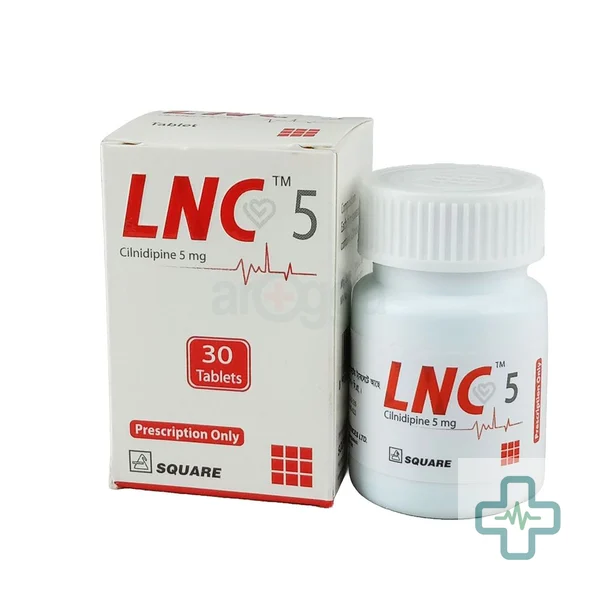
Tablet
LNC 5 5 mg Tablet
Generic: Cilnidipine
Manufacturer: Square Lifesciences Limited, Pabna
Therapeutic class: Calcium Channel Blocker (Dual L/N-type, Antihypertensive)
What is LNC 5 used for?
LNC 5 is a tablet containing cilnidipine 5 mg, made by Square Lifesciences Limited, Pabna. It belongs to the dual L/N-type calcium channel blocker group and is used in the treatment of high blood pressure.
Price in Bangladesh
| Pack | Price (BDT) |
|---|---|
| Per tablet | ৳ 7.00 |
| Box of 30 | ৳ 210.00 |
Prices are indicative — actual retail price may vary by pharmacy.
What is LNC 5?
LNC 5 is a tablet containing cilnidipine 5 mg, made by Square Lifesciences Limited, Pabna. It belongs to the dual L/N-type calcium channel blocker group and is used in the treatment of high blood pressure.
LNC 5 5 mg tablet is a medicine from Square Lifesciences Limited, Pabna that contains Cilnidipine, a newer-generation calcium channel blocker used to treat high blood pressure (hypertension), either alone or together with other blood pressure medicines.
Cilnidipine relaxes and widens blood vessels by blocking calcium from entering the muscle cells of artery walls (L-type channels), which lowers blood pressure. Unlike older medicines of this group such as amlodipine, it also blocks N-type calcium channels on sympathetic nerve endings. This extra action calms the nerve signals that speed up the heart and constrict small veins — which is why cilnidipine causes noticeably less ankle swelling and less reflex fast heartbeat, and may give added kidney protection.
Indications
- High blood pressure (hypertension) — alone or combined with other antihypertensives
- Patients who developed ankle swelling on amlodipine — a common reason doctors switch to cilnidipine
- Hypertension with protein in the urine or early kidney disease — its N-type channel action may help reduce proteinuria
Dosage & Administration
Your doctor will decide the right dose of LNC 5 based on your blood pressure readings and overall health, and may adjust it after a few weeks of monitoring.
- Take it once daily (or as prescribed), at about the same time every day — commonly after breakfast.
- Swallow with water; do not crush or chew unless advised.
- If you miss a dose, take it as soon as you remember unless the next dose is near — never take a double dose.
This is a long-term medicine. Never stop LNC 5 on your own, even if your blood pressure looks normal — it is normal because the medicine is working.
Side Effects
Cilnidipine is generally well tolerated, with less ankle swelling than older calcium channel blockers. Possible side effects include:
- Headache, dizziness or light-headedness
- Flushing or warmth in the face
- Palpitations (less common than with amlodipine)
- Mild ankle or foot swelling (much less frequent than amlodipine)
- Nausea, abdominal discomfort, fatigue
- Uncommon but important: very low blood pressure with faintness, or fast irregular heartbeat — contact your doctor
Precautions & Warnings
- Check your blood pressure regularly and keep all follow-up appointments.
- Rise slowly from sitting or lying to avoid dizziness, especially in the first weeks.
- Tell your doctor if you have liver disease, kidney disease, heart failure or severe narrowing of a heart valve (aortic stenosis).
- Avoid grapefruit juice in large amounts — it can raise the level of this group of medicines.
- Avoid driving or operating machinery until you know how the medicine affects you.
- Limit alcohol, which can exaggerate the pressure-lowering effect.
- Continue lifestyle measures: less salt, regular walking, weight control and no smoking.
Drug Interactions
- Other blood pressure medicines and diuretics: additive effect — pressure may fall too low
- Beta-blockers (metoprolol, bisoprolol): often combined safely, but watch for excessive pressure drop or slow pulse
- Strong CYP3A4 inhibitors (ketoconazole, itraconazole, clarithromycin): can raise cilnidipine levels
- CYP3A4 inducers (rifampicin, carbamazepine, phenytoin): can reduce its effect
- Grapefruit juice: may increase drug levels
- NSAID painkillers: can blunt the blood-pressure-lowering effect
- Cimetidine: may raise calcium channel blocker levels
Tell your doctor about all medicines, supplements and herbal products you use.
Contraindications
- Allergy to cilnidipine or other dihydropyridine calcium channel blockers
- Cardiogenic shock or severe low blood pressure
- Severe aortic stenosis
- Unstable angina or within the first weeks after an acute heart attack, unless a specialist advises
- Pregnancy and breastfeeding (safety not established)
Pregnancy & Lactation
Pregnancy: Cilnidipine is not recommended during pregnancy, as adequate human safety data are not available. If you become pregnant or plan to conceive while taking it, tell your doctor immediately — better-studied blood pressure medicines are available for pregnancy.
Lactation: It is not known how much cilnidipine passes into breast milk, so it is generally avoided during breastfeeding. Your doctor can switch you to an alternative with an established safety record in nursing mothers.
Storage Conditions
Store below 30°C in a cool, dry place, protected from light and moisture. Keep the tablets in the original blister pack until use, and keep out of the reach of children. Do not use after the expiry date.
Frequently Asked Questions
Can I stop LNC 5 when I feel better?
No. High blood pressure is a silent condition — you feel fine and your readings look normal because LNC 5 is working every day. Stopping on your own allows the pressure to rise again without warning, increasing the risk of stroke, heart attack and kidney damage. Continue the medicine daily and only adjust or stop it on your doctor's advice.
How is LNC 5 different from amlodipine?
Both belong to the calcium channel blocker family and lower blood pressure by relaxing artery walls. LNC 5 (cilnidipine) is a newer, fourth-generation member that additionally blocks N-type calcium channels on nerve endings. In practice this means noticeably less ankle swelling, less reflex palpitation, and possibly better kidney protection — doctors often switch patients to cilnidipine when amlodipine causes swollen feet. Blood pressure control is comparable between the two.
When is the best time to take LNC 5, and what if I miss a dose?
Take LNC 5 once daily at roughly the same time — many doctors suggest after breakfast, but the key is consistency so your blood level stays steady. If you miss a dose, take it as soon as you remember that day; if it is nearly time for the next dose, skip the missed one and continue as usual. Never take two doses together to catch up, as this can drop your pressure too far and cause dizziness or fainting.
Last updated: