
Generic
Tranexamic Acid
Brand medicines containing Tranexamic Acid available in Bangladesh — compare prices, strengths and manufacturers.
Tranexamic Acid brands in Bangladesh
Showing 1–24 of 64 medicines

Anaxyl 500 mg Tablet
Tranexamic Acid
Advanced Chemical Industries Limited
Anaxyl 250 mg Capsule
Tranexamic Acid
Advanced Chemical Industries Limited
Anaxyl 250 mg/5 ml Injection
Tranexamic Acid
Advanced Chemical Industries Limited

Anaxyl 500 mg/5 ml Injection
Tranexamic Acid
Advanced Chemical Industries Limited
Antrax 500 mg/5 ml Injection
Tranexamic Acid
Square Pharmaceuticals PLC, Pabna
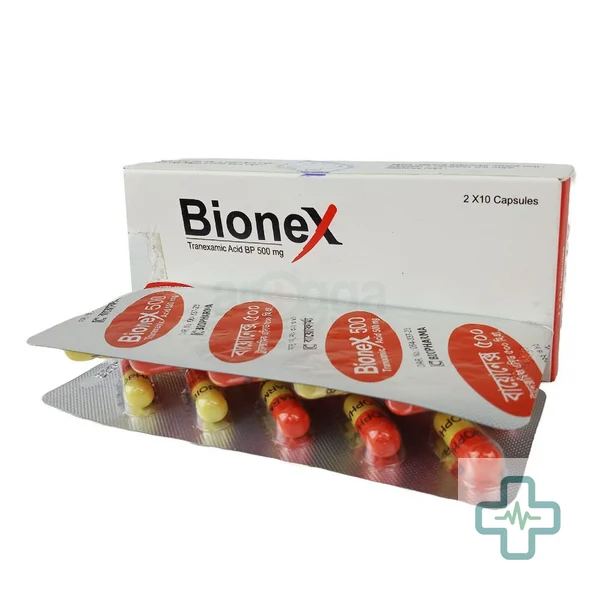
Bionex 500 mg Capsule
Tranexamic Acid
Biopharma Ltd.
Block-T 500 mg Tablet
Tranexamic Acid
Drug International Ltd., Gopalpur
Block-T 500 Capsule
Tranexamic Acid
Drug International Ltd., Gopalpur
Block-T IM/IV Inj 500 mg/5 ml Injection
Tranexamic Acid
Drug International Ltd.
Block-T Injection (IV/IM) 500 mg/5 ml Injection
Tranexamic Acid
Drug International Ltd., Gopalpur
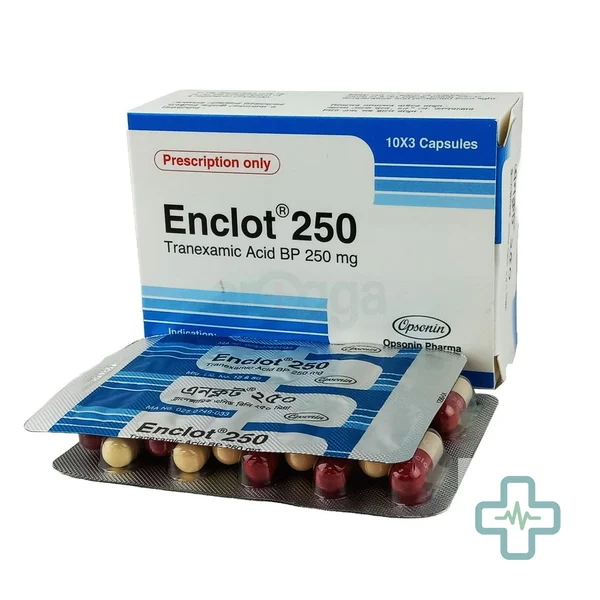
Enclot 250 mg Capsule
Tranexamic Acid
Opsonin Pharma Limited
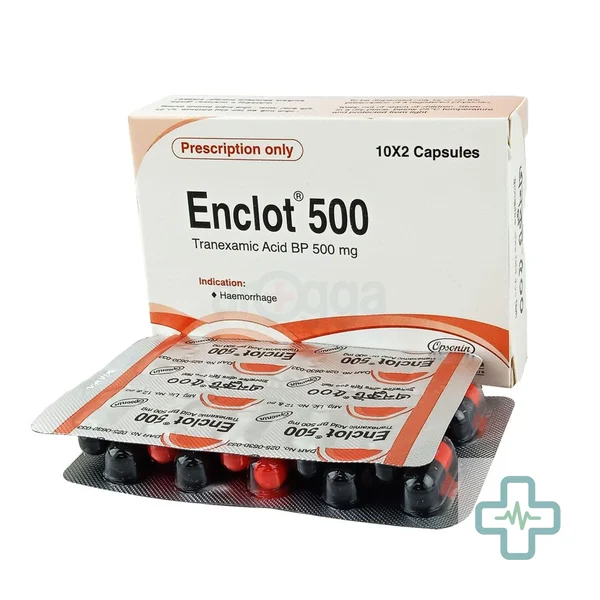
Enclot 500 mg Capsule
Tranexamic Acid
Opsonin Pharma Limited
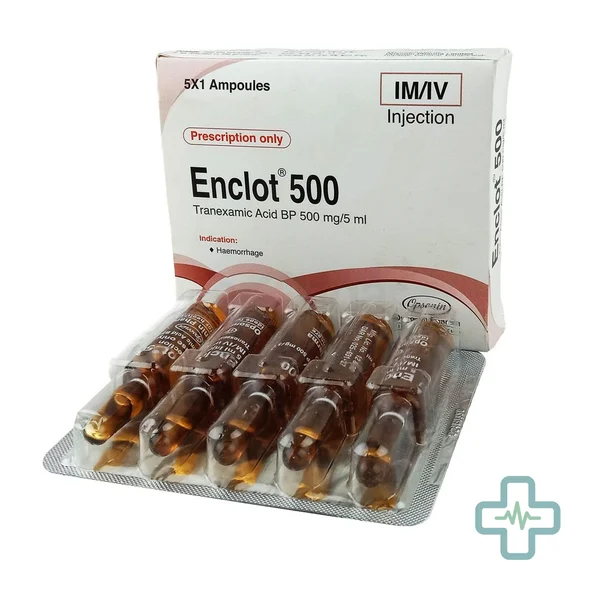
Enclot 500 mg/5 ml Injection
Tranexamic Acid
Opsonin Pharma Limited
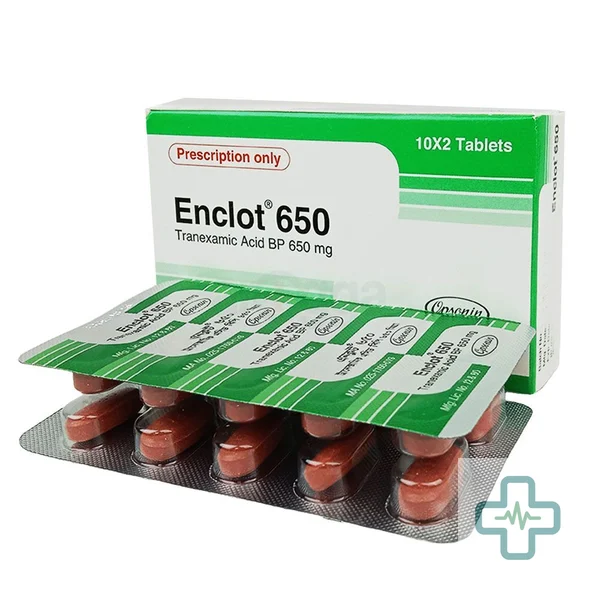
Enclot 650 mg Tablet
Tranexamic Acid
Opsonin Pharma Limited
Fibrino 500 mg Tablet
Tranexamic Acid
Eskayef Pharmaceuticals Ltd., Tongi,Gazipur
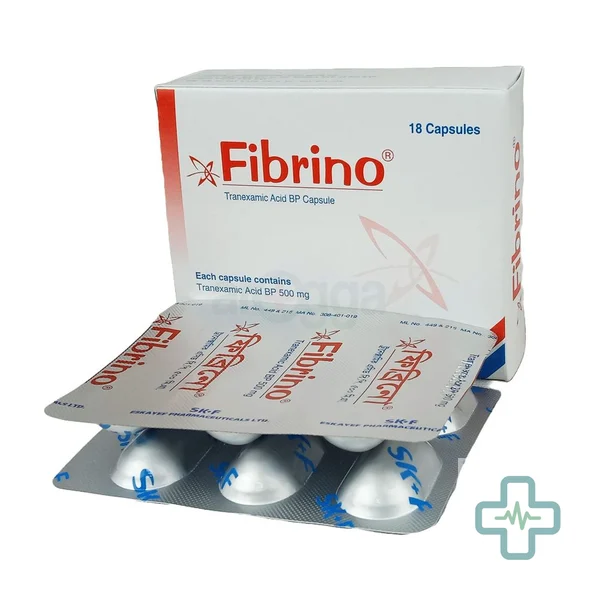
Fibrino 500 mg Capsule
Tranexamic Acid
Eskayef Pharmaceuticals Ltd., Tongi,Gazipur
Fibrino 500 mg/5 ml Injection
Tranexamic Acid
Eskayef Pharmaceuticals Ltd., Narayanganj
Fibrostat 500 mg Capsule
Tranexamic Acid
Globe Pharmaceuticals Ltd.
Fibrostat 500 mg/5 ml Injection
Tranexamic Acid
Globe Pharmaceuticals Ltd.
Frabex 250 mg Capsule
Tranexamic Acid
Square Pharmaceuticals PLC, Pabna
Frabex 500 mg Capsule
Tranexamic Acid
Square Pharmaceuticals PLC, Pabna
Frabex 250 mg/5 ml Injection
Tranexamic Acid
Square Pharmaceuticals PLC, Pabna
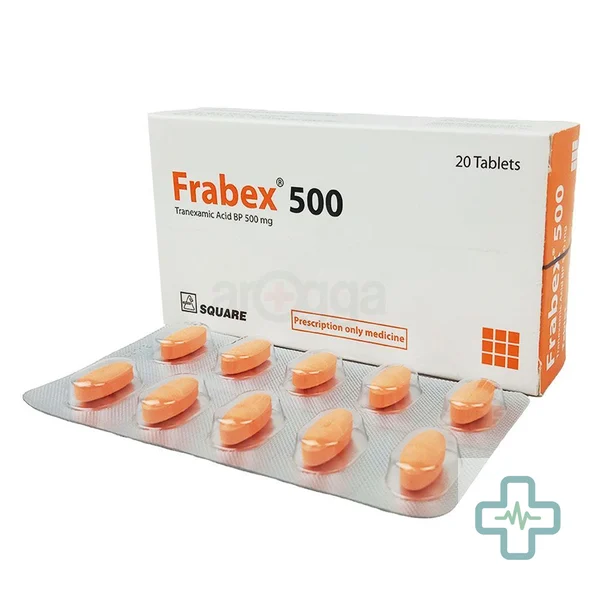
Frabex 500 mg Tablet
Tranexamic Acid
Square Pharmaceuticals PLC, Gazipur
Frabex 500 500 mg Capsule
Tranexamic Acid
Square Formulations Ltd.
All Tranexamic Acid brands (64)
- Anaxyl 250 mg Capsule
- Anaxyl 250 mg/5 ml Injection
- Anaxyl 500 mg Tablet
- Anaxyl 500 mg/5 ml Injection
- Antrax 500 mg/5 ml Injection
- Bionex 500 mg Capsule
- Block-T 500 Capsule
- Block-T 500 mg Tablet
- Block-T IM/IV Inj 500 mg/5 ml Injection
- Block-T Injection (IV/IM) 500 mg/5 ml Injection
- Enclot 250 mg Capsule
- Enclot 500 mg Capsule
- Enclot 500 mg/5 ml Injection
- Enclot 650 mg Tablet
- Fibrino 500 mg Capsule
- Fibrino 500 mg Tablet
- Fibrino 500 mg/5 ml Injection
- Fibrostat 500 mg Capsule
- Fibrostat 500 mg/5 ml Injection
- Frabex 250 mg Capsule
- Frabex 250 mg/5 ml Injection
- Frabex 500 500 mg Capsule
- Frabex 500 mg Capsule
- Frabex 500 mg Tablet
- Haemloc 500 mg Capsule
- Haemloc inj 500 mg/5 ml Injection
- Hemostat 250 mg/5 ml Injection
- Hemostat 500 mg Capsule
- Hemostat-250 mg Tablet
- Hemostop 500 mg Capsule
- Hemotrax 500 mg Tablet
- Hemotrax 500 mg/5 ml Injection
- Intrax 250 mg Capsule
- Intrax 500 650 mg Tablet
- Intrax 500 mg/5 ml Injection
- Nexasol Inj 1 gm/10 ml Injection
- Nexyl 500 mg Capsule
- Oranex 500 mg Capsule
- Taxiclot 500 mg Capsule
- Texamic-500 mg Capsule
- Texamic-500 mg/5 ml Injection
- Tracid 500 mg Tablet
- Tracid 500 mg/5 ml Injection
- Tracid 650 mg Tablet
- Tramic 500 mg/5 ml Injection
- Tranex 500 mg Tablet
- Tranex 500 mg/5 ml Injection
- Tranexamic 500 mg Capsule
- Tranexamic 500 mg/5 ml Injection
- Tranexil 500 mg Capsule
- Tranexil 500 mg/5 ml Injection
- Trapic 500 mg Tablet
- Traxyl 250 mg/5 ml Injection
- Traxyl 500 mg Capsule
- Trexam 250 mg/5 ml Injection
- Trexan 500 mg Capsule
- Xamic 250 mg/5 ml Injection
- Xamic 500 500 mg/5 ml Injection
- Xamic 500 mg Capsule
- Xamic 500 mg/5 ml Injection
- Xamic 650 mg Tablet
Veterinary products
What is Tranexamic Acid?
Tranexamic Acid is a antifibrinolytic (haemostatic) agent medicine available in Bangladesh under many brand names. Below are its uses, side effects and precautions — and every brand with its current price.
What is Tranexamic Acid used for?
Tranexamic Acid is prescribed to control bleeding in situations such as:
- Heavy menstrual bleeding (menorrhagia) — one of its commonest uses in Bangladesh
- Recurrent nosebleeds (epistaxis)
- Bleeding after tooth extraction, including in people with bleeding disorders
- Excessive bleeding after surgery, trauma or childbirth (hospital use)
- Other doctor-identified bleeding conditions, such as selected cases of blood-stained urine after proper evaluation
Heavy or irregular bleeding always deserves a diagnosis first — especially new heavy periods after age 40, bleeding between periods or bleeding after menopause — because the medicine controls bleeding but does not treat its underlying cause.
Side Effects
Tranexamic Acid is generally well tolerated. Possible effects:
- Common: nausea, vomiting, diarrhoea, stomach discomfort (often improved by dose reduction), headache, tiredness
- Less common: dizziness, muscle aches, skin rash
- Serious (stop and seek urgent care): signs of a blood clot — painful swollen calf, sudden chest pain, breathlessness, coughing blood, sudden severe headache, one-sided weakness or slurred speech; changes in colour vision or other visual disturbance; severe allergic reaction with facial swelling or breathing difficulty
Visual changes require stopping the medicine and a prompt eye assessment. Clot symptoms are emergencies — go to hospital immediately.
Precautions & Warnings
Take these precautions with Tranexamic Acid:
- Tell your doctor about any personal or family history of blood clots (DVT, pulmonary embolism, stroke, heart attack) before starting
- Combined oral contraceptive pills already raise clot risk — discuss before using both together
- Prolonged immobility, long flights, recent surgery, obesity and smoking add to clot risk; mention them
- Kidney disease requires dose reduction
- For blood in the urine, use it only after a doctor has evaluated the cause — clots can obstruct the urinary tract
- If treatment continues beyond the short term, periodic eye examinations may be advised
- Investigate the cause of abnormal bleeding rather than relying on the tablet cycle after cycle
Drug Interactions
Tranexamic Acid has relatively few interactions, but the important ones concern clotting:
- Combined hormonal contraceptives (pill, patch, ring) — additive clot risk; use together only after medical advice
- Clotting-factor concentrates (such as prothrombin complex) — combined use heightens thrombosis risk and is specialist-managed
- Thrombolytic (clot-busting) drugs — tranexamic acid directly opposes their action
- Tretinoin (in certain leukaemia treatment) — increased clotting complications reported
Anticoagulants such as warfarin work in the opposite direction; if you are on a blood thinner, any anti-bleeding medicine requires a doctor's coordinated plan. Always disclose your full medication list.
Contraindications
Do not use Tranexamic Acid if any of the following applies:
- Current blood-clot disease — deep vein thrombosis, pulmonary embolism, recent stroke or heart attack
- History of venous or arterial thrombosis, unless a specialist decides otherwise with precautions
- A known strong inherited or acquired tendency to clotting (thrombophilia)
- Subarachnoid haemorrhage (a specific type of brain bleed)
- Severe kidney failure
- History of seizures (particularly relevant to high-dose injectable use)
- Known allergy to tranexamic acid
Disturbed colour vision during previous use is also a reason not to take it again. When in doubt, ask your doctor before the first dose.
Pregnancy & Lactation
Pregnancy: Tranexamic Acid crosses the placenta, but the available evidence has not shown harm to the baby, and doctors do use it in pregnancy for specific bleeding problems — including, in hospital, for serious bleeding after childbirth. It should nevertheless be taken in pregnancy only on a doctor's explicit advice, never self-administered for spotting or unexplained bleeding, which always needs urgent evaluation.
Breastfeeding: Only tiny amounts reach breast milk — far below treatment doses — and short courses are generally considered compatible with breastfeeding. Tell your doctor you are nursing so the dose and duration can be confirmed as appropriate for you and your baby.
Storage
Store Tranexamic Acid in its original pack at room temperature below 30°C, protected from direct sunlight, heat and moisture. Do not keep it in bathrooms or other humid places. Keep it out of the reach and sight of children. Check the expiry date before each course — many women use this medicine only a few days per month, so strips can sit unused for long periods and quietly expire. Do not use discoloured or damaged tablets, and dispose of leftover or expired medicine safely rather than keeping it indefinitely.
Frequently asked questions about Tranexamic Acid
When should I start and stop Tranexamic Acid for heavy periods?
Start Tranexamic Acid only when the heavy flow actually begins — usually the first day of the period — and continue while bleeding is heavy, typically for three to four days and no more than five days in a cycle. It is not taken throughout the month or as a preventive. Keep a simple record of pad counts and cycle days; if bleeding remains heavy after two to three treated cycles, or if your cycles are irregular, go back to your doctor for reassessment, since conditions like fibroids, polyps or hormonal problems may need different treatment.
Will Tranexamic Acid stop my period completely or affect my cycle?
No. Tranexamic Acid reduces the volume of menstrual blood loss — often by around half — but it does not stop the period, shorten or lengthen the cycle, or change your hormones. It is also not a contraceptive and gives no protection against pregnancy. Your period should still come at its usual time; the days are simply less heavy and more manageable. If your periods stop altogether, become unusually light for you or turn irregular while using it, that is not the tablet's expected effect — consult your doctor for evaluation.
Is Tranexamic Acid safe for me if I previously had a blood clot?
Generally no. A history of deep vein thrombosis, pulmonary embolism, stroke or heart attack is usually a contraindication, because Tranexamic Acid preserves clots and could encourage a new one. Tell your doctor about any personal or strong family history of clots, current use of combined contraceptive pills, recent surgery or long immobility before taking it. Safer alternatives for heavy periods exist — including hormonal options and treatment of the underlying cause. If you develop leg swelling and pain, chest pain or sudden breathlessness while on it, stop and go to hospital immediately.
General information about Tranexamic Acid, written from a shared template for every medicine with this ingredient by the ChamberBD content team. This page has not been individually reviewed by a clinician and does not replace a doctor's advice — always follow your doctor's prescription.