
Generic
Famotidine
Brand medicines containing Famotidine available in Bangladesh — compare prices, strengths and manufacturers.
Famotidine brands in Bangladesh
Showing 1–24 of 67 medicines
Axidin 20 mg Tablet
Famotidine
Unimed Unihealth Pharmaceuticals Ltd.
F-2 Tablet 20 mg
Famotidine
Benham Pharmaceuticals Ltd.
F-2 Tablet 40 mg Tablet
Famotidine
Benham Pharmaceuticals Ltd.
Fabcid 20 mg Tablet
Famotidine
Nipa Pharmaceuticals Ltd.
Fabcid 40 mg Tablet
Famotidine
Nipa Pharmaceuticals Ltd.
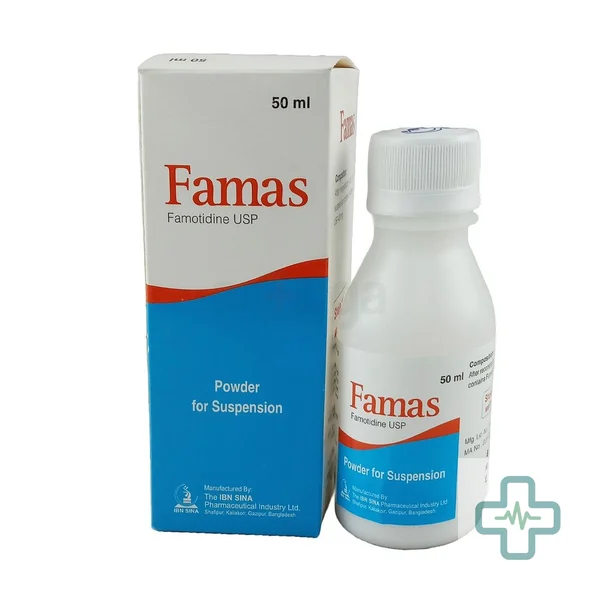
Famas 40 mg/5 ml Powder For Suspension
Famotidine
Ibn Sina Pharmaceutical Ind. Ltd.
Famas -40 mg Tablet
Famotidine
Ibn Sina Pharmaceutical Ind. Ltd.
Famas-20 mg Tablet
Famotidine
Ibn Sina Pharmaceutical Ind. Ltd.
Famisus 40 mg/5 ml Powder For Suspension
Famotidine
Ad-din Pharmaceuticals Ltd.
Famo 20 mg Tablet
Famotidine
G. A. Company Ltd.
Famo 40 mg Tablet
Famotidine
G. A. Company Ltd.
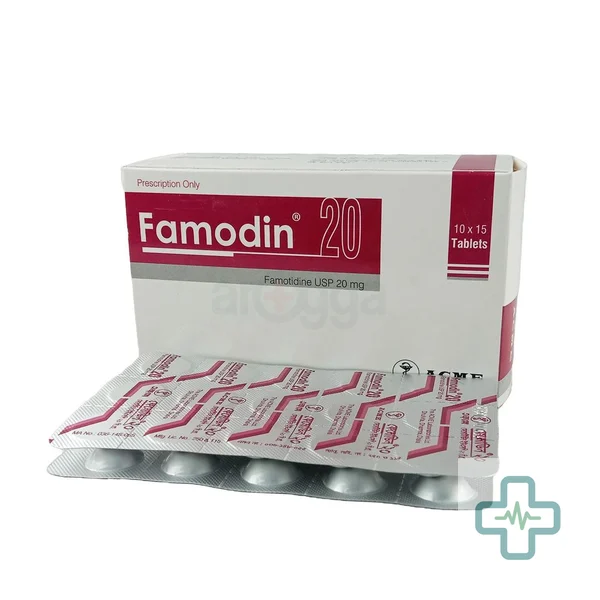
Famodin 20 mg Tablet
Famotidine
The ACME Laboratories Ltd.
Famodin 40 mg Tablet
Famotidine
The ACME Laboratories Ltd.
Famodin Powder for Suspension 40 mg/5 ml
Famotidine
The ACME Laboratories Ltd.
Famogen 40 mg/5 ml Powder For Suspension
Famotidine
General Pharmaceuticals Ltd.
Famoj 20 mg Tablet
Famotidine
Jalalabad Pharmaceuticals Ltd.
Famoj 40 mg Tablet
Famotidine
Jalalabad Pharmaceuticals Ltd.
Famoloc 40 mg/5 ml Powder For Suspension
Famotidine
Biopharma Ltd.
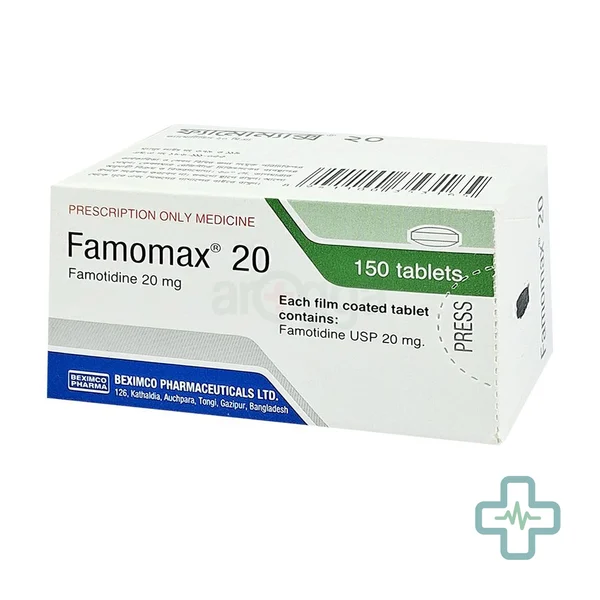
Famomax 20 mg Tablet
Famotidine
Beximco Pharmaceuticals Ltd.
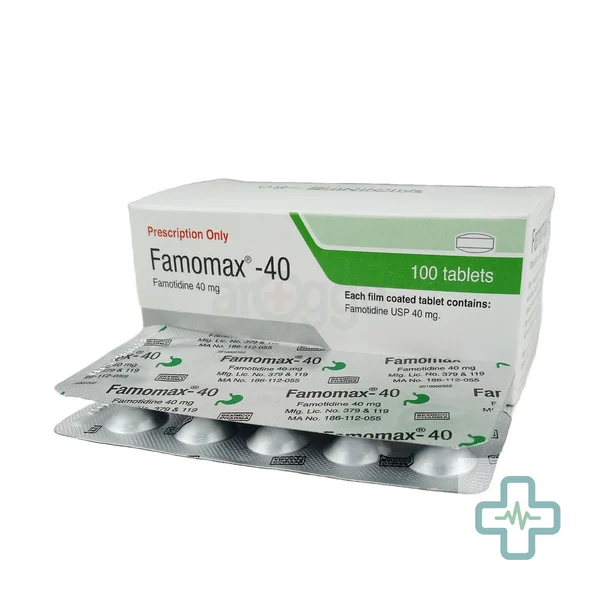
Famomax 40 mg Tablet
Famotidine
Beximco Pharmaceuticals Ltd.
Famomax Powder for Suspension 40 mg/5 ml
Famotidine
Beximco Pharmaceuticals Ltd.
Famonix PFS 40 mg/5 ml Powder For Suspension
Famotidine
Concord Pharmaceuticals Ltd.
Famopep 20 mg Tablet
Famotidine
Biogen Pharmaceuticals Ltd.
Famosic 40 mg/5 ml Powder For Suspension
Famotidine
Physic Pharmaceuticals Ltd.,
All Famotidine brands (67)
- Axidin 20 mg Tablet
- F-2 Tablet 20 mg
- F-2 Tablet 40 mg Tablet
- Fabcid 20 mg Tablet
- Fabcid 40 mg Tablet
- Famas -40 mg Tablet
- Famas 40 mg/5 ml Powder For Suspension
- Famas-20 mg Tablet
- Famisus 40 mg/5 ml Powder For Suspension
- Famo 20 mg Tablet
- Famo 40 mg Tablet
- Famodin 20 mg Tablet
- Famodin 40 mg Tablet
- Famodin Powder for Suspension 40 mg/5 ml
- Famogen 40 mg/5 ml Powder For Suspension
- Famoj 20 mg Tablet
- Famoj 40 mg Tablet
- Famoloc 40 mg/5 ml Powder For Suspension
- Famomax 20 mg Tablet
- Famomax 40 mg Tablet
- Famomax Powder for Suspension 40 mg/5 ml
- Famonix PFS 40 mg/5 ml Powder For Suspension
- Famopep 20 mg Tablet
- Famosic 40 mg/5 ml Powder For Suspension
- Famotab 20 mg Tablet
- Famotab 40 mg Tablet
- Famotac 20 mg Tablet
- Famotac 40 mg Tablet
- Famotack 20 mg Tablet
- Famotack 40 mg Tablet
- Famotack 40 mg/5 ml Powder For Suspension
- Famote 20 mg Tablet
- Famote 40 mg Tablet
- Famotid 20 mg Tablet
- Famotid 40 mg Tablet (Drug International)
- Famotid 40 mg/5 ml Powder For Suspension
- Famotid-20 Tablet
- Famotid-40 mg Tablet (Drug International, Gopalpur)
- Famotidine 20 mg Tablet
- Famotidine 40 mg Tablet
- Famotidine 40 mg/5 ml Powder For Suspension
- Famotin 20 mg Tablet
- Famotin 40 mg Tablet
- Nacid 20 mg Tablet
- Nacid 40 mg Tablet
- NCR FAST 20 mg Tablet
- NCR FAST 40 mg Tablet
- Neostidine-R 20 mg Tablet
- Notac 40 mg Tablet
- Novatac 20 mg Tablet
- Novatac 40 mg Tablet
- Novatid 20 mg Tablet
- Novatid 40 mg Tablet
- Peptid 20 mg Tablet
- Peptid 40 mg Tablet
- Precid 20 mg Tablet
- Precid 40 mg Tablet
- Precid Powder for Suspn 40 mg/5 ml Powder For Suspension
- Reducid 20 mg Tablet
- REDUCID 40 mg Tablet
- Reducid 40 mg/5 ml Powder For Suspension
- Servipep 20 mg Tablet
- Servipep 40 mg Tablet
- Snow 40 mg Tablet
- Temtac 20 mg Tablet
- Zactrol 20 mg Tablet
- Zactrol 40 mg Tablet
What is Famotidine?
Famotidine is a h2 receptor antagonist (h2 blocker) medicine available in Bangladesh under many brand names. Below are its uses, side effects and precautions — and every brand with its current price.
What is Famotidine used for?
Famotidine is indicated for:
- Heartburn and acid indigestion — relief and prevention of occasional symptoms
- Gastro-oesophageal reflux disease (GERD) — mild to moderate cases
- Duodenal and gastric ulcers — treatment and prevention of recurrence
- Zollinger-Ellison syndrome — conditions of acid hypersecretion
- Stress ulcer and aspiration prophylaxis — in selected hospital settings
It is sometimes preferred when a milder, shorter-acting acid reducer is enough, or for night-time symptom control. A registered doctor should confirm which indication applies to you.
Side Effects
Famotidine has a good safety record. Possible side effects include:
- Common: headache, dizziness, constipation, diarrhoea
- Less common: dry mouth, nausea, fatigue, skin rash
- Rare: confusion or agitation (mainly in the elderly or those with kidney failure), irregular heartbeat, liver enzyme changes, low blood counts
Most effects are mild and temporary. Seek medical attention if you develop a fast or irregular heartbeat, marked confusion, easy bruising, yellowing of the skin, or signs of allergy such as swelling and breathing difficulty.
Precautions & Warnings
Precautions while using Famotidine:
- Kidney impairment: doses usually need reduction; elderly patients with poor kidney function are prone to confusion
- Persistent heartburn despite 2 weeks of treatment, difficulty swallowing, vomiting blood or black stools require medical evaluation — acid reducers can mask stomach cancer symptoms
- Avoid smoking, alcohol, and late heavy meals, which counteract acid control
- Do not combine with other H2 blockers; tell your doctor if you also use a PPI
- Use the lowest dose that controls symptoms, for the shortest necessary time
Drug Interactions
Famotidine has fewer drug interactions than older H2 blockers like cimetidine, but note:
- Acid-dependent drugs: reduced absorption of ketoconazole, itraconazole, atazanavir, rilpivirine and some iron salts
- Antacids: may slightly reduce famotidine absorption — separate by 1-2 hours if possible
- Tizanidine: levels may increase with strong acid suppression combinations
- Probenecid: can raise famotidine blood levels
Famotidine does not significantly inhibit liver CYP enzymes, which is one reason doctors choose it. Still, list all your medicines to your doctor and pharmacist.
Contraindications
Famotidine should not be taken if:
- You have known hypersensitivity to famotidine, other H2-receptor antagonists, or any ingredient of the
- Cross-sensitivity exists between H2 blockers, so a previous reaction to ranitidine or similar drugs matters
Use with caution and medical guidance in moderate to severe kidney disease (dose adjustment needed), in the elderly, and in patients with long QT syndrome where high doses are used. If alarm symptoms are present, endoscopic evaluation should come before prolonged acid suppression.
Pregnancy & Lactation
Pregnancy: Famotidine has been used in pregnancy for many years without evidence of harm in available studies, and H2 blockers are often considered acceptable for pregnancy heartburn when lifestyle measures fail. Even so, it should be taken in pregnancy only on a doctor's advice, at the lowest effective dose.
Lactation: Famotidine passes into breast milk in small amounts, generally regarded as compatible with breastfeeding at usual doses; among H2 blockers it transfers relatively less. Nursing mothers should still confirm with their doctor before regular use.
Storage
Store below 30°C in a dry place, protected from light and moisture. Keep the in its original packaging, tightly closed, and out of the reach and sight of children. If using a suspension form, follow the label about shaking and any post-reconstitution shelf life. Do not use after the expiry date on the pack.
Frequently asked questions about Famotidine
Is Famotidine weaker than omeprazole or other PPIs?
Famotidine (famotidine) reduces acid less profoundly than PPIs like omeprazole, but that is not always a disadvantage. It acts faster — within about an hour — making it useful for predictable, occasional heartburn and night-time symptoms. PPIs suit severe reflux, erosive oesophagitis and ulcer healing better. Doctors sometimes use both classes together for difficult night-time acid breakthrough. Your doctor will match the medicine to the severity of your condition.
Can I take Famotidine only when I get heartburn, instead of every day?
For occasional heartburn, on-demand use of Famotidine is reasonable — it starts working within about an hour, and taking it 15-60 minutes before a meal you expect to cause trouble can prevent symptoms. However, if you need it more than two or three times a week, or your doctor prescribed a fixed course for ulcer or GERD healing, take it regularly as directed and get reviewed rather than self-treating long term.
Is long-term use of Famotidine safe?
Famotidine is considered one of the safer acid reducers, and maintenance use is common under medical supervision — for example 20 mg at night to prevent ulcer recurrence. Long-term users should have periodic doctor reviews, kidney function checks where relevant, and reassessment of whether treatment is still needed. Unsupervised use for months is not advisable, because ongoing symptoms may signal a condition needing investigation.
General information about Famotidine, written from a shared template for every medicine with this ingredient by the ChamberBD content team. This page has not been individually reviewed by a clinician and does not replace a doctor's advice — always follow your doctor's prescription.