 Chamber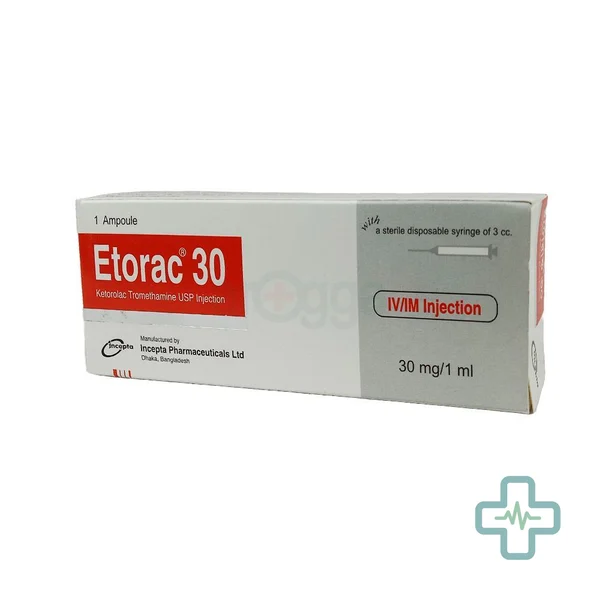
Injection
Etorac 30 mg/ml Injection
Generic: Ketorolac Tromethamine
Manufacturer: Incepta Pharmaceuticals Ltd.
Therapeutic class: Non-steroidal anti-inflammatory drug (NSAID) — potent short-term analgesic
What is Etorac used for?
Etorac 30 mg/ml Injection contains ketorolac tromethamine, a non-steroidal anti-inflammatory drug (NSAID). It is used in medical settings for short-term relief of moderate to severe acute pain, such as pain after surgery.
Price in Bangladesh
| Pack | Price (BDT) |
|---|---|
| Per injection | ৳ 55.00 |
| 1 amps | ৳ 55.00 |
Prices are indicative — actual retail price may vary by pharmacy.
What is Etorac?
Etorac 30 mg/ml Injection contains ketorolac tromethamine, a non-steroidal anti-inflammatory drug (NSAID). It is used in medical settings for short-term relief of moderate to severe acute pain, such as pain after surgery.
Etorac 30 mg/ml injection is manufactured and marketed by Incepta Pharmaceuticals Ltd. in Bangladesh. It contains Ketorolac Tromethamine, one of the most powerful NSAID painkillers available, with pain relief that approaches some opioid medicines. Doctors prescribe it for short-term management of moderate to severe acute pain — such as after surgery, dental procedures or kidney-stone pain — for a maximum of 5 days.
Ketorolac works by strongly blocking cyclo-oxygenase (COX) enzymes, sharply cutting the production of prostaglandins that cause pain and inflammation. This strong action explains both its excellent pain relief and its higher risk of stomach bleeding and kidney injury, which is why it must never be used as an everyday painkiller or beyond five days.
Indications
Etorac is used only for short-term (up to 5 days) moderate to severe acute pain, such as:
- Pain after surgery, including caesarean and orthopaedic operations
- Pain after dental extraction or dental surgery
- Kidney-stone pain (renal colic)
- Severe musculoskeletal injury pain
- Severe migraine attack (under medical supervision)
It is not for mild aches, chronic arthritis, long-term back pain or routine fever — safer options exist for those. Treatment often starts with the injection in hospital and continues with tablets.
Dosage & Administration
The usual adult dose of Etorac tablets is 10 mg every 4 to 6 hours as needed, up to a maximum of 40 mg per day. The total duration of ketorolac — injection and tablets combined — must not exceed 5 days.
- Take with or after food with a full glass of water
- Elderly patients and those under 50 kg need lower doses
- Not recommended for children except under specialist hospital care
Never extend the course on your own. The dose, route and duration must be decided by a doctor, who will weigh your stomach, kidney and heart risks first.
Side Effects
Because it is such a strong NSAID, Etorac carries a higher risk of side effects than milder painkillers:
- Stomach pain, heartburn, nausea, indigestion
- Drowsiness, dizziness or headache
- Fluid retention and raised blood pressure
- Stomach or intestinal ulcers and bleeding — can occur even within a few days, especially in the elderly
- Kidney injury, particularly in dehydrated patients
- Increased bleeding tendency after surgery
- Allergic reactions, wheezing in aspirin-sensitive asthma
Seek urgent care for black stools, vomiting blood, severe stomach pain or reduced urine output.
Precautions & Warnings
Key precautions with Etorac:
- Never use it for more than 5 days in total — the risk of bleeding and kidney damage rises steeply after that
- Always take it with food and plenty of water
- Avoid completely in dengue or suspected dengue — serious bleeding risk; use paracetamol instead
- Avoid if dehydrated, and in the elderly use only at reduced doses under supervision
- Do not combine with any other NSAID, aspirin or steroid
- Use extreme caution with ulcer history, kidney disease, heart disease, hypertension, asthma or bleeding disorders
- Not for pain relief before or during major surgery without the surgical team's instruction
Drug Interactions
Important interactions of Etorac:
- Other NSAIDs, aspirin, corticosteroids — sharply increased ulcer and bleeding risk; never combine
- Anticoagulants and antiplatelets (warfarin, heparin, clopidogrel) — dangerous bleeding risk
- SSRIs (e.g. sertraline, escitalopram) — added GI bleeding risk
- ACE inhibitors, ARBs, diuretics — kidney injury risk, reduced blood-pressure control
- Lithium and methotrexate — levels rise, causing toxicity
- Probenecid — markedly raises ketorolac levels; combination contraindicated
- Pentoxifylline — increased bleeding tendency
Tell your doctor every medicine and supplement you are taking before starting.
Contraindications
Do not use Etorac if you have:
- Active or recent peptic ulcer or GI bleeding, or past NSAID-related bleeding
- Bleeding disorders, suspected cerebrovascular bleeding, or high bleeding risk after surgery
- Moderate to severe kidney impairment or risk of kidney failure from dehydration
- Severe heart failure or uncontrolled heart disease
- Asthma, urticaria or allergy triggered by aspirin or other NSAIDs
- Dengue fever or suspected dengue
- Pregnancy (especially third trimester), labour, delivery or breastfeeding without specialist advice
- Use as a painkiller before or during major surgery, unless directed by the surgical team
Pregnancy & Lactation
Pregnancy: Etorac should be avoided throughout pregnancy and is contraindicated in the third trimester and around delivery — it can close a vital vessel in the baby's heart prematurely, impair the baby's kidneys, delay labour and increase bleeding at delivery.
Breastfeeding: Ketorolac passes into breast milk in small amounts and many references advise avoiding it while breastfeeding, particularly with newborns. If strong pain relief is needed after caesarean delivery, use it only exactly as prescribed by your doctor, who may prefer safer alternatives.
Storage Conditions
Store Etorac below 30°C in a dry place, protected from light and moisture. Keep tablets in the original blister until use; store injections as directed on the label and protect them from light. Keep all medicines out of the reach and sight of children. Do not use after the expiry date on the pack.
Frequently Asked Questions
How many days can I safely take Etorac?
A maximum of 5 days in total, counting both injections and tablets. Ketorolac is designed only for short bursts of severe acute pain; beyond five days the risk of stomach bleeding, ulcers and kidney damage rises sharply without any extra benefit. If your pain still needs treatment after 5 days, go back to your doctor — they will switch you to a safer longer-term option rather than continuing ketorolac.
Is Etorac stronger than paracetamol or other painkillers?
Yes. Ketorolac is one of the strongest NSAID painkillers — for severe acute pain its effect approaches that of some opioid injections. But strength comes with risk: it is far harder on the stomach, kidneys and bleeding tendency than paracetamol. That is why Etorac is reserved for short-term moderate to severe pain on prescription, while paracetamol remains the first choice for everyday pain and fever.
Can I take Etorac for body pain during dengue fever?
Absolutely not. Dengue lowers platelet counts and weakens blood vessels, and ketorolac — a potent NSAID — further impairs platelet function and can injure the stomach lining. Together this can lead to dangerous internal bleeding. For fever and body ache in dengue or suspected dengue, use paracetamol only, stay well hydrated, and consult a doctor promptly for testing and monitoring.
Last updated: