
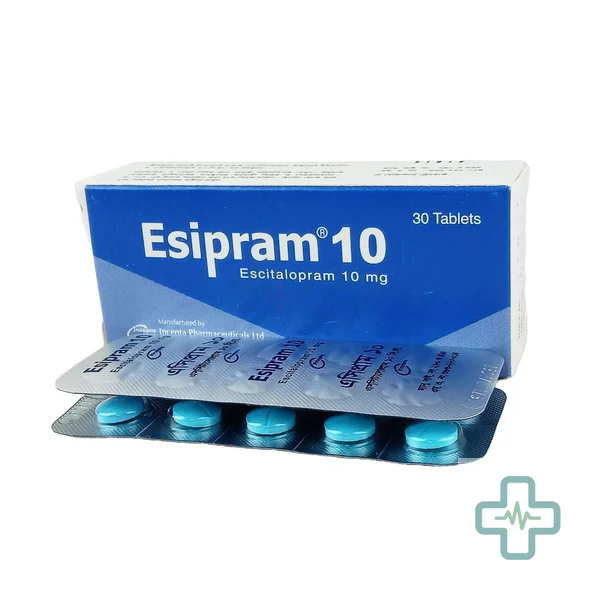
Tablet
Esipram 10 mg Tablet
Generic: Escitalopram
Manufacturer: Incepta Pharmaceuticals Ltd.
Therapeutic class: Selective Serotonin Reuptake Inhibitor (SSRI) Antidepressant
What is Esipram used for?
Esipram (Tablet) contains Escitalopram 10 mg and is made by Incepta Pharmaceuticals Ltd. Therapeutic class: Selective Serotonin Reuptake Inhibitor (SSRI) Antidepressant.
Price in Bangladesh
| Pack | Price (BDT) |
|---|---|
| Per tablet | ৳ 12.00 |
| Strip of 10 | ৳ 120.00 |
Prices are indicative — actual retail price may vary by pharmacy.
What is Esipram?
Esipram 10 mg Tablet contains escitalopram, an SSRI antidepressant made by Incepta Pharmaceuticals Ltd. It is used under medical supervision to treat depression and certain anxiety disorders, including generalized anxiety, panic disorder, social anxiety disorder, and obsessive-compulsive disorder.
Esipram 10 mg tablet is manufactured and marketed by Incepta Pharmaceuticals Ltd. in Bangladesh. It contains Escitalopram, a selective serotonin reuptake inhibitor (SSRI) — one of the most commonly prescribed modern antidepressants. Doctors use it for depression and several anxiety-related conditions. It is a prescription medicine intended for sustained daily use under medical follow-up, not an occasional calming pill.
Escitalopram works on serotonin, a brain chemical involved in regulating mood, anxiety and sleep. It blocks the pumps that reabsorb serotonin into nerve cells, leaving more available at nerve connections. With steady daily dosing, this gradually restores healthier signalling in mood circuits — which is why benefits appear over two to four weeks rather than immediately.
Indications
Esipram is prescribed for:
- Major depressive disorder — persistent low mood, loss of interest, poor sleep and energy
- Generalised anxiety disorder — excessive, hard-to-control worry
- Panic disorder, with or without agoraphobia
- Social anxiety disorder
- Obsessive-compulsive disorder (OCD), as advised by a psychiatrist
Treatment usually continues for at least six months after recovery from a first depressive episode — often longer for repeated episodes or chronic anxiety — to prevent relapse. Medication works best combined with counselling or psychotherapy, regular sleep, physical activity and follow-up visits, so keep your review appointments even when you feel well.
Dosage & Administration
ChamberBD shows dosing only from the approved product label, with its source named, and no label is on file for Esipram 10 mg Tablet. Use the dose your doctor prescribed and the instructions in the pack leaflet.
Side Effects
Most side effects appear early and fade within one to two weeks:
- Common: nausea, headache, dry mouth, sweating, sleepiness or insomnia, temporary increase in anxiety or restlessness
- May persist for some users: reduced sexual desire or delayed orgasm, weight change, vivid dreams
- Serious (seek help): new or worsening suicidal thoughts — particularly in people under 25 during the first weeks; unusual bleeding or bruising; severe agitation with fever and muscle twitching (possible serotonin syndrome); fainting or palpitations; confusion and weakness in the elderly (possible low sodium)
Report side effects rather than stopping the medicine — most can be managed with timing or dose changes.
Precautions & Warnings
Important precautions with Esipram:
- People under 25 need close monitoring during the first weeks, when restlessness or suicidal thoughts can transiently increase — family awareness helps
- Allow 2–4 weeks for benefit; do not abandon treatment early
- Never stop abruptly; always taper under medical guidance
- Tell your doctor about epilepsy, bipolar disorder, heart rhythm problems, bleeding tendency, glaucoma, liver or kidney disease and diabetes
- Combining it with NSAIDs or aspirin increases bleeding risk — mention every painkiller you use
- Avoid alcohol, which worsens depression and side effects
- Be careful driving early in treatment until you know how it affects you
Drug Interactions
Tell your doctor about all medicines before starting Esipram:
- MAO inhibitors — absolutely contraindicated together or within 14 days; risk of fatal serotonin syndrome
- Other serotonergic drugs — tramadol, triptans, other antidepressants, lithium, St John's Wort — raise the risk of serotonin syndrome and seizures
- NSAIDs, aspirin, warfarin and clopidogrel — increased bleeding tendency; protective measures may be needed
- Omeprazole and cimetidine — can raise escitalopram levels; dose limits may apply
- QT-prolonging medicines (certain antibiotics, antipsychotics, antiarrhythmics) — additive heart-rhythm risk
Avoid alcohol, and never add herbal mood remedies without asking your doctor.
Contraindications
Esipram must not be taken if any of the following applies:
- Use of a MAO-inhibitor antidepressant currently or within the past 14 days
- Known congenital long QT syndrome or a significant uncorrected heart-rhythm disorder
- Concurrent use of other strongly QT-prolonging medicines, unless a specialist accepts and monitors the combination
- Known allergy to escitalopram or citalopram
It should be used only with specialist guidance in bipolar disorder (used alone it can trigger a manic switch), severe liver disease, poorly controlled epilepsy, and in anyone under 18, where treatment decisions belong to a psychiatrist.
Pregnancy & Lactation
Pregnancy: Decisions are individual. Untreated depression and anxiety carry real risks for both mother and baby, and abrupt discontinuation often causes relapse, so Escitalopram is used in pregnancy when a doctor judges the benefit outweighs the risk. Babies exposed late in pregnancy occasionally show temporary adaptation symptoms (jitteriness, feeding or breathing difficulty) after birth, so the delivery team should know about the medicine.
Breastfeeding: Small amounts pass into breast milk. Many mothers breastfeed successfully during treatment under medical supervision while watching the baby for unusual sleepiness, irritability or poor feeding. Always plan pregnancy and feeding choices together with your psychiatrist.
Storage Conditions
Store Esipram in its original pack below 30°C, protected from light, heat and moisture, and away from bathrooms or kitchen humidity. Keep it out of the reach and sight of children and stored discreetly away from anyone who might take it without a prescription. Take stock before long trips so daily dosing is never interrupted, because missed days can bring discontinuation symptoms. Do not use tablets past their expiry date or ones that look damaged, and dispose of leftover medicine safely rather than passing it to relatives with similar symptoms.