 Chamber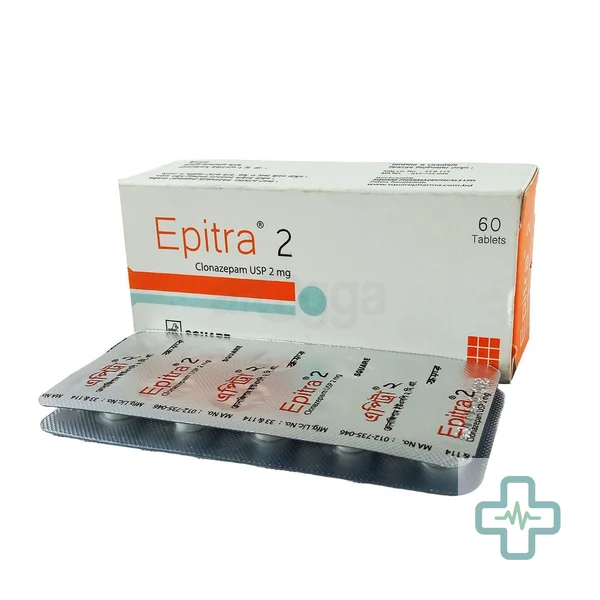
Tablet
Epitra 2 mg Tablet
Generic: Clonazepam
Manufacturer: Square Pharmaceuticals PLC, Pabna
Therapeutic class: Benzodiazepine — anticonvulsant and anxiolytic (strictly prescription-only, controlled medicine)
What is Epitra used for?
Epitra 2 mg Tablet contains clonazepam, a benzodiazepine medicine from Square Pharmaceuticals PLC. It is prescribed for certain seizure disorders and panic disorder, and should be used only under a doctor’s supervision because it is a contr…
Price in Bangladesh
| Pack | Price (BDT) |
|---|---|
| Per tablet | ৳ 12.50 |
| Strip of 10 | ৳ 125.00 |
Prices are indicative — actual retail price may vary by pharmacy.
What is Epitra?
Epitra 2 mg Tablet contains clonazepam, a benzodiazepine medicine from Square Pharmaceuticals PLC. It is prescribed for certain seizure disorders and panic disorder, and should be used only under a doctor’s supervision because it is a controlled prescription medicine.
Epitra 2 mg tablet is manufactured and marketed by Square Pharmaceuticals PLC, Pabna in Bangladesh. It contains Clonazepam, a long-acting benzodiazepine used for epilepsy, panic disorder and certain severe anxiety or sleep problems under specialist care. It is a strictly prescription-only, controlled medicine: it can cause dependence within weeks, must never be bought casually from a pharmacy, and must never be stopped abruptly.
Clonazepam works by enhancing the action of GABA, the brain's main calming chemical messenger. By boosting GABA's effect at its receptors, it slows excessive electrical activity in the brain — which suppresses seizures, eases panic attacks and reduces severe anxiety. The same calming action also causes drowsiness, slowed reflexes and, with regular use, tolerance and dependence.
Indications
Epitra is prescribed by specialists for:
- Epilepsy — several seizure types, including myoclonic and absence seizures, alone or as add-on therapy
- Panic disorder — with or without agoraphobia
- Short-term management of severe, disabling anxiety when other options are unsuitable
- Certain sleep-related movement disorders (e.g. REM sleep behaviour disorder, restless legs) under specialist advice
It is intended for the shortest effective period, usually with a clear plan to review and taper. It is not a routine sleeping pill or everyday stress remedy.
Dosage & Administration
Epitra dosing is highly individual and set only by the treating doctor. Typical adult patterns:
- Panic/anxiety: often started at 0.25–0.5 mg at night, adjusted gradually; many patients are maintained on 0.5–2 mg daily
- Epilepsy: low starting doses increased slowly to the effective maintenance dose, sometimes in divided doses
Take it exactly as prescribed, usually at the same time each evening. Do not increase the dose yourself even if the effect seems weaker — that is how tolerance and dependence develop. Use is generally kept short-term where possible, and stopping always requires a slow, supervised taper, never an abrupt halt.
Side Effects
Common side effects of Epitra:
- Drowsiness, fatigue and daytime sleepiness — very common, especially early on
- Dizziness, unsteadiness and poor coordination — falls are a real risk in the elderly
- Slowed thinking, memory and concentration problems
- Muscle weakness; slurred speech at higher doses
- Mood changes, irritability; occasionally paradoxical agitation
- Increased salivation in some patients
With regular use beyond a few weeks: tolerance, dependence and withdrawal symptoms (rebound anxiety, insomnia, tremor, sweating, seizures) if stopped suddenly. Combined with alcohol or opioids it can dangerously suppress breathing.
Precautions & Warnings
Essential precautions with Epitra:
- Strictly prescription-only: take it solely under a psychiatrist's or neurologist's supervision, at the exact dose prescribed
- Never stop abruptly — sudden withdrawal can cause rebound anxiety, insomnia and even seizures; the dose must be tapered slowly
- No alcohol at all while on this medicine
- Do not drive, ride motorbikes or operate machinery — reaction time and judgement are impaired, often more than you realise
- Use is normally short-term; long-term use needs regular specialist review
- Extra caution in the elderly (falls, confusion), in breathing problems such as COPD or sleep apnoea, and in liver disease
- Tell your doctor about depression, suicidal thoughts or any history of substance misuse
- Keep it locked away; never share it with anyone
Drug Interactions
Important interactions of Epitra:
- Alcohol — dangerous additive sedation and breathing suppression; strictly avoid
- Opioids (tramadol, morphine, codeine) — combined use can fatally suppress breathing; only under close specialist supervision
- Other sedatives — sleeping pills, pregabalin, gabapentin, sedating antihistamines, some antidepressants and antipsychotics — additive drowsiness
- Enzyme inducers (carbamazepine, phenytoin, rifampicin) — can lower clonazepam levels
- Enzyme inhibitors (ketoconazole, itraconazole, some HIV medicines) — can raise levels and sedation
- Sodium valproate — interaction may rarely provoke absence status in epilepsy; specialists monitor this combination
Give your doctor a complete list of everything you take, including herbal sleep remedies.
Contraindications
Do not take Epitra if you have:
- Known allergy to clonazepam or other benzodiazepines
- Severe breathing failure (severe respiratory insufficiency)
- Sleep apnoea syndrome
- Severe liver failure
- Myasthenia gravis (severe muscle weakness disease)
- Acute narrow-angle glaucoma
It should not be combined with alcohol or used without prescription. In people with current or past drug or alcohol dependence, it is prescribed only in exceptional circumstances under strict specialist control.
Pregnancy & Lactation
Pregnancy: Epitra should be avoided in pregnancy unless a specialist judges it essential (for example, uncontrolled epilepsy where the risk of seizures is greater). Benzodiazepines in late pregnancy can cause floppiness, breathing and feeding difficulties, and withdrawal symptoms in the newborn. Never stop it abruptly on discovering pregnancy — contact your doctor immediately for a safe plan.
Breastfeeding: Clonazepam passes into breast milk and can make the baby drowsy and feed poorly; it is generally not recommended while breastfeeding. If treatment is unavoidable, the baby needs medical monitoring.
Storage Conditions
Store Epitra below 30°C in a dry place, protected from light, in the original pack. As a controlled medicine with misuse potential, keep it locked away, strictly out of the reach of children and anyone it was not prescribed for. Count your tablets so missing ones are noticed. Return unused tablets to a pharmacy rather than keeping them. Do not use after the expiry date.
Frequently Asked Questions
Is Epitra just a sleeping pill? Can I take it whenever I cannot sleep?
No. Epitra is a benzodiazepine for epilepsy, panic disorder and severe anxiety, prescribed by specialists — not a casual sleep remedy. Using it on your own for sleeplessness is risky: tolerance develops within weeks, the dose creeps up, and dependence follows, after which sleep without the tablet becomes even harder. If you have ongoing insomnia, see a doctor to find the cause; safer approaches and medicines exist for sleep problems.
What happens if I stop Epitra suddenly?
Stopping Epitra abruptly after regular use can cause withdrawal symptoms: rebound anxiety and insomnia worse than before, restlessness, tremor, sweating, palpitations, confusion and — most dangerously — seizures, even in people who never had epilepsy. That is why the dose must always be reduced slowly, step by step, over weeks under your doctor's supervision. If you have run out of tablets, contact your doctor the same day instead of waiting it out.
Can I drink alcohol or drive while taking Epitra?
No to both. Alcohol and clonazepam both depress the brain; together they multiply each other's effects and can cause blackouts, accidents and dangerously suppressed breathing — this combination can be fatal. Driving, riding motorbikes and operating machinery are also unsafe on Epitra: it slows reaction time and judgement, often more than you feel. Avoid driving at least until your specialist confirms your dose is stable and you tolerate it well — and never after a missed night's sleep or an increased dose.
Last updated: