
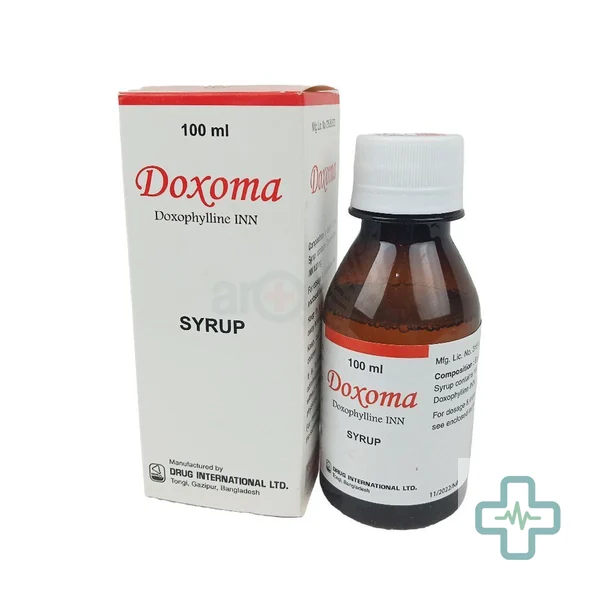
Syrup
Doxoma 100 mg/5 ml Syrup
Generic: Doxofylline
Manufacturer: Drug International Ltd., Gopalpur
Therapeutic class: Bronchodilator (Xanthine derivative)
What is Doxoma used for?
Doxoma (Syrup) contains Doxofylline 100 mg/5 ml and is made by Drug International Ltd., Gopalpur. Therapeutic class: Bronchodilator (Xanthine derivative).
Price in Bangladesh
| Pack | Price (BDT) |
|---|---|
| Per syrup | ৳ 95.00 |
| 100ml bot | ৳ 95.00 |
Prices are indicative — actual retail price may vary by pharmacy.
What is Doxoma?
Doxoma 100 mg/5 ml Syrup contains doxofylline, a xanthine-derived bronchodilator. It is used in the management of breathing conditions such as asthma and COPD where airway narrowing or bronchospasm contributes to wheeze, cough, or shortness of breath.
Doxoma 100 mg/5 ml syrup is a bronchodilator from Drug International Ltd., Gopalpur containing Doxofylline, a newer-generation xanthine medicine. It is prescribed for asthma, chronic obstructive pulmonary disease (COPD), and chronic bronchitis to keep the airways open and reduce breathlessness and wheezing. It is taken regularly as maintenance therapy rather than for instant relief of a sudden attack.
Doxofylline works by inhibiting phosphodiesterase enzymes in airway smooth muscle, which relaxes the muscle and widens the bronchial tubes. Unlike the older xanthine theophylline, it has little effect on adenosine receptors, so it causes fewer caffeine-like side effects — less palpitations, sleep disturbance, stomach upset, and nervousness — while still providing effective, long-lasting bronchodilation.
Indications
- Bronchial asthma (maintenance treatment)
- Chronic obstructive pulmonary disease (COPD)
- Chronic bronchitis with airway narrowing
- Breathlessness and wheezing associated with reversible airway obstruction
Dosage & Administration
ChamberBD shows dosing only from the approved product label, with its source named, and no label is on file for Doxoma 100 mg/5 ml Syrup. Use the dose your doctor prescribed and the instructions in the pack leaflet.
Side Effects
Doxofylline is generally better tolerated than theophylline. Possible side effects include nausea, stomach discomfort, headache, dizziness, and mild sleep disturbance or irritability. Palpitations and fast heartbeat can occur but are less frequent than with older xanthines. High doses may cause vomiting or tremor. Stop the medicine and contact a doctor if you develop severe palpitations, chest pain, persistent vomiting, or any seizure-like activity.
Precautions & Warnings
Use doxofylline with caution in heart disease, high blood pressure, hyperthyroidism, peptic ulcer, epilepsy, and liver or kidney impairment — dose adjustment may be needed. Limit heavy tea, coffee, and energy drinks, which add xanthine-like load. Fever, viral illness, and smoking status can change how the body handles xanthines, so inform your doctor of any major changes. Remember it does not replace inhaled steroids or your reliever inhaler; continue them as prescribed.
Drug Interactions
Erythromycin, clarithromycin, ciprofloxacin, cimetidine, and allopurinol can raise doxofylline levels and increase side effects. Rifampicin, phenytoin, carbamazepine, and smoking can lower its levels. Avoid taking it together with other xanthines such as theophylline or aminophylline — the effects add up. Caution is needed with ephedrine and other stimulant sympathomimetics. Flu vaccination or active viral infection may also alter xanthine handling. Tell your doctor about every medicine you use.
Contraindications
Doxofylline is contraindicated in people hypersensitive to doxofylline or other xanthine derivatives, in acute myocardial infarction (recent heart attack), in significant low blood pressure, and during breastfeeding unless a doctor advises otherwise. It should not be relied on to treat an acute asthma attack — fast-acting inhaled relievers and emergency care are needed for that.
Pregnancy & Lactation
Pregnancy: Safety in pregnancy has not been established, so doxofylline should be used only if the doctor judges the benefit clearly outweighs the risk, generally avoiding the first trimester. Lactation: Xanthines pass into breast milk and may make the baby irritable; use during breastfeeding is generally not recommended unless the doctor advises it. Discuss your asthma treatment plan with your doctor if you are pregnant or breastfeeding.
Storage Conditions
Store as printed on the pack and keep out of the reach of children.