
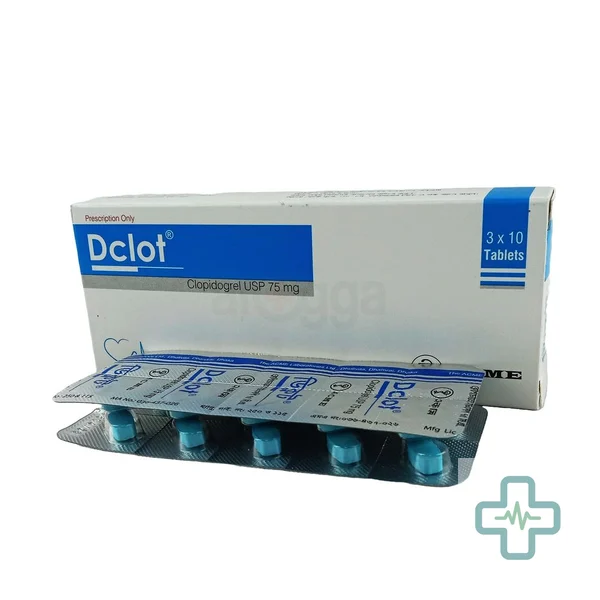
Tablet
Dclot 75 mg Tablet
Generic: Clopidogrel
Manufacturer: The ACME Laboratories Ltd.
Therapeutic class: Antiplatelet Agent (P2Y12 Inhibitor)
What is Dclot used for?
Dclot (Tablet) contains Clopidogrel 75 mg and is made by The ACME Laboratories Ltd. Therapeutic class: Antiplatelet Agent (P2Y12 Inhibitor).
Price in Bangladesh
| Pack | Price (BDT) |
|---|---|
| Per tablet | ৳ 12.00 |
| Strip of 10 | ৳ 120.00 |
Prices are indicative — actual retail price may vary by pharmacy.
What is Dclot?
Dclot 75 mg Tablet contains clopidogrel, an antiplatelet medicine from The ACME Laboratories Ltd. It is used to help reduce unwanted blood clot formation in people at risk after conditions such as heart attack, stroke, or peripheral arterial disease.
Dclot 75 mg tablet is a medicine from The ACME Laboratories Ltd. that contains Clopidogrel, an antiplatelet agent used to prevent dangerous blood clots in people who have had a heart attack, stroke, or a heart stent placed, and in those with blocked leg arteries.
Clopidogrel works on platelets — the tiny blood cells that clump together to form clots. It permanently blocks a receptor (P2Y12) on the platelet surface, so platelets become less sticky and cannot easily clump inside narrowed or stented arteries. This keeps blood flowing to the heart, brain and limbs. Because the effect lasts for the life of each platelet, the medicine keeps protecting you even between doses.
Indications
- After a heart attack (myocardial infarction) — to prevent another attack
- After coronary stent placement (PCI/ring) — to stop clots forming inside the stent, usually with aspirin
- Acute coronary syndrome — unstable angina or heart attack, with aspirin
- After ischaemic stroke or mini-stroke (TIA) — to prevent another stroke
- Peripheral arterial disease — blocked leg arteries causing pain on walking
Dosage & Administration
ChamberBD shows dosing only from the approved product label, with its source named, and no label is on file for Dclot 75 mg Tablet. Use the dose your doctor prescribed and the instructions in the pack leaflet.
Side Effects
Because clopidogrel reduces clotting, bleeding-related effects are the most common:
- Bruising more easily, longer bleeding from cuts
- Nosebleeds, bleeding gums
- Stomach upset, diarrhoea, abdominal pain
- Rash or itching
Seek urgent medical help if you notice:
- Black or tarry stools, blood in vomit (may look like coffee grounds), blood in urine
- Unusual or prolonged bleeding that will not stop
- Sudden weakness, severe headache or confusion
- Unexplained fever, extreme tiredness, purple skin spots or yellowing of eyes (very rare blood disorder TTP)
Precautions & Warnings
- Tell every doctor, dentist or surgeon that you take Dclot before any procedure, surgery or tooth extraction — it is usually stopped 5–7 days beforehand, but only on the prescribing doctor's instruction.
- Tell your doctor if you have a stomach ulcer, previous bleeding, liver disease or a planned operation.
- Use a soft toothbrush and shave carefully to reduce bleeding.
- Avoid contact sports or activities with high injury risk.
- Do not take regular painkillers like ibuprofen or diclofenac without asking — they increase bleeding risk.
- Some people genetically respond less to clopidogrel; if a clot occurs despite the medicine, your doctor may switch to an alternative.
Drug Interactions
- Omeprazole and esomeprazole (PPIs): can reduce the activation and effect of clopidogrel — doctors usually prefer pantoprazole or rabeprazole if a gastric medicine is needed
- NSAID painkillers (ibuprofen, diclofenac, naproxen) and aspirin: higher bleeding risk; aspirin is combined only when the doctor prescribes it deliberately
- Anticoagulants (warfarin, rivaroxaban, heparin): major bleeding risk — combined only under specialist supervision
- SSRIs (escitalopram, sertraline): can add to bleeding tendency
- Strong CYP2C19 inhibitors (fluconazole, fluoxetine): may blunt clopidogrel's effect
Tell your doctor about all medicines, supplements and herbal products you use.
Contraindications
- Allergy to clopidogrel or any component of the medicine
- Active bleeding — such as a bleeding stomach ulcer or bleeding inside the brain
- Severe liver disease
- It should not be started without medical assessment in people with recent major trauma or surgery
Pregnancy & Lactation
Pregnancy: Clopidogrel is used in pregnancy only if clearly needed. Animal studies have not shown harm, but human data are limited, and the bleeding risk around delivery needs careful planning. Always tell your doctor if you are pregnant or planning pregnancy so the risks and benefits can be weighed.
Lactation: It is not known whether clopidogrel passes into human breast milk. Breastfeeding is generally not recommended during treatment — discuss with your doctor whether to stop the medicine or stop breastfeeding based on how essential the drug is for you.
Storage Conditions
Store below 30°C in a cool, dry place away from direct sunlight and moisture. Keep in the original blister pack until use, and keep out of the reach of children. Do not use after the expiry date.
Frequently Asked Questions
What should I do about Dclot before surgery or a tooth extraction?
Always inform the surgeon or dentist that you take Dclot — well before the procedure. For many minor dental procedures it can be continued, but for surgery it is often paused 5–7 days beforehand. Never stop it yourself: the decision must come from the doctor who prescribed it (usually your cardiologist), who will weigh your clot risk against the bleeding risk and tell you exactly when to stop and restart.
Can I take gastric medicine (omeprazole) with Dclot?
Be careful with the choice. Omeprazole and esomeprazole can reduce how well Dclot works, because they block the liver enzyme (CYP2C19) that activates clopidogrel. If you need an acid-reducing medicine for gastric protection, tell your doctor — pantoprazole or rabeprazole are usually preferred as they interfere much less. Do not add or change gastric medicines on your own while on Dclot.