
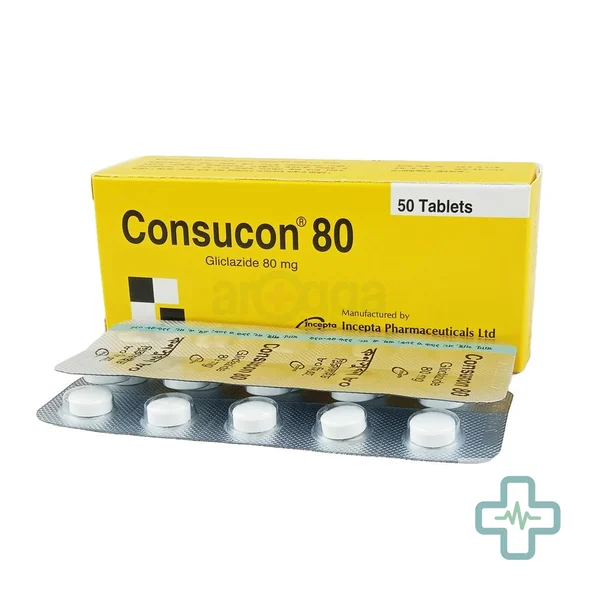
Tablet
Consucon 80 mg Tablet
Generic: Gliclazide
Manufacturer: Incepta Pharmaceuticals Ltd.
Therapeutic class: Sulfonylurea — oral antidiabetic for type 2 diabetes
What is Consucon 80 used for?
Consucon 80 (Tablet) contains Gliclazide 80 mg and is made by Incepta Pharmaceuticals Ltd. Therapeutic class: Sulfonylurea — oral antidiabetic for type 2 diabetes.
Price in Bangladesh
| Pack | Price (BDT) |
|---|---|
| Per tablet | ৳ 8.00 |
| Strip of 10 | ৳ 80.00 |
Prices are indicative — actual retail price may vary by pharmacy.
What is Consucon 80?
Consucon 80 is a tablet containing gliclazide 80 mg, made by Incepta Pharmaceuticals Ltd. It is a sulfonylurea oral antidiabetic used in type 2 diabetes to help control blood glucose by increasing insulin release from the pancreas.
Consucon 80 80 mg tablet is manufactured by Incepta Pharmaceuticals Ltd. and contains the generic Gliclazide. It is a sulfonylurea-class diabetes tablet, commonly prescribed in Bangladesh for type 2 diabetes when diet, weight control and exercise alone cannot keep blood sugar within target. It is available as standard and modified-release (MR) tablets, and is often combined with metformin.
Gliclazide lowers blood sugar by stimulating the insulin-producing beta cells of the pancreas, so more of your own insulin is released after meals. It also has some favourable effects on small blood vessels. Because it increases insulin whether or not you eat, missing meals after taking the tablet can drop your sugar too low — keeping regular meal times is an essential part of treatment with this medicine.
Indications
Consucon 80 is used for:
- Type 2 diabetes mellitus in adults — when blood sugar cannot be controlled by diet, exercise and weight reduction alone.
- Combination therapy — together with metformin or other antidiabetic medicines when single-drug treatment is insufficient, as judged by the doctor.
It is not used in type 1 diabetes or diabetic ketoacidosis, where insulin injections are essential. Your doctor will consider your kidney and liver function, age, meal pattern and hypoglycaemia risk before choosing gliclazide and its release form (standard or MR).
Dosage & Administration
ChamberBD shows dosing only from the approved product label, with its source named, and no label is on file for Consucon 80 mg Tablet. Use the dose your doctor prescribed and the instructions in the pack leaflet.
Side Effects
Side effects of Consucon 80 may include:
- Hypoglycaemia — the key risk: sweating, shakiness, intense hunger, palpitations, dizziness, irritability, blurred vision or confusion; severe cases may cause unconsciousness. Take sugar or glucose immediately, then a meal.
- Digestive upset — nausea, indigestion, abdominal pain, constipation or diarrhoea; taking the tablet with breakfast reduces this.
- Mild weight gain in some patients.
- Skin reactions — rash, itching; stop and consult a doctor if severe.
- Rarely, liver enzyme changes or blood-cell disturbances, which reverse after stopping — periodic blood tests may be advised.
Precautions & Warnings
Important precautions with Consucon 80:
- Regular, carbohydrate-containing meals are essential — skipped or delayed meals, unusual exertion or alcohol can trigger hypoglycaemia.
- Keep glucose or sweets within reach and make sure family members recognise low-sugar symptoms.
- Take care when driving or using machines, particularly at the start of treatment or after dose changes.
- Elderly patients and those with kidney or liver impairment need lower doses and closer monitoring.
- Illness, fever, vomiting, surgery or major stress can destabilise sugar control — your doctor may switch you temporarily to insulin.
- Before fasting (e.g. Ramadan), consult your doctor for dose and timing adjustment.
- Continue routine glucose and HbA1c monitoring.
Drug Interactions
Tell your doctor about all medicines you take with Consucon 80:
- Increase low-sugar risk — other antidiabetics and insulin, miconazole and fluconazole (antifungals), phenylbutazone, NSAIDs and aspirin, sulfonamide antibiotics (co-trimoxazole), some antidepressants and ACE inhibitors.
- Reduce sugar control — corticosteroids, danazol, chlorpromazine in high doses, thiazide diuretics and some hormone preparations.
- Beta-blockers — may mask the early warning signs of hypoglycaemia.
- Warfarin — anticoagulant effect may be altered; INR monitoring needed.
- Alcohol — can provoke severe, prolonged hypoglycaemia; avoid it.
Contraindications
Consucon 80 must not be used in:
- Type 1 diabetes.
- Diabetic ketoacidosis, diabetic pre-coma or coma — these need emergency insulin treatment.
- Severe kidney or liver failure — insulin is recommended instead.
- Allergy to gliclazide, other sulfonylureas or sulfonamides.
- Concurrent miconazole therapy.
- Breastfeeding, and generally in pregnancy, where insulin is the standard choice.
Pregnancy & Lactation
Pregnancy: Consucon 80 is generally avoided in pregnancy. If you are planning a baby or find out you are pregnant, inform your doctor immediately — control is usually switched to insulin, which is the safest established option for the baby. Do not stop the tablet abruptly without a replacement plan, because uncontrolled sugar itself is harmful in pregnancy.
Breastfeeding: It is not known with certainty how much gliclazide passes into breast milk, and there is a theoretical risk of low blood sugar in the infant, so the medicine is contraindicated while breastfeeding. Your doctor will arrange insulin or another suitable alternative during this time.
Storage Conditions
Store Consucon 80 in a cool, dry place below 30°C, away from direct sunlight and moisture. Keep tablets in the original strip until you take them, and store all medicines out of the reach and sight of children. Never use the medicine after its expiry date; hand expired stock to a pharmacy for safe disposal instead of discarding it with household waste.