
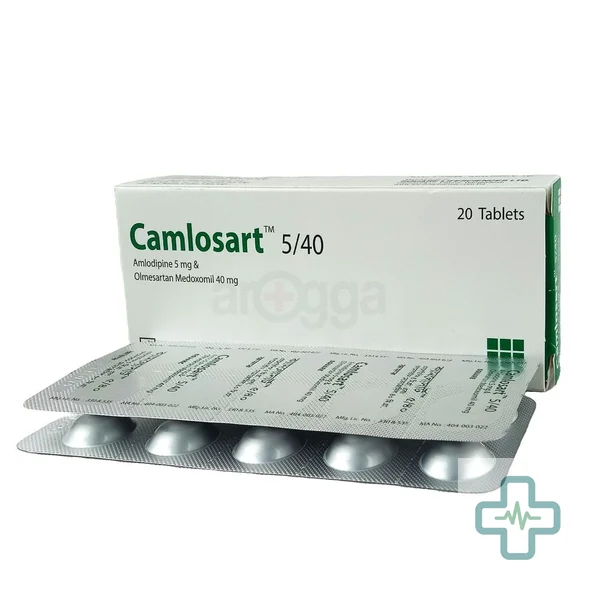
Tablet
Camlosart 5/40 5 mg + 40 mg Tablet
Generic: Amlodipine + Olmesartan Medoxomil
Manufacturer: Square Pharmaceuticals PLC, Pabna
Therapeutic class: Antihypertensive Combination (Calcium Channel Blocker + ARB)
What is Camlosart 5/40 used for?
Camlosart 5/40 (Tablet) contains Amlodipine + Olmesartan Medoxomil 5 mg + 40 mg and is made by Square Pharmaceuticals PLC, Pabna. Therapeutic class: Antihypertensive Combination (Calcium Channel Blocker + ARB).
Price in Bangladesh
| Pack | Price (BDT) |
|---|---|
| Per tablet | ৳ 20.00 |
| Strip of 10 | ৳ 200.00 |
Prices are indicative — actual retail price may vary by pharmacy.
What is Camlosart 5/40?
Camlosart 5/40 is a tablet containing amlodipine 5 mg and olmesartan medoxomil 40 mg, made by Square Pharmaceuticals PLC. It is used to treat high blood pressure by combining a calcium channel blocker with an angiotensin receptor blocker.
Camlosart 5/40 5 mg + 40 mg tablet is a fixed-dose combination medicine from Square Pharmaceuticals PLC, Pabna containing Amlodipine + Olmesartan Medoxomil. It is used to treat high blood pressure when one medicine alone cannot reach the target, or as initial therapy in patients likely to need two medicines.
The two ingredients lower pressure through different routes. Amlodipine, a calcium channel blocker, relaxes the muscle in artery walls so the vessels stay wide. Olmesartan, an angiotensin receptor blocker (ARB), stops the hormone angiotensin II from constricting vessels and retaining salt. Working together they control pressure more strongly than either alone, and olmesartan also reduces the ankle swelling amlodipine can cause.
Indications
- High blood pressure (hypertension) not controlled by amlodipine or olmesartan alone
- Initial treatment when the doctor judges that two medicines will be needed to reach the target
- Patients taking amlodipine and olmesartan as separate tablets — for convenience and better adherence
Dosage & Administration
ChamberBD shows dosing only from the approved product label, with its source named, and no label is on file for Camlosart 5/40 5 mg + 40 mg Tablet. Use the dose your doctor prescribed and the instructions in the pack leaflet.
Side Effects
Possible side effects include:
- Ankle or foot swelling (amlodipine — usually less in this combination)
- Dizziness, light-headedness, especially on standing
- Flushing, warmth in the face, palpitations
- Headache, tiredness
- Raised blood potassium (olmesartan)
- Rare: chronic severe diarrhoea with weight loss (sprue-like enteropathy from olmesartan, may appear months–years later)
- Rare but serious: swelling of face, lips or throat (angioedema), severe low pressure — seek urgent care
Precautions & Warnings
- Monitor blood pressure regularly; attend all follow-up visits.
- Your doctor may periodically test kidney function and potassium.
- Tell your doctor about kidney or liver disease, severe heart valve narrowing (aortic stenosis), or heart failure.
- Dehydration from vomiting, diarrhoea, diuretics or a strict low-salt diet can cause an exaggerated pressure drop at the start — report weakness or fainting.
- Rise slowly from sitting or lying; be careful driving until you know the medicine's effect.
- Avoid potassium supplements and potassium salt substitutes unless prescribed.
- Report long-lasting severe diarrhoea with weight loss.
- Avoid large amounts of grapefruit juice (amlodipine levels may rise).
Drug Interactions
- NSAID painkillers (ibuprofen, diclofenac, naproxen): blunt the pressure-lowering effect and stress the kidneys
- Other antihypertensives and diuretics: additive pressure drop
- Potassium supplements, potassium-sparing diuretics: high potassium risk
- ACE inhibitors or aliskiren: dual blockade generally avoided — kidney injury, high potassium and low pressure risk
- Lithium: levels may rise
- Simvastatin (high dose): amlodipine raises its level — dose limits apply
- Strong CYP3A4 inhibitors (ketoconazole, clarithromycin): increase amlodipine levels
- Colesevelam: take this combination at least 4 hours before it
Contraindications
- Allergy to amlodipine, other dihydropyridines, olmesartan or any component
- Pregnancy — the olmesartan component can seriously harm the unborn baby
- Severe low blood pressure or shock
- Severe aortic stenosis, obstruction of heart outflow
- Severe bile-flow obstruction (biliary obstruction)
- Use with aliskiren in diabetic patients
Pregnancy & Lactation
Pregnancy: Contraindicated. The olmesartan component can damage the unborn baby's kidneys, reduce amniotic fluid and cause foetal death, especially in the second and third trimesters. If you become pregnant or plan to conceive, stop and contact your doctor immediately — a pregnancy-safe alternative will be started.
Lactation: Not recommended while breastfeeding because data for olmesartan are limited; amlodipine passes into milk in small amounts. Your doctor can prescribe a better-studied alternative.
Storage Conditions
Store below 30°C in a dry place, protected from light and moisture. Keep in the original pack and out of the reach of children. Do not use after the expiry date.
Frequently Asked Questions
Can I stop Camlosart 5/40 when I feel better?
No. High blood pressure rarely causes symptoms, so "feeling better" simply means Camlosart 5/40 is doing its job. The disease itself remains; stop the tablet and within days the pressure starts climbing again — silently — raising your risk of stroke, heart attack and kidney damage. Take it every day at the same time, keep your home readings, and let only your doctor decide about reducing or changing the medicine.
Can I take Camlosart 5/40 during pregnancy?
No. Camlosart 5/40 contains olmesartan, an ARB, and ARBs are contraindicated in pregnancy — they can damage the unborn baby's kidneys, reduce the amniotic fluid and even cause the baby's death, particularly in the second and third trimesters. If you are pregnant, planning a pregnancy, or discover a pregnancy while on this medicine, stop and contact your doctor immediately; safe alternatives for controlling pressure in pregnancy are available.