
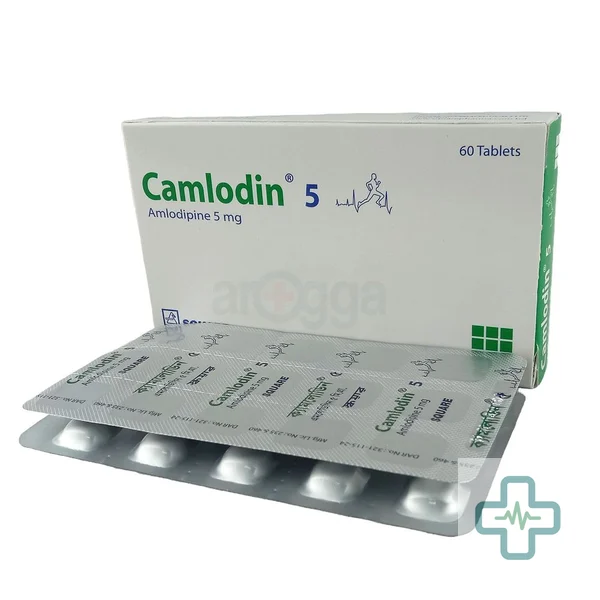
Tablet
Camlodin 5 mg Tablet
Generic: Amlodipine
Manufacturer: Square Pharmaceuticals PLC, Pabna
Therapeutic class: Calcium channel blocker (dihydropyridine) — antihypertensive and anti-anginal
What is Camlodin used for?
Camlodin (Tablet) contains Amlodipine 5 mg and is made by Square Pharmaceuticals PLC, Pabna. Therapeutic class: Calcium channel blocker (dihydropyridine) — antihypertensive and anti-anginal.
Price in Bangladesh
| Pack | Price (BDT) |
|---|---|
| Per tablet | ৳ 5.02 |
| Strip of 15 | ৳ 75.30 |
Prices are indicative — actual retail price may vary by pharmacy.
What is Camlodin?
Camlodin 5 mg Tablet contains amlodipine, a dihydropyridine calcium channel blocker made by Square Pharmaceuticals PLC. It is used in the management of high blood pressure and certain types of chest pain caused by angina.
Camlodin 5 mg tablet is a medicine from Square Pharmaceuticals PLC, Pabna containing the generic Amlodipine. It is one of the most commonly prescribed blood pressure tablets in Bangladesh, used alone or in combination with other antihypertensives, and also for angina (chest pain due to reduced blood flow to the heart). Its long action allows convenient once-daily dosing.
Amlodipine is a calcium channel blocker. Muscle cells in the walls of your arteries need calcium to contract; amlodipine slows calcium entry into these cells, so the artery walls relax and widen. Wider, relaxed arteries mean the heart pumps against less resistance — blood pressure falls — and the heart muscle itself receives blood more easily, which relieves and prevents angina. The effect builds gently over days, avoiding sudden pressure drops.
Indications
Camlodin is prescribed for:
- Hypertension (high blood pressure) — as a first-line option, alone or combined with ARBs, ACE inhibitors, diuretics or beta-blockers.
- Chronic stable angina — chest pain on exertion due to narrowed coronary arteries.
- Vasospastic (Prinzmetal's) angina — chest pain from coronary artery spasm.
By keeping blood pressure controlled over the long term, it reduces the risk of stroke, heart attack, heart failure and kidney damage. Your doctor will decide whether it should be used alone or as part of a combination.
Dosage & Administration
ChamberBD shows dosing only from the approved product label, with its source named, and no label is on file for Camlodin 5 mg Tablet. Use the dose your doctor prescribed and the instructions in the pack leaflet.
Side Effects
Most side effects of Camlodin are dose-related and often ease with time:
- Ankle and foot swelling (oedema) — the most characteristic effect, caused by widening of small vessels, not by kidney or heart failure; it is more common at the 10 mg dose and in women. Raising the legs helps; tell your doctor if it is bothersome — the dose may be reduced or a combination used.
- Flushing, warmth or headache — usually in the first days.
- Dizziness or tiredness.
- Palpitations.
- Less commonly: gum swelling, stomach upset, muscle cramps or rash.
Seek medical advice for chest pain that worsens, fainting or severe swelling.
Precautions & Warnings
Points to remember with Camlodin:
- Ankle swelling is common and usually harmless, but always mention it to your doctor so other causes can be ruled out and the dose reviewed.
- Rise slowly from sitting or lying in the first days to avoid dizziness.
- Tell your doctor about severe liver disease, severe aortic stenosis or recent heart attack — doses are chosen cautiously in these situations.
- Keep taking the tablet during fasting, travel or minor illness unless your doctor says otherwise.
- Limit excess salt, maintain a healthy weight, walk regularly and avoid tobacco — lifestyle remains half of blood pressure treatment.
- Grapefruit juice in large amounts may slightly increase drug levels; moderation is sensible.
Drug Interactions
Tell your doctor about all medicines taken with Camlodin:
- Other blood pressure medicines, nitrates, alpha-blockers and drugs for prostate or erectile dysfunction — combined effect can drop pressure too far, causing dizziness or fainting.
- CYP3A4 inhibitors — clarithromycin, erythromycin, ketoconazole, itraconazole, ritonavir and large amounts of grapefruit juice raise amlodipine levels.
- CYP3A4 inducers — rifampicin, carbamazepine, phenytoin, St John's wort can weaken its effect.
- Simvastatin — amlodipine raises its level; simvastatin doses above 20 mg daily are avoided.
- Ciclosporin and tacrolimus — levels may rise; monitoring needed.
- NSAID painkillers — regular use can blunt blood-pressure control.
Contraindications
Camlodin should not be used in:
- Allergy to amlodipine, other dihydropyridines or any tablet component.
- Severe hypotension (very low blood pressure, e.g. systolic below 90 mmHg).
- Shock, including cardiogenic shock.
- Severe aortic stenosis — obstruction of the heart's outflow.
- Haemodynamically unstable heart failure after acute heart attack.
Use needs extra care, not necessarily avoidance, in liver disease and in the elderly — lower doses are chosen.
Pregnancy & Lactation
Pregnancy: The safety of amlodipine in pregnancy is not fully established, so Camlodin is used only if the doctor judges the benefit outweighs the risk; other agents with longer pregnancy track records are often preferred for high blood pressure in pregnancy. Never stop a blood pressure tablet abruptly on discovering pregnancy — uncontrolled hypertension endangers both mother and baby. Contact your doctor promptly for a planned switch.
Breastfeeding: Amlodipine passes into breast milk in small amounts. Available information has not shown harm to breastfed infants, but it should be used during lactation only on a doctor's advice, with the baby observed for unusual sleepiness or poor feeding.
Storage Conditions
Store Camlodin below 30°C in a dry place, protected from light and moisture; keep tablets in the original blister until use. As with all medicines, keep it out of the reach and sight of children. Do not use after the expiry date printed on the pack, and return out-of-date tablets to a pharmacy for safe disposal instead of putting them in household waste.